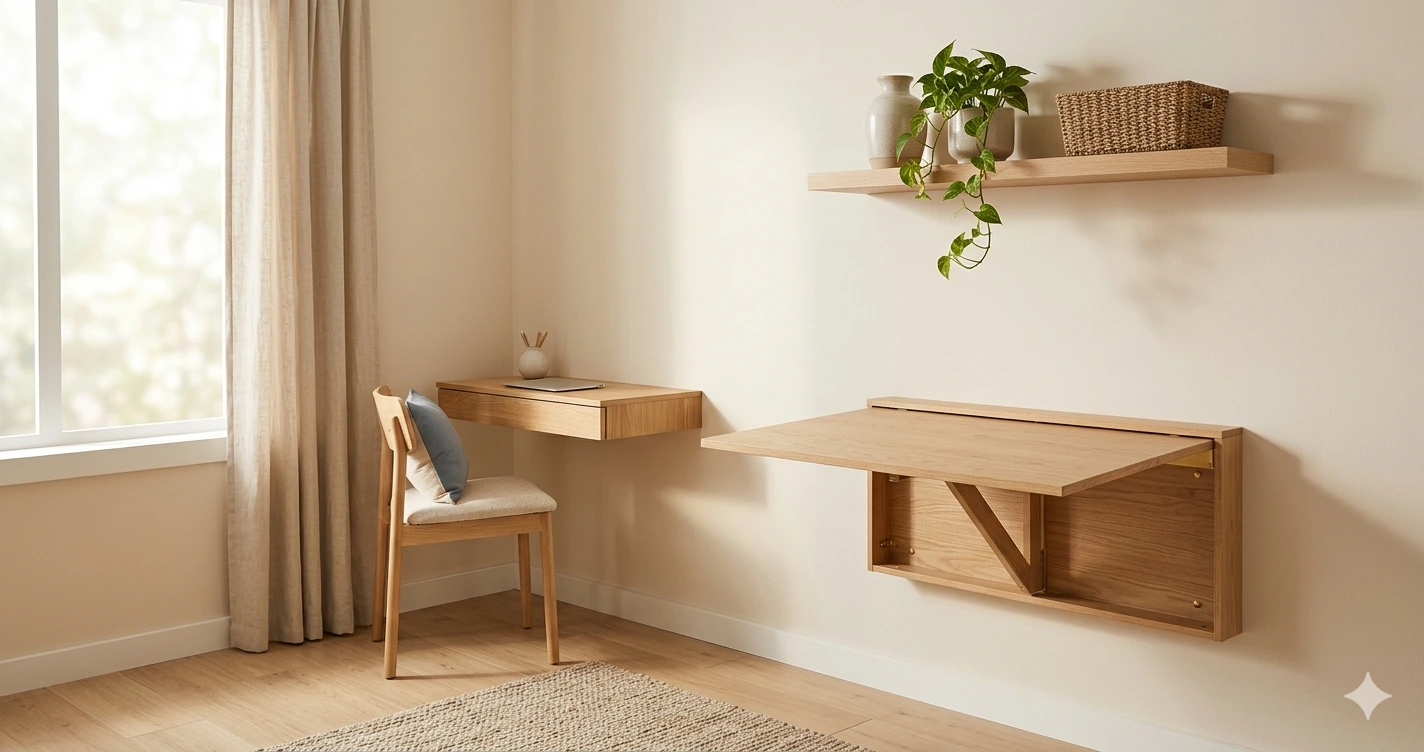
Wall Mounted Furniture: The Complete Guide for Small Spaces

Wall mounted furniture is one of the most effective ways to reclaim space in a small apartment — and it’s consistently underused. Every piece sitting on your floor competes for the same limited square footage. When you move furniture to the wall, you free up the floor, open the sightlines, and make any room feel noticeably larger without adding a single square foot.
I’ve been helping people transform small spaces for years, and wall mounted furniture is one of the highest-impact changes you can make. This guide covers every category — dining tables, desks, shelves, TV units, nightstands — with size charts, installation advice, and options for renters who can’t make permanent changes.
Table of Contents
- Why Wall Mounted Furniture Works in Small Spaces
- Wall Mounted Dining Tables
- Wall Mounted Desks for Small Home Offices
- Floating Shelves and Wall Mounted Shelving Units
- Wall Mounted TV Units and Media Consoles
- Wall Mounted Nightstands for Small Bedrooms
- Materials Guide for Wall Mounted Furniture
- Weight Capacity: The Number That Matters Most
- How to Install Wall Mounted Furniture
- Wall Mounted Furniture Options for Renters
- FAQ
Why Wall Mounted Furniture Works in Small Spaces {#why-it-works}
The logic behind wall mounted furniture is straightforward: furniture on the floor creates visual barriers and reduces the open floor area your eye can register. Wall mounted pieces eliminate that barrier at ground level entirely. The result is a room that reads as larger and more open — even if the actual square footage is unchanged.
Beyond the visual effect, wall mounted furniture delivers three practical advantages that floor furniture simply can’t match.
Cleaning is easier. No legs means no corners to vacuum around, no dust buildup underneath pieces, and no shuffling furniture to mop. A floor cleared of furniture legs takes minutes to clean instead of half an hour.
Traffic flow improves. Wall mounted furniture doesn’t define walking paths the way floor furniture does. In a 400-square-foot studio, that freedom of movement makes a real daily difference.
Usable space multiplies. The floor area below a wall mounted dining table or desk is completely open. That space can serve double duty — as yoga space, pet space, or simply breathing room.
According to interior design guidelines widely used by space planners, even a single wall mounted furniture piece replacing a floor-standing equivalent can increase the perceived floor area of a small room by 15–20%. (source: Architectural Digest — Small Space Design Principles)
Wall Mounted Dining Tables {#dining-tables}
Wall mounted dining tables are the most space-efficient dining solution for small apartments. A fold-down wall mounted dining table takes up almost zero space when closed — just 3–4 inches of depth against the wall — and provides a full dining or work surface when open.
The majority of small-space interior designers rank wall mounted dining tables as the single highest-ROI furniture purchase for studio apartments and one-bedroom flats under 600 square feet.
📊 Wall Mounted Dining Table Size Guide
| Table Width | Seats | Best For | Wall Space Needed |
|---|---|---|---|
| 24 inches | 1–2 | Solo dining / studio apartment | 24–30 inches wide |
| 32 inches | 2 | Couples / small kitchen | 32–40 inches wide |
| 40 inches | 2–3 | Small dining room | 40–48 inches wide |
| 48 inches | 3–4 | Compact dining area | 48–60 inches wide |
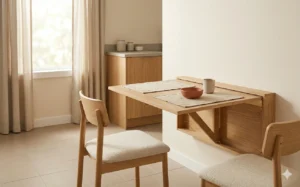
The detail most buyers miss: measure the clearance needed in front of the table when open, not just the table width. Allow at least 24 inches of pull-out space in front for chairs, plus a 36-inch walkway beside that.
👉 For a complete breakdown of wall mounted dining table configurations, bracket types, and top Amazon picks by budget, see the wall-mounted dining tables guide for small apartments.
What to look for in a wall mounted dining table:
- Weight capacity when open: at least 100 lbs for regular dining use
- Fold mechanism: bracket-support is the most stable for daily use
- Folded depth: anything over 4 inches starts to feel like an obstacle on a narrow wall
- Finish: match to existing wood tones in your space for a cohesive look
Expert Warning: Before purchasing any wall mounted furniture that requires drilling, locate the wall studs behind your chosen installation wall. Most fold-down dining tables must be anchored into studs — not just drywall. A table attached only to drywall will pull away from the wall under load. A stud finder costs under $20 and takes five minutes to use. Don’t skip this step.
Wall Mounted Desks for Small Home Offices {#desks}
Wall mounted desks have become one of the most searched categories of wall mounted furniture — a direct result of the shift toward working from home in smaller apartments. A wall mounted desk transforms a corner, a bedroom wall, or a hallway alcove into a functional workspace without claiming any floor space.
There are three main wall mounted desk configurations to know:
Fold-down wall mounted desks work like a wall mounted dining table — the surface folds flat when not in use, creating an almost invisible wall-mounted panel. Best choice if you want to visually “close” your workspace at the end of the day. In a bedroom that doubles as a home office, this boundary between work and rest matters more than it sounds.
Floating desk shelves are fixed horizontal surfaces mounted at desk height with no folding mechanism. Cleaner look, generally more affordable, and slightly more stable than fold-down options. The tradeoff: the desk is always visible.
Wall mounted desk and shelving combos add vertical shelving above or beside the desk surface. Right choice when you need storage for books, files, a monitor, and equipment alongside your workspace.
📊 Wall Mounted Desk Comparison
| Type | Depth | Best For | Typical Price Range |
|---|---|---|---|
| Fold-down wall desk | 16–20 in | Studios, bedroom offices, renters | $80–$300 |
| Floating desk shelf | 16–24 in | Permanent setups, minimalist look | $60–$250 |
| Desk + shelving combo | 16–20 in | Home offices needing storage | $150–$500 |
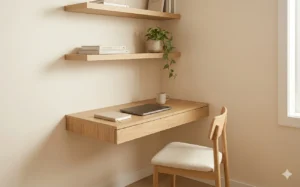
👉 Pro Tip: The minimum comfortable depth for wall mounted desk furniture is 16 inches for a laptop-only setup. If you use an external monitor, go to 20 inches minimum — anything less creates an uncomfortable viewing distance and puts your monitor at an angle that causes neck strain over time.
Floating Shelves and Wall Mounted Shelving Units {#shelving}
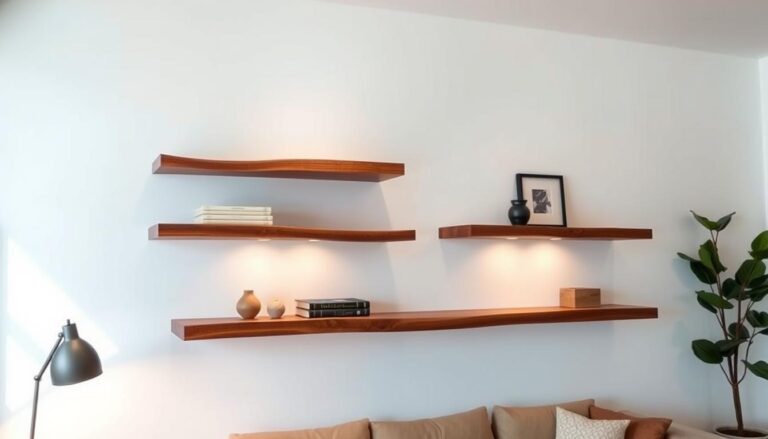
Floating shelves are the most versatile category of wall mounted furniture. They add storage and display space in every room — living room, bedroom, kitchen, bathroom, home office — without occupying a single square foot of floor space.
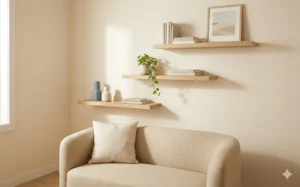
The term “floating” refers to the hidden mounting hardware: the shelf appears to hover against the wall with no visible brackets underneath. The visual effect is significantly cleaner than traditional bracket-mounted shelves.
Wall mounted shelving by room:
Living room: Install above a sofa or TV unit to create a layered wall effect. Three floating shelves at staggered heights is one of the most effective small living room transformations you can make for under $150.
Bedroom: Wall mounted floating nightstands — shelves installed at mattress height — free up the floor on both sides of the bed. In a compact bedroom, that cleared floor area on both sides reads as a significant visual expansion of the room.
Home office: A single wall mounted shelf above a desk doubles your usable surface area without adding any footprint to the room.
Kitchen: Open wall mounted shelving replaces upper cabinets in small kitchens where cabinet doors would feel oppressive and closed-in.
👉 For the most popular finish in wall mounted shelving right now, see the walnut floating shelves guide with installation tips and top picks.
Expert Warning: Wall mounted shelving creates a strong temptation to overload because the surfaces look so minimal. Every floating shelf has a weight limit — typically 15–30 lbs for standard residential pieces. Exceeding it doesn’t just damage the shelf; it can pull the mounting hardware out of the wall entirely. Check the manufacturer’s weight limit before loading up with books or equipment.
Wall Mounted TV Units and Media Consoles {#tv-units}
Replacing a floor TV console with wall mounted furniture — a floating media unit plus a wall-mounted screen — is one of the single most effective small living room transformations available. The floor space freed up under a wall mounted TV setup typically spans 5–7 feet of width, which makes the room feel dramatically more open.
A wall mounted media console typically consists of a floating cabinet or floating shelves at the correct height for a wall-mounted screen. The combination of wall mounted TV plus wall mounted console eliminates the largest floor-furniture footprint in most living rooms in a single decision.
📊 Wall Mounted TV Height Guide
| Screen Size | Mounting Height (center of screen) | Console Height Below |
|---|---|---|
| 40–49 inches | 42–48 inches from floor | 18–24 inches from floor |
| 50–59 inches | 44–52 inches from floor | 20–26 inches from floor |
| 60–75 inches | 46–56 inches from floor | 20–28 inches from floor |
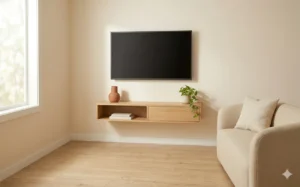
These heights are calibrated for seated viewing. Adjust upward by 4–6 inches if you primarily watch from a standing position or a higher sofa back.
Wall Mounted Nightstands for Small Bedrooms {#nightstands}
Wall mounted nightstands are among the most underused small bedroom solutions. Traditional nightstands take up floor space on both sides of the bed and make the room feel tighter from every angle. A wall mounted nightstand installed at mattress height does the same job — holds a lamp, phone, book, glass of water — while leaving the floor completely clear.
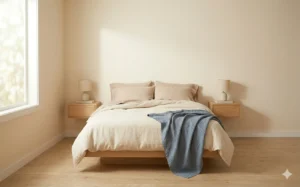
In a small bedroom, clearing the floor on both sides of the bed creates a visual pathway that the eye registers as significantly more space. This effect is particularly strong in bedrooms with low ceilings, where keeping the floor plane open emphasizes the available vertical space.
Installation height: Mount wall mounted nightstands 2–4 inches above your mattress top. For a standard mattress-and-box-spring setup (approximately 25 inches high), this puts the surface at 27–29 inches from the floor. For a low-profile platform bed (18–22 inches), aim for 20–26 inches.
👉 For 15 more ways to maximize a small bedroom — including wall mounted furniture ideas, lighting, and layout strategies — see the small bedroom ideas guide.
Materials Guide for Wall Mounted Furniture {#materials}
Wall mounted furniture comes in three primary materials. Each has different trade-offs for small spaces, load requirements, and budget.
Solid wood is the most durable option and handles weight well over time. Oak and walnut are the most popular finishes. Solid wood wall mounted furniture resists sagging under sustained loads — the main advantage over engineered alternatives. The trade-off is price: solid wood typically costs 2–3x more than MDF equivalents.
Engineered wood (MDF and plywood) covers the majority of the market and offers strong value. MDF produces a very smooth finish and takes paint cleanly. The weakness: MDF doesn’t handle moisture well and can sag under heavy sustained loads. Well-suited for decorative shelves, light desk use, and nightstands. Less ideal for a dining table used multiple times daily.
Metal is the right choice when maximum weight capacity and minimal visual bulk are both priorities. A thin steel wall mounted shelf can hold more weight than a thick MDF shelf at the same price. Metal wall mounted desks have an industrial quality; pair with a warm wood surface or accessories to soften the aesthetic.
Weight Capacity: The Number That Matters Most {#weight}
Weight capacity is the most important specification for any wall mounted furniture purchase — and the one most buyers overlook. The figure on the packaging assumes correct installation into wall studs. When mounted into drywall only, real-world capacity drops to 20–30% of the stated limit.
📊 Minimum Weight Capacity by Piece
| Wall Mounted Furniture Piece | Minimum Capacity Needed |
|---|---|
| Decorative floating shelf | 15–20 lbs |
| Book shelf | 30–50 lbs |
| Desk (laptop setup) | 50–75 lbs |
| Dining table (daily use) | 100–150 lbs |
| Murphy bed | 300–500 lbs |
If a wall mounted furniture piece doesn’t list a weight capacity in its specifications, treat that as a red flag. Reputable manufacturers always publish this number.
How to Install Wall Mounted Furniture {#installation}
Installation is where most wall mounted furniture projects go wrong — not because the furniture itself is poorly designed, but because the wall preparation wasn’t done correctly.
Step 1: Find your studs. Use a stud finder to locate the wooden framing behind the drywall. For any wall mounted furniture that will bear significant weight — desks, dining tables, Murphy beds — anchoring into studs is non-negotiable.
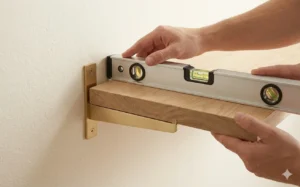
Step 2: Check for pipes and wires. Use a multi-scanner that detects both metal pipes and live electrical wiring before drilling anywhere. Drilling into a wire or water pipe turns a 30-minute installation into a costly repair.
Step 3: Use the right anchors. If your desired wall location doesn’t align with studs, use toggle bolts or Molly bolts rated for the required load. Standard plastic wall anchors are not appropriate for wall mounted furniture that bears weight.
Step 4: Level before you lock. A shelf that’s 2 degrees off level looks fine at installation and becomes quietly maddening over months of use. Check level with a spirit level or a level app before tightening any hardware permanently.
👉 Pro Tip: For heavier wall mounted furniture like fold-down dining tables, floating desks, or Murphy beds, consider hiring a handyman for installation. A professional installation takes 30–60 minutes and typically costs $50–$100 — considerably less than repairing wall damage if the mounting fails.
Wall Mounted Furniture Options for Renters {#renters}
Renting doesn’t mean avoiding wall mounted furniture — it means planning the installation more carefully. Most landlords permit reasonable wall anchoring as long as you patch and repaint the holes when you leave.
Check your lease first. Some leases explicitly address drilling and wall modifications. Know your baseline before you start.
Document before and after. Photograph the wall before installation and after patching. This protects you if there’s any dispute at move-out.
Use the smallest hardware that handles the load. Fewer holes, smaller holes — easier to patch cleanly with spackling compound and touch-up paint.
Consider no-drill alternatives for light loads. Adhesive mounting strips (3M Command Strips and equivalents) handle shelves up to 7.5 lbs cleanly and remove from painted walls without damage. Not appropriate for desks, dining tables, or anything bearing sustained weight — but effective for lightweight decorative wall mounted shelving and small nightstands.
For heavier wall mounted furniture pieces you plan to take with you when you move, invest in a quality installation and account for professional patching costs at move-out. The floor space and daily quality-of-life improvement typically outweighs the patching cost for the duration of a lease.
👉 For a complete small apartment setup checklist covering wall mounted furniture and floor pieces together, see the small apartment furniture checklist.
FAQ {#faq}
What is wall mounted furniture and is it right for a small apartment? Wall mounted furniture is any furniture piece fixed directly to the wall rather than standing on the floor — including fold-down dining tables, floating shelves, wall desks, floating nightstands, and wall-hung media consoles. It is particularly well-suited to small apartments because it frees up floor space, improves visual openness, and makes rooms easier to clean and navigate.
What is the most space-saving wall mounted furniture piece for a studio? A fold-down wall mounted dining table is typically the highest-impact single piece for a studio apartment. When folded, it takes up 3–4 inches of wall depth and is essentially invisible. When open, it provides a full dining or work surface. For studios under 400 square feet, this one piece often eliminates the need for both a separate dining table and a separate desk.
How much weight can wall mounted shelves hold? Most residential wall mounted shelves are rated for 15–50 lbs per shelf, depending on material, shelf length, and installation method. Shelves anchored into studs hold significantly more than those anchored into drywall only. Always verify the manufacturer’s stated weight capacity before loading wall mounted shelving with heavy items such as books or equipment.
Can I install wall mounted furniture in a rental apartment? Yes, with planning. Most landlords permit reasonable wall drilling; check your lease first. Small holes from wall mounted furniture hardware can be patched cleanly with spackling compound and touch-up paint at move-out. For very lightweight shelves under 7.5 lbs, adhesive mounting strips offer a no-drill alternative that removes cleanly from painted walls.
How high should wall mounted nightstands be installed? Mount wall mounted nightstands 2–4 inches above the top of your mattress. For a standard mattress and box spring (approximately 25 inches high), this places the nightstand surface at 27–29 inches from the floor. For a low-profile platform bed mattress at 18–22 inches, aim for 20–26 inches from the floor.
Is wall mounted furniture more expensive than regular furniture? Not necessarily. Basic wall mounted shelves start under $30. Entry-level wall mounted desks range from $60–$150. Wall mounted dining tables start around $80. Murphy beds are the exception — quality Murphy bed systems typically run $500–$2,000, reflecting the mechanical complexity. For most wall mounted furniture categories, pricing is comparable to floor-standing equivalents.
The Bottom Line on Wall Mounted Furniture
Wall mounted furniture isn’t a design trend — it’s a practical response to the reality of living well in a small space. Every piece you move off the floor gives the room room to breathe. Start with the wall in your home that feels most cluttered or constrained, and work from there.
If you’re not sure where to begin, a single floating shelf or a wall mounted nightstand is a low-commitment first step that delivers an immediate visual result. Once you see how much space it creates, you’ll want to keep going.
As an Amazon Associate, I earn from qualifying purchases and referrals.