Small Bedroom Ideas: 15 Ways to Maximize Your Space

Introduction
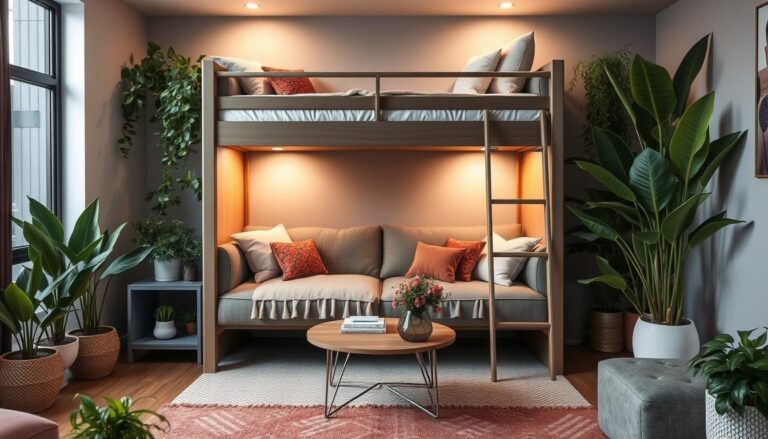
Small bedroom ideas are everywhere — but most of them assume you have more space than you actually do. The reality is that maximizing a compact bedroom requires specific strategies, not just inspiration photos.
Whether you’re working with a 100-square-foot studio bedroom, a narrow guest room that pulls double duty, or a primary bedroom that needs smarter storage, these 15 small bedroom ideas will help you reclaim every inch — without sacrificing comfort or style.
👉 Pro Tip: Before applying any of these small bedroom ideas, measure your room and sketch a simple floor plan. Knowing your exact dimensions makes every decision faster — and prevents expensive furniture mistakes.
Key Takeaways
- A platform bed with built-in storage is the single highest-impact small bedroom idea you can implement today.
- Light colors, mirrors, and vertical storage create the perception of a larger, more open space.
- Multi-functional furniture — beds with drawers, wall-mounted nightstands, ottomans with storage — eliminates the need for extra pieces.
- Decluttering is free and delivers the most immediate visual impact of any technique on this list.
- Murphy beds are the most space-efficient sleeping solution for small bedrooms under 150 sq ft.
1. Choose a Platform Bed with Built-In Storage
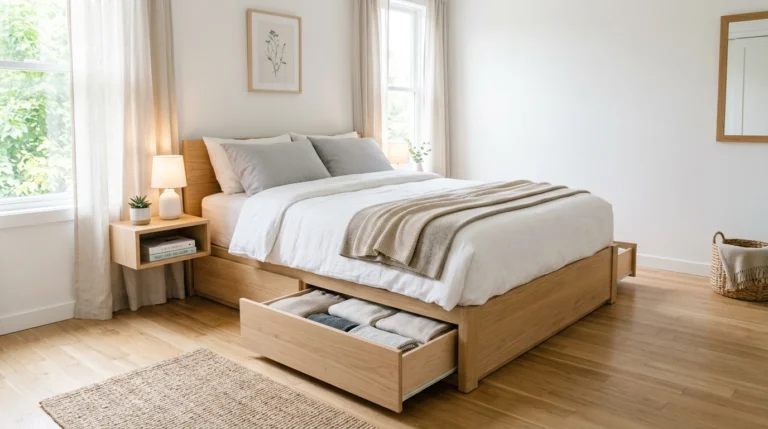
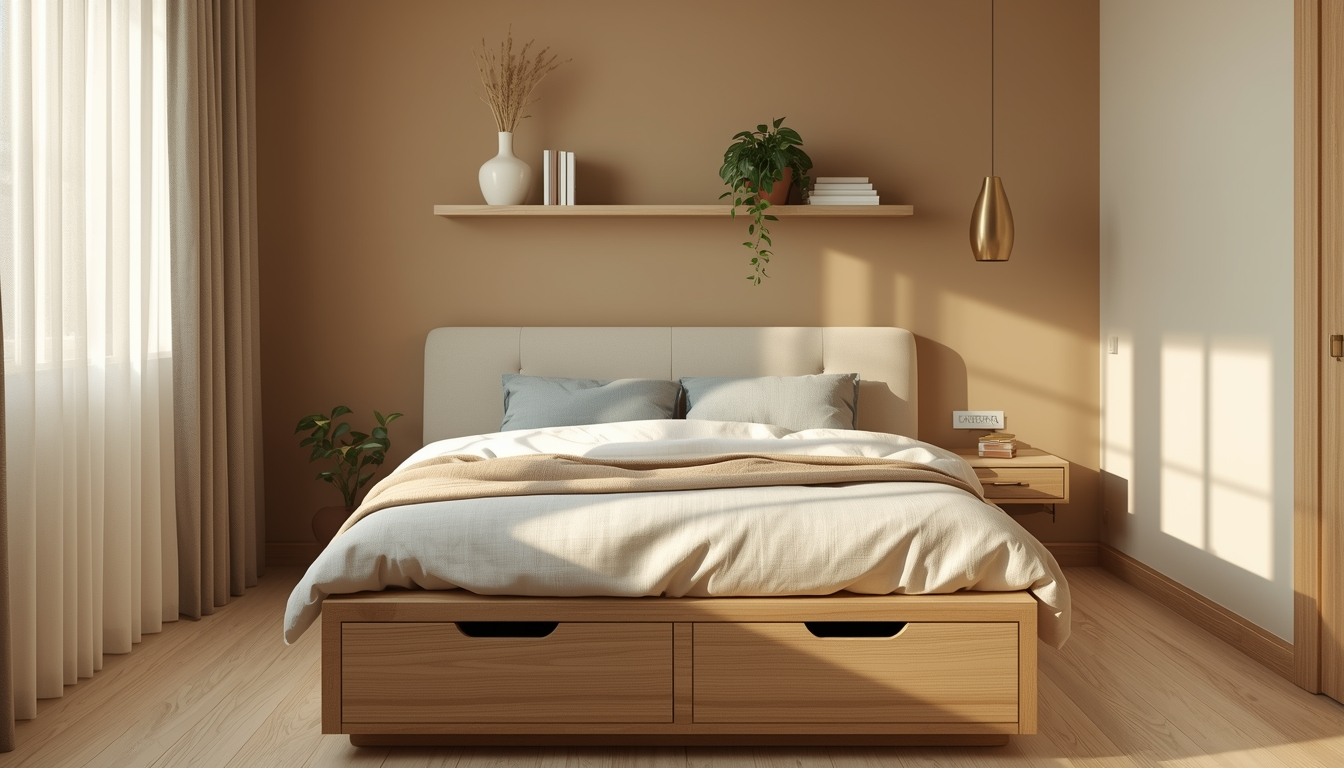
The bed takes up more floor space than any other piece of furniture in a small bedroom — so it needs to work harder than just providing a place to sleep. A platform bed with built-in drawers eliminates the need for a separate dresser, freeing up an entire wall for other purposes.
Look for models with drawers on both sides to maximize storage capacity. In rooms under 120 square feet, this single swap can replace a full 4-drawer dresser — one of the most practical small bedroom ideas you’ll find.
🛒 Browse platform beds with storage drawers on Amazon
Expert Warning: Measure the clearance height under your current bed frame before buying a storage platform bed. Most require at least 7–8 inches of drawer depth, which affects the overall bed height. Taller beds can make low-ceiling rooms feel more cramped.
2. Go Vertical with Floating Shelves
Floor space is your most precious resource when exploring small bedroom ideas. Walls, on the other hand, are free. Floating shelves above the bed, around the window, or flanking the door create storage and display space without consuming a single square foot of floor.
Install shelves at varying heights to create visual interest and maximize different storage needs — books and photos higher up, daily essentials at arm’s reach.
👉 See our complete guide to walnut floating shelves for styles, dimensions, and installation tips that work perfectly above a bed.
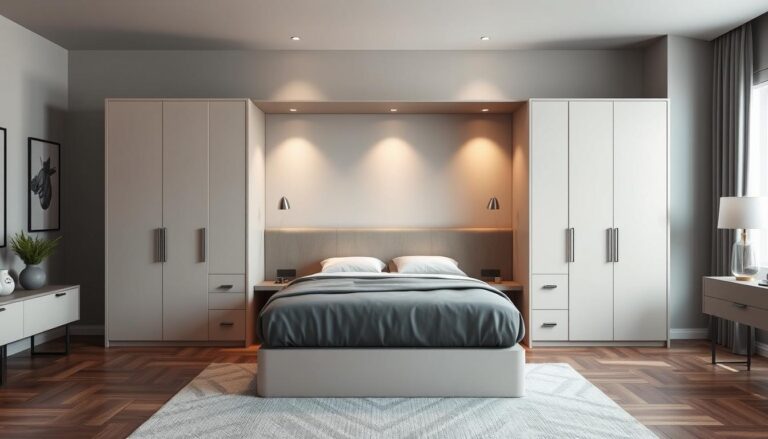
3. Use a Murphy Bed for Small Bedrooms Under 150 Sq Ft
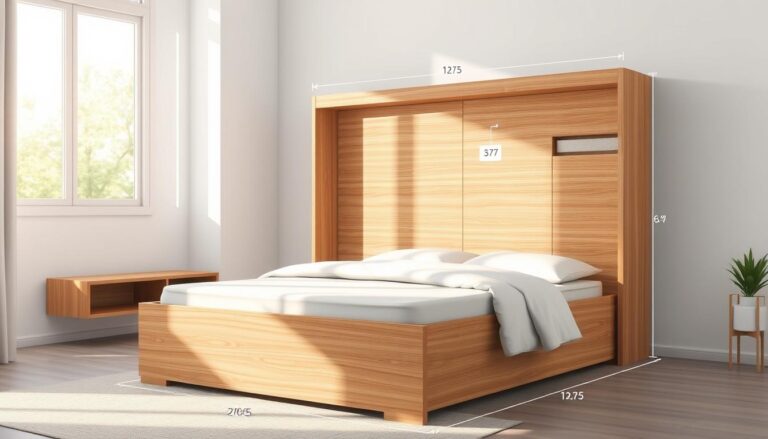
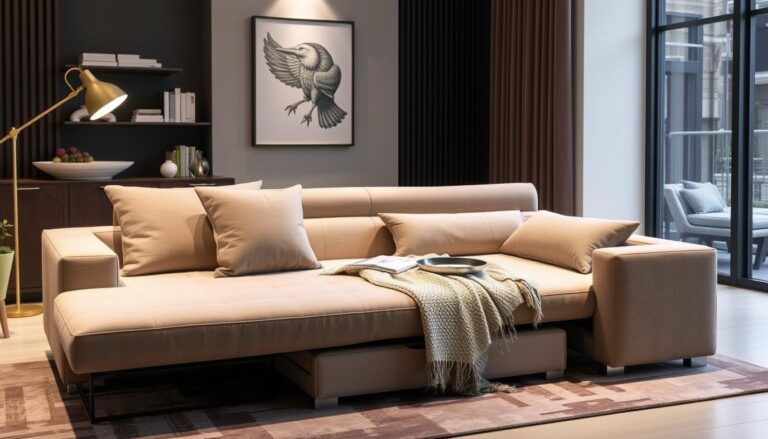
If your small bedroom doubles as a home office, yoga space, or living area — a murphy bed is the most transformative furniture investment you can make. Folded up against the wall, it gives you back 100% of your floor space during the day.
Modern murphy beds are nothing like the flimsy fold-downs of the past. Today’s models come with integrated desks, shelving units, and sofas that remain functional when the bed is in use.
📊 Murphy Bed vs Standard Bed — Space Comparison
| Solution | Floor Space (Folded) | Floor Space (Extended) |
|---|---|---|
| Standard queen bed | 33 sq ft | 33 sq ft |
| Murphy queen bed | ~4 sq ft (cabinet) | 33 sq ft |
| Murphy twin bed | ~3 sq ft (cabinet) | 22 sq ft |
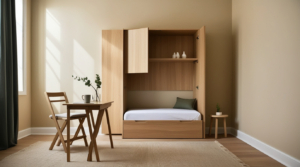
👉 See our full murphy bed guide to compare styles, mechanisms, and sizes before you buy.
4. Replace Your Nightstand with a Wall-Mounted Alternative
Traditional nightstands typically occupy 12–18 inches of floor space on each side of the bed. In a small bedroom, that’s valuable real estate. A wall-mounted shelf or floating nightstand provides the same surface area — lamp, book, phone — with zero floor footprint.
Look for models with a small drawer or shelf underneath for extra storage. Installed at the right height (roughly level with your mattress top), they’re just as functional as a standard nightstand and far more space-efficient.
🛒 Browse wall-mounted floating nightstands on Amazon
5. Use Light Colors to Make Your Small Bedroom Feel Larger
Color choice affects how large a room feels more than almost any other design decision. Light colors — warm whites, soft grays, pale greiges — reflect natural and artificial light, making walls appear to recede and the small bedroom feel more open.
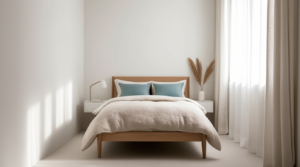
This doesn’t mean every surface needs to be white. A soft greige on the walls with white trim and natural wood furniture creates warmth and depth without heaviness.
Expert Warning: In rooms under 120 square feet, avoid painting any wall a dark or saturated color — even as an accent wall. What looks dramatic in a large room feels oppressive in a small bedroom. If you want contrast, bring it in through movable items: pillows, throws, or artwork.
6. Install a Mirror to Double the Visual Space
A well-placed mirror is the oldest trick in small bedroom design — and still one of the most effective. Position a large mirror on the wall opposite the window to bounce natural light across the room and create the illusion of a second window.
A full-length mirror on the back of the door serves double duty: it doesn’t use any wall space, and it makes even the smallest bedroom appear significantly larger every time you open it.
7. Choose Furniture with Exposed Legs
Furniture that sits directly on the floor blocks the sightline at floor level, making a small bedroom feel more cluttered and lower. Pieces with slim, exposed legs — even just 4–6 inches — let light travel underneath, creating visual breathing room.
This applies to your bed frame, nightstands, accent chairs, and any other furniture in the room. It’s a subtle detail that makes a disproportionate difference in compact spaces.
👉 See our guide to small apartment furniture essentials for more furniture selection principles that work in tight spaces.
8. Use Under-Bed Storage Strategically
If you don’t have a storage bed, the space underneath is one of the most underused zones in a small bedroom. Use flat, rolling storage boxes for seasonal clothing, extra bedding, or shoes.
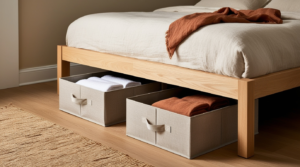
The key is organization. Unlabeled boxes under the bed quickly become a dumping ground that makes the room feel messier. Use clear bins or labeled fabric boxes, and limit under-bed storage to items you need seasonally — not daily.
🛒 Browse under-bed storage organizers on Amazon
9. Keep the Color Palette Consistent
In a small bedroom, visual clutter is just as impactful as physical clutter. When too many colors compete for attention, the room feels chaotic and cramped even when it’s tidy.
Limit your palette to 3 colors maximum: a neutral base (walls and large furniture), a secondary tone (textiles), and one accent (artwork, a single lamp, throw pillows). This creates a cohesive, calm space that reads as larger than it is — one of the simplest small bedroom ideas with immediate visual impact.
10. Maximize Closet Space with Organizers
Most standard closets are dramatically under-organized. A basic closet organizer system — double hanging rods, shelf dividers, door-mounted organizers — can effectively double your closet’s storage capacity without changing the small bedroom’s footprint.
The goal is to keep as much as possible inside the closet, so the bedroom itself stays clear. Every item that doesn’t have a designated closet spot will eventually end up visible in the room.
11. Use Curtains to Create the Illusion of Height
Hang curtains as close to the ceiling as possible — not at window height. Floor-to-ceiling curtains draw the eye upward, making a small bedroom feel taller even when the actual ceiling height hasn’t changed.
Choose light, airy fabrics in neutral tones. Heavy, dark curtains absorb light and make small rooms feel cave-like. Linen, sheer cotton, or semi-sheer panels filter light beautifully while keeping the space bright.
12. Declutter Ruthlessly and Regularly
No furniture arrangement, color choice, or storage solution will make a cluttered small bedroom feel spacious. Decluttering is the one technique on this list that costs nothing and delivers the most immediate visual result.
Apply the one-in-one-out rule: whenever something new enters the small bedroom, something else leaves. This keeps the room at a stable level of organization without requiring periodic major purges.
Expert Warning: Don’t use the bedroom as overflow storage for other rooms. Every item that “temporarily” lives in the small bedroom becomes a permanent resident within weeks. If it doesn’t belong there functionally, it doesn’t belong there at all.
13. Choose a Compact, Multi-Functional Desk
If your small bedroom doubles as a workspace, a dedicated desk that can be tucked away or folded down keeps the two functions from visually competing. A wall-mounted fold-down desk is ideal — it disappears entirely when not in use.
Alternatively, a narrow console table (12–14 inches deep) against a wall can serve as both a desk and a surface for a lamp or decorative objects, without projecting far into the room.
👉 See our guide to folding work tables for small spaces for compact workspace solutions that work in small bedrooms.
14. Use Bedside Lighting That Doesn’t Need a Surface
Table lamps require a surface. In a small bedroom, every surface is premium real estate. Wall-mounted sconces or swing-arm lights provide the same bedside lighting without consuming nightstand space.
Plug-in sconces are a renter-friendly solution that requires no hardwiring — just mount, plug in, and route the cord discreetly along the wall.
🛒 Browse plug-in wall sconces for bedrooms on Amazon
15. Create Defined Zones in a Multi-Purpose Small Bedroom
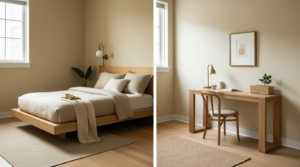
When a small bedroom also functions as an office, reading nook, or dressing area, undefined space quickly becomes chaotic. A small area rug under the desk, a floor lamp positioned to mark the reading corner, or a curtain panel to visually separate the sleeping area creates zones without walls.
Clear zones make multi-purpose rooms feel intentional rather than cramped — and they signal to your brain which activity belongs where, which actually improves sleep quality.
👉 See our complete guide to narrow living room layout ideas for more zone-defining strategies that apply equally well to small bedrooms.
Small Bedroom Size Guide: Furniture Recommendations by Room Size
📊 Recommended Furniture Sizes for Small Bedrooms
| Room Size | Max Bed Size | Nightstand Width | Dresser? | Desk? |
|---|---|---|---|---|
| Under 100 sq ft | Twin or Full | Wall-mounted only | No — use storage bed | Fold-down only |
| 100–130 sq ft | Full or Queen | 12–14 inches | Small 2-drawer | Narrow console |
| 130–170 sq ft | Queen | 14–18 inches | 3-drawer | Standard narrow |
| 170–200 sq ft | Queen or King | Up to 20 inches | Full dresser | Standard |
Conclusion
The best small bedroom ideas share one underlying principle: every piece of furniture, every color choice, and every storage solution should earn its place. A small bedroom becomes a problem only when it’s treated like a large one.
Start with the highest-impact changes — a storage bed or murphy bed if you’re under 150 sq ft, floating shelves to reclaim your walls, and a consistent light color palette. Then layer in the smaller details: wall-mounted lighting, curtains hung high, furniture with exposed legs.
Your small bedroom can be just as restful, functional, and beautiful as a large one. It just requires a little more intention. For a complete list of furniture pieces that work together in compact spaces, see our small apartment furniture checklist.
FAQs
What are the best small bedroom ideas for maximizing space?
The most impactful small bedroom ideas are: a platform bed with built-in storage drawers, floating shelves above the bed, wall-mounted nightstands, light wall colors, and floor-to-ceiling curtains. Together, these changes can make a room feel significantly larger without moving walls.
What is the best bed for a small bedroom?
A platform bed with built-in storage drawers is the best choice for most small bedrooms — it replaces the need for a separate dresser. For small bedrooms under 150 sq ft that double as living or work spaces, a murphy bed is the most space-efficient option.
How do I make a 10×10 small bedroom feel bigger?
Use light wall colors, install floating shelves instead of floor-standing furniture, choose a bed frame with exposed legs, hang curtains at ceiling height, and place a large mirror opposite the window. Keep the color palette to 3 tones maximum.
How much space do I need around a bed in a small bedroom?
Allow a minimum of 24 inches on each side you access regularly, and 18 inches on the other side. The path from the bedroom door to the bed should be at least 36 inches wide for comfortable movement.
Can a queen bed fit in a small bedroom?
A queen bed (60 × 80 inches) fits comfortably in small bedrooms of 130 sq ft or more, provided you maintain minimum clearances. In rooms under 120 sq ft, a full bed (54 × 75 inches) is a better choice for maintaining usable floor space.
Is a murphy bed worth it for a small bedroom?
Yes — if your small bedroom is under 150 sq ft or serves multiple functions. A murphy bed gives you back 100% of your floor space during the day. See our detailed guide to storage beds for small bedrooms to compare options.
As an Amazon Associate, I earn from qualifying purchases and referrals.