Murphy Bed vs Sofa Bed: Which Is Right for You?

Murphy bed vs sofa bed — which one actually makes sense for your small space? It’s one of the most common dilemmas for anyone furnishing a studio apartment, a guest room, or a home office that needs to double as a bedroom.
Both a murphy bed and a sofa bed save space and offer a real sleeping surface. But they work very differently, suit different lifestyles, and come at very different price points. This guide breaks down everything — comfort, cost, space requirements, and who each option is really for — so you can make the right call for your specific situation.
What Is a Murphy Bed?
A murphy bed (also called a wall bed or fold-down bed) is a full-size bed frame that folds vertically against the wall or into a cabinet when not in use. When you need to sleep, you pull it down — and you have a real bed with a real mattress.
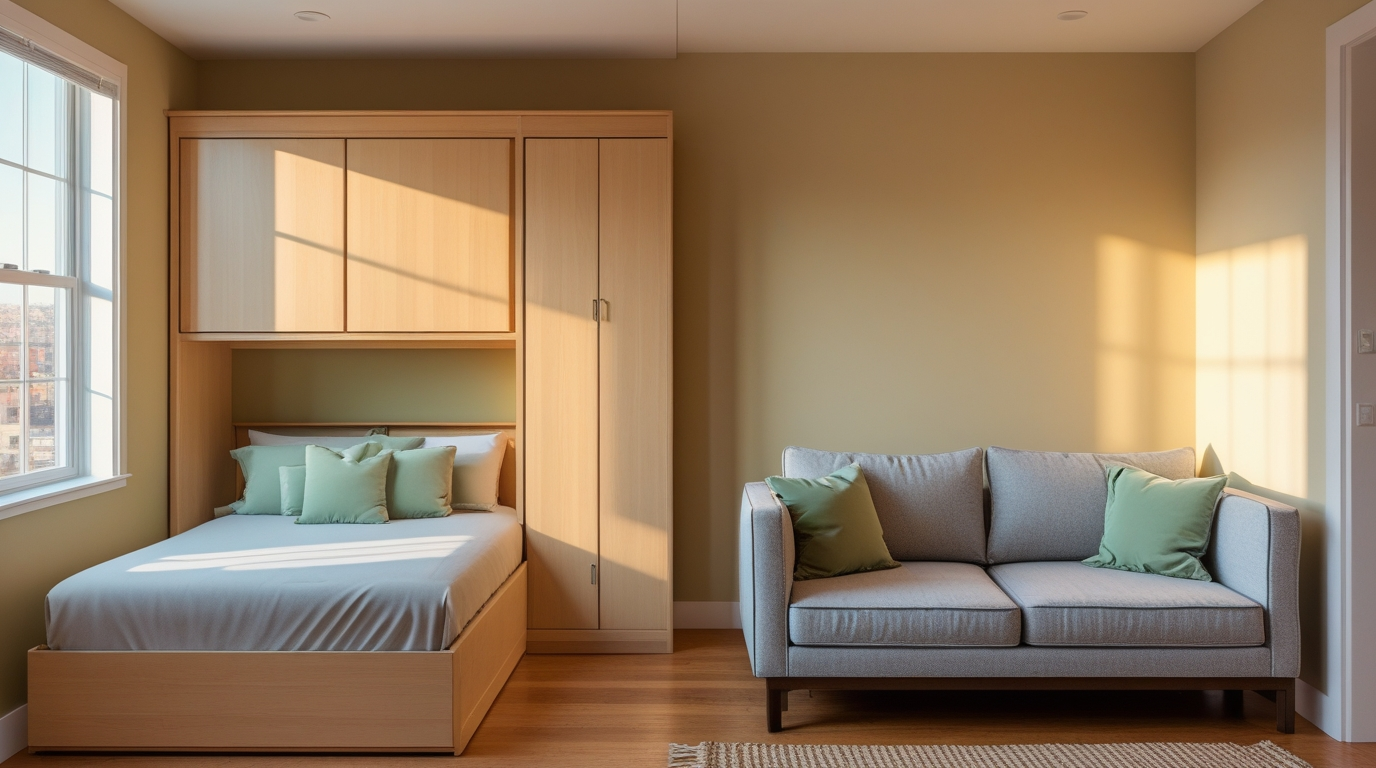
Modern murphy beds are designed to look like furniture when closed: a bookcase, a desk, or a clean wall panel. They come in twin, full, queen, and king sizes, and many models include integrated storage, shelving, or a fold-down desk.
Key specs to know:
- Closed depth: 16–21 inches from the wall
- Queen model height when closed: 87–89 inches
- Floor space needed when open: at least 10×10 feet for a queen
- Mattress thickness limit: 12 inches maximum
👉 For exact measurements before you buy, see our complete queen murphy bed dimensions guide.
What Is a Sofa Bed?
A sofa bed (also called a pull-out couch or sleeper sofa) is a sofa with a folding mattress hidden inside the frame. You remove the cushions, pull out the metal frame, and unfold the mattress — typically in under two minutes.
Sofa beds are available in twin, full, and queen sizes. The most common version for small spaces is the queen sleeper sofa, which works as a normal seating piece during the day and converts to a sleeping surface at night.
Key specs to know:
- Standard sofa depth: 34–40 inches
- Pull-out mattress thickness: 4–6 inches (innerspring) or 6–8 inches (memory foam)
- Floor space needed when open: 8–9 feet of depth from the sofa front
- Weight of the pull-out mechanism: adds 50–100 lbs to the frame
Murphy Bed vs Sofa Bed: Side-by-Side Comparison
📊 Quick Comparison
| Feature | Murphy Bed | Sofa Bed |
|---|---|---|
| Sleep quality | ★★★★★ Real mattress | ★★★ Thin mattress |
| Space saved | ★★★★★ 40+ sq ft reclaimed | ★★ Sofa stays in the room |
| Daily usability | ★★★★ Desk or shelving option | ★★★★★ Full seating always |
| Setup time | 30–60 seconds | 1–3 minutes |
| Cost (entry) | $500–$800 | $400–$700 |
| Cost (quality) | $1,200–$3,000 | $800–$2,000 |
| Installation | Wall mounting required | No installation needed |
| Best for | Studio apartments, home offices | Guest rooms, shared living |
Sleep Quality: Murphy Bed Wins
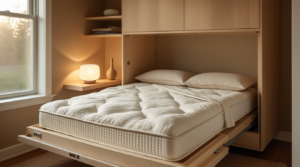
This is where murphy beds have a clear advantage. Because they use a standard mattress — up to 12 inches thick — you can choose a quality memory foam or latex mattress that gives the same comfort as a regular bed. Guests won’t feel like they’re sleeping on borrowed furniture.
Sofa bed mattresses, by contrast, are almost always a compromise. The fold-in-half design limits thickness, and the metal bar in the center of most innerspring pull-outs is notorious for disrupting sleep. Upgrading to a memory foam sofa bed mattress (4–6 inches) helps significantly, but it still won’t match a real mattress.
Expert Warning: If you plan to sleep on a sofa bed more than 2–3 nights per week, the comfort gap becomes a real issue over time. Murphy beds are the better long-term solution for anyone using the sleeping surface regularly.
According to the Sleep Foundation, mattress thickness and support are the two most critical factors for sleep quality on a fold-down bed — which is why murphy beds consistently outperform pull-out sofas for regular use.
Space Savings: Murphy Bed Wins
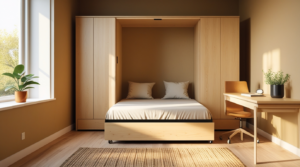
A queen murphy bed reclaims roughly 40 square feet of floor space every morning. In a 400 sq ft studio, that’s 10% of your entire apartment — enough space for a home office setup, a yoga mat, or simply room to breathe.
A sofa bed, by contrast, stays in your living space all the time. It doesn’t disappear when you don’t need it. That said, a sofa bed is still furniture you’re actively using as seating — so the space isn’t exactly “wasted” either.
👉 For ideas on how to lay out a studio once you free up floor space, explore our small apartment furniture checklist and layout ideas.
Daily Usability: Sofa Bed Wins

Here’s where the sofa bed has the clear edge. When the bed is tucked away inside the sofa, your room functions normally — you have seating, you can have guests over, and nothing about the room signals “someone sleeps here.”
With a murphy bed, your room is designed around a wall unit. Unless you opt for a murphy bed with a sofa attachment, you’ll need separate seating furniture. That means more pieces to buy and more space to plan around.
Cost Comparison
Sofa beds:
- Budget ($400–$700): IKEA Friheten, basic pull-out with innerspring mattress
- Mid-range ($800–$1,400): memory foam upgrade available
- Premium ($1,500–$2,500+): custom upholstery options
Murphy beds:
- Budget ($500–$900): DIY hardware kit + custom plywood cabinet
- Mid-range ($1,200–$1,800): integrated shelving included
- Premium ($2,000–$3,500+): European-design wall systems
👉 For a full breakdown of murphy bed styles and price tiers, see our complete murphy bed guide.
For current pricing and availability, you can browse murphy bed options on Amazon or check Wayfair for a wider selection of styles and sizes.
Installation: Sofa Bed Wins
A sofa bed requires zero installation. It arrives, you place it in the room, and it works. No tools, no wall anchors, no measuring ceiling heights.
A murphy bed requires wall mounting — it must be anchored into wall studs to support the weight of the mattress and frame safely. If you rent your apartment, this means getting permission from your landlord. If you’re not comfortable with DIY installation, budget for a professional.
Pro Tip 👉 If you’re renting and love the murphy bed concept but can’t drill into walls, look for freestanding murphy bed cabinet systems — they don’t require wall anchors and work on any floor surface.
Who Should Choose a Murphy Bed?
A murphy bed makes sense if:
- You live in a studio apartment and need to reclaim floor space daily
- You work from home and want a room that functions as both a bedroom and an office
- You’re setting up a dedicated guest room that also serves another purpose
- You’re willing to invest more upfront for a long-term space solution
- Sleep quality is a priority — for yourself or frequent guests
👉 Browse queen murphy beds on Amazon — filter by size and cabinet style to find the right fit for your room.
Who Should Choose a Sofa Bed?
A sofa bed makes sense if:
- You have occasional guests (a few nights a year) and don’t want a dedicated bed
- You rent and can’t mount anything to the walls
- Budget is a primary constraint
- You want functional seating as the primary use of the piece
- You’re furnishing a room that primarily serves as a living space
Browse queen sleeper sofas on Amazon — sort by customer rating to find the most comfortable options under $1,000.
The Murphy Bed + Sofa Combo: Best of Both Worlds
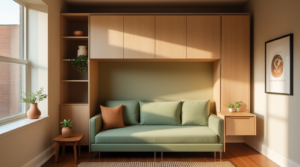
If you can’t choose between the murphy bed and the sofa bed, you don’t have to. Several manufacturers now offer murphy bed systems with an integrated sofa that folds out of the way when the bed comes down. When the bed is up, the sofa faces the room normally. When you pull the bed down, the sofa slides forward to stay in place.
This hybrid option runs $1,800–$3,500 depending on size and brand, but it genuinely solves the seating problem without buying two separate pieces of furniture.
Conclusion
The murphy bed vs sofa bed debate comes down to one question: how often will you use the sleeping surface? For daily use in a small apartment, the murphy bed wins on sleep quality and space savings. For occasional guests in a living space you don’t want to reconfigure, the sofa bed wins on convenience and cost.
The right choice depends on how often the sleeping surface will be used, whether you can install wall-mounted furniture, and how much floor space you’re willing to dedicate to a piece that only functions part of the time.
Still unsure about murphy bed dimensions for your room? Our queen murphy bed dimensions guide and king murphy bed guide have everything you need to measure before you commit.
FAQ
Is a murphy bed more comfortable than a sofa bed?
Yes, in most cases. Murphy beds use a standard mattress up to 12 inches thick, which gives you the same comfort as a regular bed. Sofa bed mattresses are typically 4–6 inches thick and limited by the fold-in-half mechanism.
Can a sofa bed be used every night?
It can, but it’s not ideal long-term. The thin mattress and metal bar in most pull-out designs cause discomfort over time. If you plan to sleep on it nightly, invest in a memory foam sofa bed mattress upgrade.
How much wall space does a queen murphy bed need?
A queen murphy bed needs approximately 65–68 inches of wall width and 88–89 inches of ceiling height. When open, it projects 85–90 inches from the wall — so your room needs at least 10×10 feet of floor space.
Do murphy beds require professional installation?
Most murphy beds need to be anchored to wall studs, which requires basic tools and DIY confidence. If you’re not comfortable with drilling into walls, hiring a handyman typically costs $150–$300 for the installation.
What is the cheapest murphy bed option?
A DIY murphy bed hardware kit ($150–$300) combined with custom-built plywood panels is the most affordable route. Total cost typically runs $400–$700 depending on materials.
Can you get a murphy bed if you rent?
Yes — look for freestanding murphy bed cabinet systems that don’t require wall anchoring. They cost slightly more than wall-mounted versions but work in any rental without landlord permission.
As an Amazon Associate, I earn from qualifying purchases and referrals.