Difference Between Sofa and Couch: 10 Powerful Insights

Introduction
Difference Between Sofa and Couch is a topic many people overlook, even though these two terms describe seating options with key distinctions that influence comfort, style, and room layout. While they’re often used interchangeably, understanding the true differences helps you choose the right piece based on your lifestyle, available space, and budget.
This guide breaks down 10 powerful insights to help you clearly understand the difference between a sofa and a couch and make a confident, well-informed decision for your home.
Looking for inspiration? Check our guide: Complete Guide to Sofa Styles & Types
Want small-space ideas? Try Small Curved Sofas for Maximizing Space
Need a modern aesthetic? Explore Grey Sectional Sofa Ideas
Structural Differences (Core of the Difference Between Sofa and Couch)
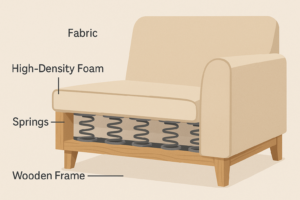
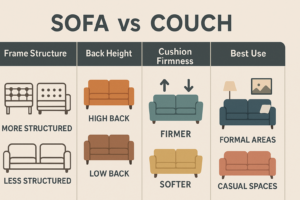
Frame and Overall Design
A major part of the difference between sofa and couch lies in how each piece is built.
A sofa typically includes:
a structured, formal frame,
straight, clean lines,
a higher backrest,
armrests designed for upright seating.
A couch emphasizes casual comfort, with:
a lower profile,
softer, more flexible construction,
plush proportions for lounging,
relaxed, informal shapes.
Cushion Firmness and Support
Another important difference between sofa and couch is cushion density:
Sofas use firmer foam (1.8–2.2 lb/ft³), ideal for posture and long-term shape.
Couches use softer foam (1.5–1.8 lb/ft³), creating a deeper sink-in comfort.
🔗 Learn more about choosing the right living room furniture layout
Materials & Comfort
Material Quality
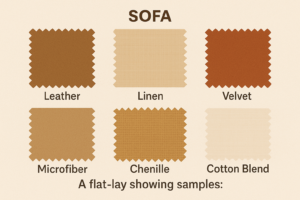
The difference between sofa and couch materials reflects their intended use.
Sofas often feature durable, structured materials such as:
leather,
linen,
velvet,
high-density foam.
Couches generally use softer, cozy fabrics like:
microfiber,
chenille,
cotton blends,
memory foam or down-filled cushions.
Comfort Experience
Sofas promote an upright, formal seating posture.
Couches offer a more relaxed, lounge-friendly experience—another clear difference between sofa and couch.
Dimensions & Size Guide
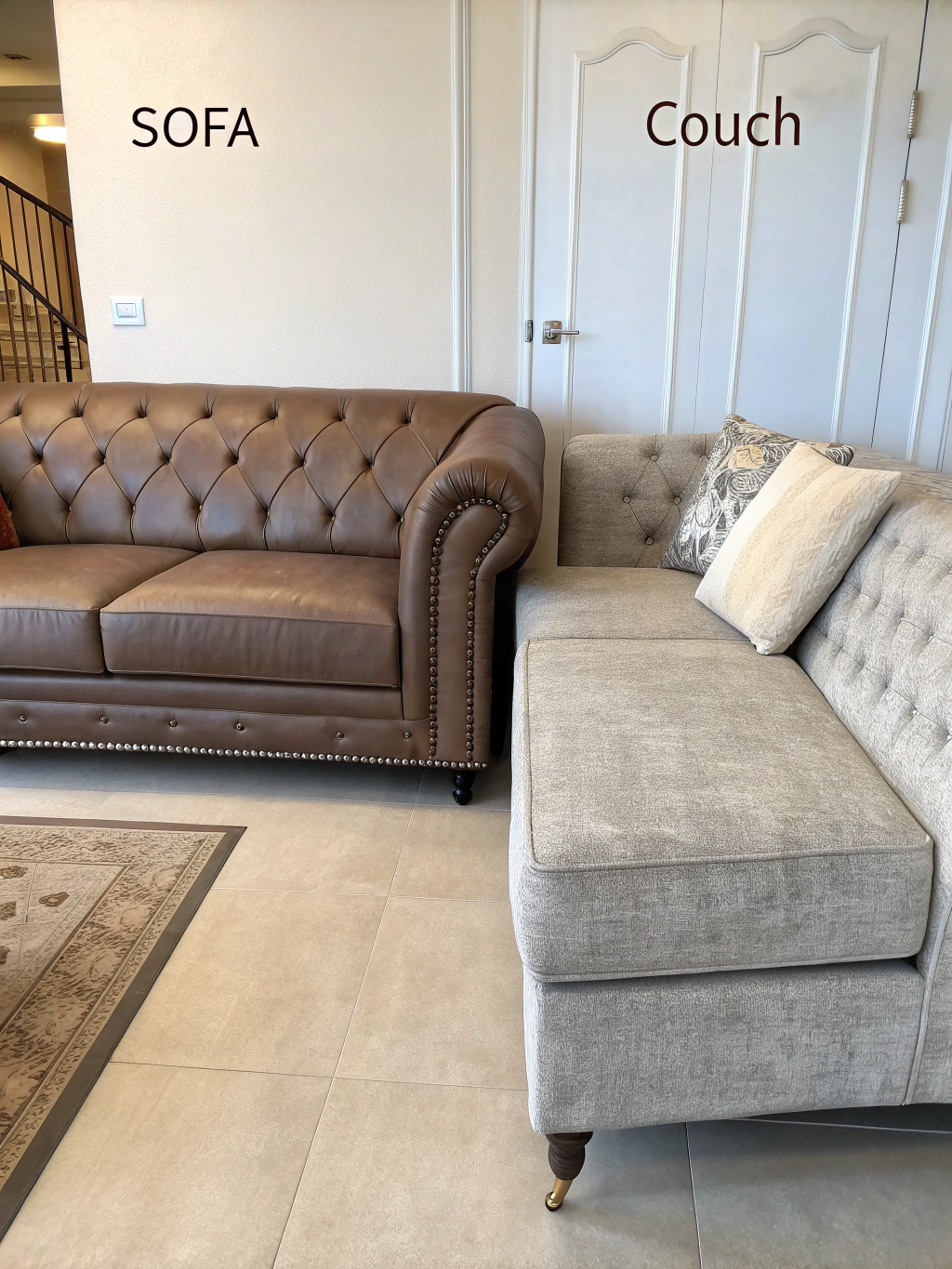
Dimensions also help distinguish the two.
Typical Sofa Dimensions
Height: 32–36 in
Depth: 32–40 in
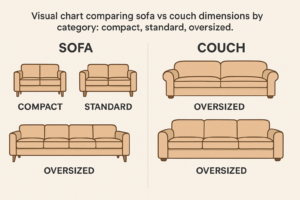
Width: varies depending on design (compact, standard, oversized)
Typical Couch Dimensions
Height: 28–32 in
Depth: 36–44 in
Width: more flexible, depending on comfort-oriented design
📊 Universal Size Comparison Table
| Size Type | Width | Depth | Height | Best For |
|---|---|---|---|---|
| Compact Sofa | 72-78 inches | 32-36 inches | 34-36 inches | Studios, formal living rooms |
| Standard Sofa | 84-90 inches | 36-40 inches | 32-36 inches | Apartments, traditional spaces |
| Oversized Sofa | 96+ inches | 40+ inches | 32-38 inches | Large rooms, open floor plans |
| Compact Couch | 70-76 inches | 36-42 inches | 28-32 inches | Casual spaces, family rooms |
| Standard Couch | 82-88 inches | 38-44 inches | 30-34 inches | Living rooms, entertainment areas |
| Oversized Couch | 94+ inches | 42+ inches | 30-36 inches | Large families, casual entertaining |
Placement considerations include maintaining 14-18 inches of walkway space around your seating and positioning pieces at least 8-10 feet from television screens for optimal viewing comfort.
🔗 Discover small space furniture solutions
Installation & Assembly Process
Preparation
Before assembling, clear the space completely:
measure doorways and stairwells,
remove old furniture,
ensure enough room for movement.
Tools Required
You’ll typically need:
a Phillips screwdriver,
an Allen key set,
a socket wrench.
Check that all hardware is included before starting.
Assembly Steps
Begin with the main frame.
Attach the legs or base.
Install armrests and the back.
Position the cushions.
Sofas usually require more precise alignment than couches. Cushions may take 24–48 hours to fully expand.
🔗 Get professional furniture assembly tips
Pros & Cons
Sofa Advantages
Long lifespan (10–15 years)
Maintains its shape over time
Suitable for formal or professional settings
Higher resale value
Supports proper posture
Sofa Limitations
Higher cost ($800–$2,500)
Less suited for lounging or napping
Harder to move due to rigidity
Limited seating flexibility
Couch Advantages
Excellent comfort for relaxation
More affordable options ($400–$1,200)
Multiple lounging positions
Ideal for families with kids or pets
Easier to replace
Couch Limitations
Shorter lifespan (5–8 years)
Cushions lose shape more quickly
Less formal look
Lower resale value
Best Placement & Styling Ideas
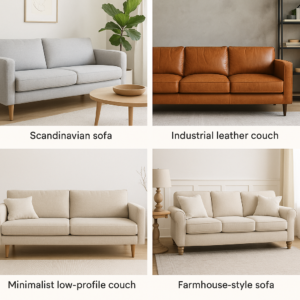
Scandinavian Style
Light-colored sofas with clean lines fit perfectly into Nordic interiors.
Industrial Style
Leather couches complement exposed brick, metal fixtures, and reclaimed wood.
Minimalist Spaces
Low-profile pieces in neutral tones help maintain open, uncluttered sight lines.
Farmhouse Decor
Structured sofas suit more formal rooms, while cozy couches work better in family spaces.
🔗 Explore modern living room design ideas
Alternatives & Comparable Options
Budget-Friendly Alternative: Sectional loveseats offer similar seating capacity at 30-40% lower costs than traditional sofas or large couches. They provide flexibility for rearrangement while maintaining comfort and style.
Premium Upgrade: Modular seating systems combine the best of both worlds, offering sofa-like construction quality with couch-level comfort customization. These systems allow configuration changes as needs evolve, justifying higher initial investments through long-term versatility.
Space-Saving Variant: Convertible sofa beds serve dual purposes, functioning as seating during the day and guest beds at night. Modern mechanisms have improved significantly, providing comfortable sleeping surfaces without compromising daytime aesthetics.
Common Mistakes to Avoid
The most frequent error involves choosing based solely on appearance without considering lifestyle needs. Formal sofa buyers often regret their purchase when family comfort becomes a priority, while couch purchasers sometimes feel embarrassed when entertaining professional contacts.
Sizing mistakes rank second, with 43% of buyers underestimating space requirements. Always measure twice and account for delivery pathway limitations. Many beautiful pieces remain stuck in doorways due to inadequate planning.
Material mismatches create ongoing frustration. Households with pets and children need durable, easy-to-clean fabrics rather than delicate materials requiring professional maintenance.
Ignoring room proportions results in overwhelming or underwhelming furniture presence. Follow the one-third rule: your main seating piece should occupy roughly one-third of your room’s visual weight.
Maintenance & Care Tips
Proper maintenance extends furniture lifespan significantly regardless of type. Weekly vacuuming removes accumulated dust and debris that can wear fabric fibers prematurely. Use upholstery attachments to clean crevices where crumbs and pet hair accumulate.
Rotate and flip cushions monthly to ensure even wear patterns. This simple step can double cushion lifespan by preventing permanent impressions in frequently used spots.
For leather pieces, apply conditioner every 6-12 months to prevent cracking and maintain suppleness. Test products on hidden areas first to avoid discoloration.
Address spills immediately with appropriate cleaning methods. Blot rather than rub to prevent stain spreading, and always work from outside edges toward the center.
Professional cleaning every 12-18 months refreshes appearance and removes deep-seated allergens and odors that regular maintenance cannot address.
Storage, Folding & Space-Saving Tips
While traditional sofas and couches don’t fold, several strategies maximize space efficiency. Choose pieces with legs rather than solid bases to create visual lightness and easier floor cleaning access.
Ottoman storage provides dual functionality, serving as both seating extension and hidden storage for blankets, pillows, or seasonal items.
Modular designs allow reconfiguration based on changing needs. Separate pieces can spread throughout your home during parties then reunite for intimate gatherings.
When moving, disassemble pieces completely to navigate tight spaces. Keep all hardware in labeled bags to simplify reassembly at your destination.
Conclusion
Understanding the difference between sofa and couch empowers you to make furniture choices aligned with your lifestyle, space constraints, and design preferences. While sofas excel in formal settings with superior structural integrity, couches prioritize comfort and casual living. Consider your primary use patterns, room dimensions, and long-term needs when making this important investment.
The key lies in matching furniture characteristics to your specific requirements rather than following trends or assumptions. Whether you choose a sophisticated sofa or a comfortable couch, prioritize quality construction, appropriate sizing, and materials that suit your household’s demands.
Ready to find your perfect seating solution? Explore our curated collection of sofas and couches designed for every lifestyle and space.
FAQs
Q: Which is more formal, a sofa or couch?
A: Sofas are traditionally more formal due to their structured design, upright seating position, and premium materials. They’re better suited for formal living rooms and professional entertaining.
Q: Do sofas last longer than couches?
A: Generally yes. Sofas typically last 10-15 years with proper care due to their firmer construction and higher-quality materials, while couches average 5-8 years before replacement.
Q: Can I use sofa and couch interchangeably when shopping?
A: While many retailers use the terms interchangeably, specifying your preference helps salespeople understand whether you prioritize formal structure (sofa) or casual comfort (couch).
Q: Which is better for small spaces?
A: Couches often work better in small spaces due to their lower profiles and casual proportions, but compact sofas can work well if you prefer a more formal aesthetic.
Q: Are there price differences between sofas and couches?
A: Sofas typically cost more due to premium materials and construction methods, ranging $800-2,500, while couches offer more budget-friendly options starting around $400-1,200.