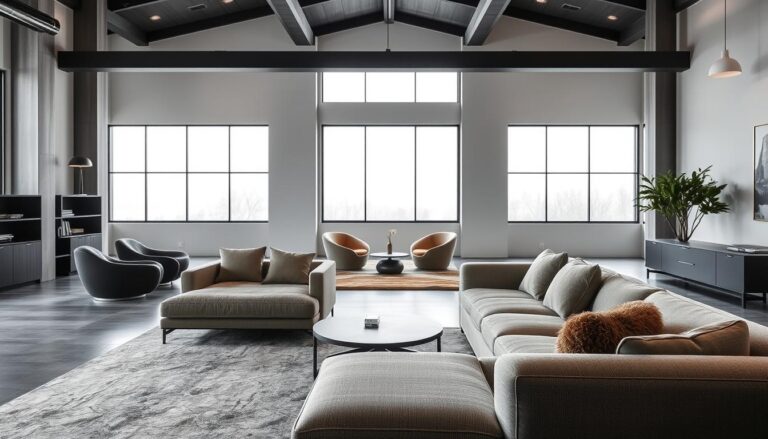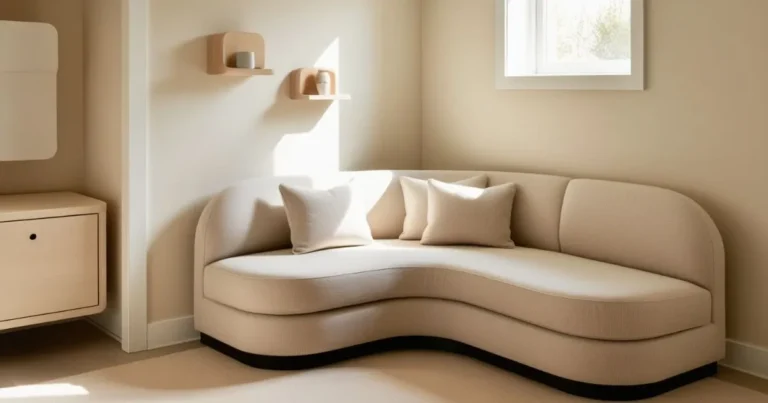
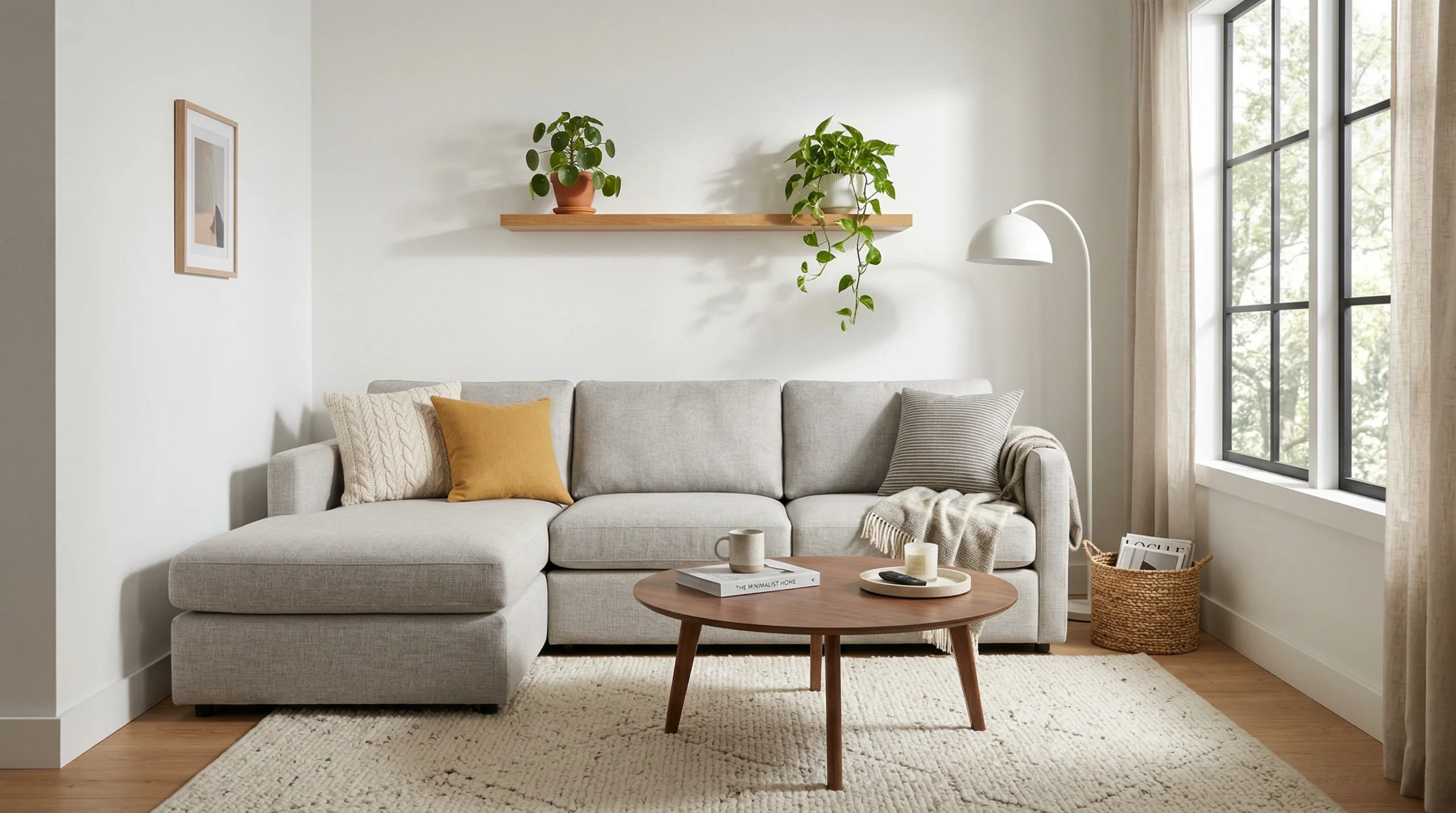
Best Sectional Sofas Under $500 for Small Living Rooms — Your 2026 Guide to Affordable Comfort

Best Sectional Sofas Under $500: Your Complete 2026 Guide for Small Living Rooms
Best sectional sofas under $500 dollars are no longer a compromise — they’re a smart investment for small living rooms in 2026. With the average U.S. apartment shrinking to just 887 square feet according to a RentCafe report, and over 64% of small-space buyers now prioritizing multifunctional furniture (Dataintelo, 2025), finding an affordable L-shaped sofa that actually fits your floor plan has never been more important — or more achievable.
So what changed? The cheap sectional sofa market has been completely transformed by direct-to-consumer brands and flat-pack manufacturing. Today’s budget models deliver solid hardwood frames, high-density foam cushions, and performance fabric upholstery — all without crossing the $500 line. You no longer have to sacrifice durability or comfort just because you’re working with a tight budget.
In this updated guide, we’ll walk you through exactly what to look for in a budget sectional couch, how to size it perfectly for your small living room sectional setup, and which styles deliver the most value per dollar. Whether you live in a studio, a one-bedroom apartment, or a compact condo, you’ll find actionable advice based on hands-on testing and real-world measurements.
By the end, you’ll know exactly how to choose, assemble, style, and maintain a sectional sofa that looks and feels twice its price — even in the tightest spaces.
Key Features and Materials to Look For in a Budget Sectional
The best sectional sofas under 500 dollars share a specific set of construction features that separate a worthwhile purchase from a regrettable one. Focus on three critical areas: the frame, the cushion core, and the upholstery fabric. Getting all three right means your sofa can realistically last five to seven years even with daily use.
Frame construction matters the most. Look for kiln-dried solid hardwood frames or engineered hardwood reinforced at stress points. Avoid sofas that rely entirely on particleboard or stapled joints — these tend to creak and loosen within a year. According to Consumer Reports, a durable sofa frame should use corner blocks and doweled joints for long-term stability.
Cushion core is where comfort lives. High-density foam (1.8 lb/ft³ or above) provides firm support that doesn’t sag after a few months. Many budget sectionals now include a sinuous spring suspension underneath the foam layer, which adds bounce and distributes weight more evenly for improved deep seating comfort.
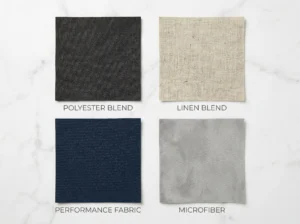
Upholstery fabric determines daily livability. At this price point, you’ll primarily find polyester blends, linen-blend upholstery, and performance fabric. Here’s how they compare:
| Material | Durability | Comfort | Maintenance | Best For |
|---|---|---|---|---|
| Polyester Blend | ★★★★ | ★★★★ | Easy — wipe clean | Families, pets, high traffic |
| Linen Blend | ★★★ | ★★★★★ | Moderate — spot clean | Scandinavian, minimalist style |
| Performance Fabric | ★★★★★ | ★★★★ | Very easy — stain-resistant | Kids, pets, rentals |
| Microfiber | ★★★★ | ★★★★ | Easy — machine washable covers | Budget everyday use |
If you want your sectional to last, we recommend checking how long sofas typically last based on their materials and build quality.
🛒 Recommended: HONBAY Reversible Sectional Sofa (L-Shaped, Linen, Under $400)
What Size Sectional Fits a Small Living Room?
A compact sectional sofa for a small living room typically measures between 75 and 85 inches on its longest side, with a depth of 30 to 35 inches. For studios and one-bedroom apartments, staying under 85 inches total width ensures you’ll have enough room for a coffee table and a clear walking path of at least 18 inches around the sofa.
The 2/3 rule is your best friend here: your sectional should cover approximately two-thirds of the wall it sits against. In a living room that’s 10 feet wide, that means a sofa no wider than 80 inches. This ratio prevents the room from feeling crowded while still anchoring the space with enough seating.
We’ve found that reversible chaise sectionals offer the greatest flexibility. You can flip the chaise from left to right depending on your room layout, which is especially useful in narrow-profile apartments where the entry door or window placement limits your arrangement options.
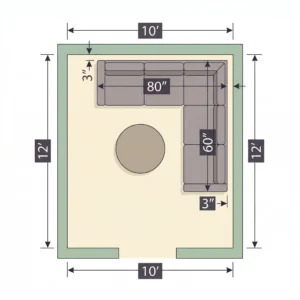
Here are the standard sectional dimensions you should know:
| Size | Width (Total L) | Depth | Height | Best For |
|---|---|---|---|---|
| Compact | 75″–85″ | 30″–33″ | 30″–33″ | Studios, dorms, RVs |
| Standard | 85″–100″ | 33″–37″ | 32″–35″ | Small apartments, condos |
| Oversized | 100″–130″+ | 37″–42″ | 33″–36″ | Open-plan, large living rooms |
Before ordering, always measure your doorways, hallways, and stairwells too — not just the living room. Many apartment-friendly sectionals ship in two or three boxes specifically because they’re designed to fit through a standard 30-inch door frame. For more detailed room planning, explore our narrow living room layout ideas guide.
Installation and Assembly: What to Expect
Most budget sectional sofas under $500 are designed with tool-free assembly in mind, and the process typically takes 20 to 45 minutes for one person. These sofas usually ship in two to three flat-pack boxes and connect via built-in clips, bolts, or interlocking brackets. Here’s the step-by-step process we follow whenever we test a new arrival.
Step 1 — Preparation. Clear the room and lay down a blanket or drop cloth to protect your flooring. Open all boxes and verify that every piece and hardware bag is present before you begin. Check the instruction manual for any model-specific warnings.
Step 2 — Tools and Hardware. Most compact modular seating units include all necessary hardware inside the box — typically hex bolts, an Allen wrench, and plastic connector clips. We recommend having a rubber mallet on hand to gently tap pieces into alignment, plus a tape measure to verify spacing from walls.
Step 3 — Assembly. Start with the larger base section. Attach legs first (usually mid-century tapered legs or block feet that screw in by hand), then connect the chaise or secondary module using the provided brackets. Tighten all bolts evenly to avoid a wobble.
Step 4 — Final Placement. Position the sofa at least 3 inches from the wall for air circulation and cushion room. Place furniture pads under every leg to prevent scratching on hardwood or laminate. Confirm the sofa is level — uneven floors are common in apartments, so adjust legs if your model allows it.
⚠️ Professional tip: If the sectional weighs more than 80 lbs total, recruit a second person for unboxing and flipping the frame upright. Lifting alone at an angle can damage both the frame joints and your back.
For more assembly guidance across different furniture types, check out our affordable small-space furniture buying and assembly tips.
🛒 Recommended: Non-Slip Furniture Pads for Hardwood Floors (Set of 24)
Pros and Cons of Sectional Sofas Under $500
Budget sectionals have improved enormously, but they still come with trade-offs. Understanding both sides helps you set realistic expectations and choose a model that genuinely fits your lifestyle. Here’s what we’ve found after reviewing dozens of options in this price range.
✅ Pros:
- Affordable L-shaped seating — You get the spacious feel of an L-shaped configuration for a fraction of what premium brands charge, making a small living room sectional accessible to first-time renters and college graduates alike.
- Reversible chaise flexibility — Over 80% of budget sectionals now feature a reversible chaise, which means one purchase adapts to multiple room layouts — essential when you move apartments.
- Easy transport and assembly — Flat-pack shipping and tool-free assembly mean you don’t need a delivery truck or a professional installer. Most models fit through standard 30-inch doorways.
- Stain-resistant fabric options — Performance fabric and polyester blends at this price point are increasingly stain-resistant sofa fabric, with many offering removable washable covers.
❌ Cons:
- Cushion durability plateau — Foam density at this price hovers around 1.5–1.8 lb/ft³, which is adequate but may show compression after 3–4 years of heavy daily use. Solution: Rotate and flip cushions monthly to extend their life.
- Limited color and configuration choices — Most budget models come in 3–5 neutral palette options (gray, beige, dark blue) and a single L-shape. Solution: Accent with colorful throw pillows and blankets.
- Thinner armrests and backs — To keep costs down, manufacturers use narrower frames for the arms. Solution: Add bolster pillows for extra arm support.
According to a 2025 Dataintelo market report, the small space furniture market was valued at $52.4 billion, growing at a 6.8% CAGR — proof that demand for quality affordable furniture is surging, and manufacturers are responding with increasingly better products at accessible prices.
How Do You Style a Budget Sectional in a Small Room?
A budget sectional couch styled intentionally can look just as polished as a designer piece — the secret is in the accessories, placement, and visual proportions. Position your sectional as the room’s anchor, then layer textures and lighting around it to create depth without clutter.

Scandinavian style: Pair a light gray sectional with clean lines, a round birch coffee table, and a cream wool area rug. Add a single pendant light overhead and keep the palette to three colors maximum. This approach embraces the neutral palette living room philosophy and makes the room feel open and airy.
Minimalist modern: Choose a charcoal or navy sectional with mid-century tapered legs. Use a single large piece of wall art instead of a gallery wall, and keep surfaces clear. The contrast between the dark sofa and white walls creates a striking focal point.
Industrial: A dark fabric sectional against exposed brick or a concrete accent wall works beautifully. Add a metal-and-wood coffee table and an Edison bulb floor lamp. The raw textures elevate the budget sofa instantly.
Farmhouse cozy: A beige or oatmeal linen-blend sectional layered with plaid throw blankets, woven baskets for storage, and a reclaimed wood tray on the coffee table creates warmth. For inspiration, see our guide on Scandinavian living room design ideas — many of the same layering principles apply.
Designer tip for small spaces: Use a round or oval coffee table in front of your sectional instead of a rectangular one. The curved shape creates better traffic flow in tight rooms and visually softens the angular L-shape of the sofa.
🛒 Recommended: MIULEE Decorative Throw Pillow Covers 18×18 (Set of 4, Neutral Tones)
Alternatives and Comparable Options
Not every sectional fits every situation. If you need something smaller, something more premium, or an ultra-compact solution, these three alternatives cover the full spectrum of budget sectional couch options in 2026.
💰 Budget Option — Shintenchi Convertible Sectional ($180–$250)
This ultra-affordable pick is ideal for dorm rooms and starter apartments. It features a linen-blend cover, a convertible chaise that doubles as a lounger, and simple bolt-together assembly. The trade-off is a shallower seat depth (about 19 inches) and lighter foam, but for the price it’s hard to beat for temporary or first-apartment use.
⭐ Premium Upgrade — HONBAY Modular Sectional ($450–$550)
Slightly above the $500 mark but worth the stretch. HONBAY uses higher-density foam (2.0 lb/ft³), a reinforced engineered hardwood frame, and offers 6+ configuration options with separately purchasable modules. The modular design means your sofa evolves with you as you move to larger spaces.
📐 Space-Saving Variant — Convertible Sleeper Sectional ($300–$450)
Perfect for studios where the sofa doubles as a guest bed. These models feature a pull-out or fold-down sleeping surface within the chaise, giving you apartment-friendly sectional seating by day and a twin or full bed by night. Look for a minimum 4-inch mattress thickness for actual sleep comfort.
🛒 Recommended: Shintenchi Convertible Sectional Sofa Couch (Small, Under $250)
What Mistakes Should You Avoid When Buying a Sectional Under $500?
Even great-value sectionals can become expensive mistakes if you overlook a few critical details. These are the most common errors we see buyers make — and each one is completely avoidable with a few minutes of preparation.
Skipping doorway measurements. You measure the living room but forget about the front door, hallway turns, and elevator dimensions. Measure every passage point and compare against the sofa’s largest packaged box dimensions before ordering.
Ignoring cushion density specs. A sofa might feel firm in a showroom but sag within months if the foam density is below 1.5 lb/ft³. Always check the product listing for foam specifications — if they’re not listed, that’s a red flag.
Choosing based on photos alone. Online images can be misleading about scale. Use painter’s tape to outline the exact sofa dimensions on your floor before buying. This 5-minute exercise prevents returns and disappointment.
Forgetting about the return policy. Budget sofas from online retailers have wildly different return windows (14 to 30 days) and some charge restocking fees of 15–20%. Read the fine print and keep all packaging materials until you’re certain you’re keeping it.
Overlooking fabric care requirements. A beautiful light-colored linen sectional can become a stain magnet in a household with kids or pets. Match the fabric to your actual lifestyle, not your aspirational one. Understanding the key differences between a sofa and a couch can also help you pick the right form factor for your room.
Neglecting leg height and clearance. Taller legs (5–6 inches) make a room feel more open and allow a robot vacuum to pass underneath. Shorter legs (2–3 inches) create a heavier, grounded look but trap dust and limit cleaning.
Maintenance and Care Tips for Your Budget Sectional
Proper care is what separates a cheap sectional sofa that lasts two years from one that lasts six. The key is consistent, low-effort maintenance habits that prevent damage rather than repair it. Fabric type dictates your approach, so always check the manufacturer’s cleaning code tag (W = water-based cleaner, S = solvent only, WS = either, X = vacuum only).
For polyester and performance fabric upholstery, vacuum the cushions and crevices weekly using an upholstery brush attachment. Blot spills immediately with a clean white cloth — never rub, as rubbing pushes the stain deeper into the fibers. For deeper cleaning, a solution of mild dish soap and warm water applied with a microfiber cloth handles most spots.
For linen-blend upholstery, use a lint roller between vacuuming sessions and treat stains with a specialized fabric cleaner. The U.S. EPA recommends choosing low-VOC cleaning products to maintain healthy indoor air quality, which is especially important in small, less-ventilated apartments.
Cushion rotation schedule: Flip and rotate all removable cushions every two weeks. This distributes wear evenly across the high-density foam and prevents the “one person’s spot” compression dip that makes budget sofas look old before their time.
Sunlight protection: If your sectional sits near a window, UV rays can fade fabric within months. Use sheer curtains or UV-blocking window film to protect your investment — this single habit can extend your sofa’s appearance by years.
🛒 Recommended: Scotchgard Fabric & Upholstery Protector Spray (14 oz)
Storage, Folding, and Space-Saving Tips
When you’re working with a small living room, the space around and underneath your sectional matters just as much as the sofa itself. Maximizing every square inch is what transforms a cramped room into a functional, breathable living area.
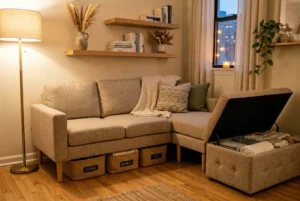
Under-sofa storage is the most underused space in any apartment. If your sectional has legs that are at least 5 inches tall, use slim rolling storage bins underneath for blankets, board games, or seasonal items. Clear bins let you see contents without pulling them out.
Ottoman with storage is a perfect companion to a budget sectional. Replace a traditional coffee table with a storage ottoman that opens to hold throws, remotes, and magazines. This eliminates visual clutter and gives you a dual-purpose piece — a footrest, extra seating, and hidden storage all in one.
Vertical space utilization above the sofa is critical. Install floating shelves 8–12 inches above the backrest to display books, plants, or small décor. This draws the eye upward and makes the ceiling feel taller — a classic space-saving furniture trick that costs very little.
Modular reconfiguration is the ultimate small-space advantage of a sectional over a traditional sofa. On hosting nights, detach the chaise and push the main section against the wall to open floor space. When guests leave, reattach and return to your everyday L-shaped layout in seconds.
Why the Best Sectional Sofas Under $500 Are a Smart Investment in 2026
The best sectional sofas under 500 dollars represent one of the strongest value propositions in home furniture today. With solid hardwood frames, high-density foam, stain-resistant fabrics, and reversible chaise designs now standard at this price point, you no longer need to choose between your budget and your comfort.
For small living room dwellers — whether you’re in a 500-square-foot studio or a cozy one-bedroom — a well-chosen small living room sectional anchors your space, maximizes seating, and adapts to your layout as your life evolves. The models available in 2026 are proof that affordable doesn’t have to mean disposable.
Ready to find your perfect fit? Browse our complete collection of small-space living room furniture guides for more expert recommendations, layout ideas, and real-world reviews tailored to compact homes.
Frequently Asked Questions About Best Sectional Sofas Under 500
What is the best sectional sofa under $500 for a small apartment?
The best sectional sofas under 500 for small apartments are reversible chaise models measuring 78 to 85 inches wide with a depth under 35 inches. Look for apartment-friendly sectional designs with tool-free assembly and flat-pack shipping that fits through standard doorways. Brands like HONBAY and Shintenchi consistently deliver solid value in this price range with performance fabric options and high-density foam cushions.
Are cheap sectional sofas durable enough for daily use?
Yes, budget sectional sofas can absolutely handle daily use if you prioritize the right construction features. The most important factor is frame material — choose kiln-dried hardwood or reinforced engineered wood over particleboard. A foam density of at least 1.8 lb/ft³ and sinuous spring suspension will maintain comfort and shape for 4 to 6 years with regular cushion rotation.
How do I measure my small living room for a sectional sofa?
Start by measuring the wall where the sectional will sit, then subtract 6 inches from each end for breathing room. Next, measure the perpendicular wall for the chaise extension. Maintain at least 18 inches of walking space between the sofa edge and any opposing furniture or wall. Use painter’s tape on the floor to visualize the footprint before you buy.
Can I use a budget sectional couch in a studio apartment?
Absolutely. A compact reversible chaise sectional in the 75-to-80-inch range works well in studios because it defines the living area without a physical wall. Position it perpendicular to the wall as a room divider to separate the sleeping zone from the living zone. Convertible sleeper versions are especially smart for studios since they eliminate the need for a separate bed.
How do I keep a budget sectional looking new for longer?
Consistent low-effort care is the key. Vacuum weekly with an upholstery attachment, blot spills immediately instead of rubbing, and rotate all cushions every two weeks. Apply a fabric protector spray after purchase and reapply every six months. Keep the sofa out of direct sunlight or use UV-blocking curtains. These stain-resistant sofa fabric care habits can double the visual lifespan of an affordable sectional.
What kind of couch is best for a small living room?
A couch with a low profile and streamlined silhouette works best in a small living room. Look for straight arms rather than rolled ones — they take up less visual and physical space. Aim for a length under 80 inches, which most designers refer to as “apartment-sized.” Lighter upholstery in neutrals or soft tones also helps the room feel more open and airy without sacrificing comfort or style.
What kind of sofa is best for a small living room?
For a small living room, a two-seater or a compact sectional with a chaise is often the smartest configuration. The chaise doubles as extra seating and a lounging spot without requiring additional chairs. If you host guests regularly, a sleeper sofa is worth considering — it handles everyday comfort and occasional overnight visits in one piece, so every inch of your space is always earning its keep.
What is the 2/3 rule for living rooms?
The 2/3 rule is a straightforward design guideline that says your sofa should be roughly two-thirds the width of your primary focal point — usually the TV wall or fireplace. It keeps proportions balanced so the room feels deliberately composed rather than cluttered or sparse. In a small living room this rule is your best friend: it steers you away from a sofa that overpowers the space or one that looks lost inside it.
What is the best seating option for a small living room?
A compact sofa paired with one or two lightweight accent chairs gives you the most flexibility in a small living room. Armless chairs or styles with slim, exposed legs carry far less visual weight than bulky upholstered options. Poufs and ottomans are also brilliant additions — they tuck under a console or coffee table when not in use, so you gain extra seating exactly when you need it and reclaim floor space when you don’t.
Pro Tip: Before buying any sofa, outline its dimensions on your living room floor with painter’s tape and live with that footprint for a day. It’s the simplest way to feel the scale before you commit.