Best Nightstands for Small Bedrooms: Top 10 Picks

As an Amazon Associate, I earn from qualifying purchases and referrals.
Finding the best nightstands for small bedrooms is one of those decisions that looks simple but makes a real difference every single day. The wrong piece crowds your bed, blocks your pathway, or gives you nowhere to put the essentials. The right one feels like it was made for your room — functional, proportional, and completely out of the way.
In this guide, I’ll walk you through the 10 best nightstands for small bedrooms across every style and budget, a room-by-room size guide, and everything you need to know before you buy so you don’t end up returning something that looked perfect online.
Table of Contents
- What to Look for in Nightstands for Small Bedrooms
- Size Guide: Best Nightstands for Small Bedrooms by Room Size
- Top 10 Best Nightstands for Small Bedrooms
- Pros & Cons of Different Nightstand Styles
- Best Placement & Styling Ideas
- Common Mistakes to Avoid
- Frequently Asked Questions
- Related Articles
What to Look for in Nightstands for Small Bedrooms
Before you scroll through options, take 2 minutes to think through these four factors. They’ll save you from buying a nightstand for a small bedroom that looks great in the product photo and feels wrong the moment it arrives.
Footprint vs. storage ratio. In a small bedroom, every square inch counts. The best nightstands for small bedrooms balance a compact footprint with real storage — drawers, shelves, or hidden compartments. A piece that’s 18″ wide with two drawers does more work than a 24″ open-shelf unit.
Height relative to your mattress. The surface of your nightstand should sit within 2–3 inches of your mattress height. Too low and you’ll strain every time you reach for your phone. Too high and it looks awkward and off-balance. According to Better Homes & Gardens’ nightstand guide, the ideal nightstand height aligns with the top of your mattress, give or take a couple of inches.
Wall clearance. In tight bedrooms, you often need to position the nightstand flush against the wall. The best small bedroom nightstands have a clean back profile — avoid designs with decorative backs that push the unit away from the wall.
Visual weight. A heavy, solid nightstand makes a small room feel more enclosed. Open designs, light-colored finishes, and hairpin or tapered legs create visual breathing room — the room looks less crowded even if the footprint is identical.
Size Guide: Best Nightstands for Small Bedrooms by Room Size
Not all small bedrooms are the same size. Use this table to find the right nightstand dimensions for your specific room — one of the most practical steps you can take before shopping for the best nightstands for small bedrooms.
| Room size | Recommended nightstand width | Max depth | Notes |
|---|---|---|---|
| Under 100 sq ft | 14–16 inches | 12 inches | Wall-mounted or floating nightstands ideal |
| 100–150 sq ft | 16–20 inches | 14 inches | One drawer minimum recommended |
| 150–200 sq ft | 18–22 inches | 16 inches | Standard nightstand sizes work well |
| 200+ sq ft | Up to 24 inches | 18 inches | Full range of options available |
👉 Pro Tip: Measure from the edge of your bed frame to the nearest wall — not from the mattress. Many bed frames extend 2–4 inches beyond the mattress, which reduces your actual clearance for a small bedroom nightstand. You need at least 2–3 inches between the nightstand and the wall for comfortable daily access.
Expert Warning: Avoid nightstands with top-heavy designs (wide top, narrow base) in small rooms — they create an optical illusion of instability and make the ceiling feel lower. The best nightstands for small bedrooms have balanced, proportional profiles.
Top 10 Best Nightstands for Small Bedrooms
Here are my top 10 picks across different styles, storage needs, and budgets — each selected specifically for how well it performs as a nightstand for a small bedroom.
1. Floating Wall-Mounted Nightstand
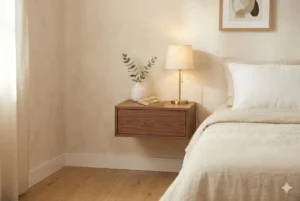
Best for: Rooms under 120 sq ft where floor space is critical
A floating nightstand is one of the smartest choices you can make for a small bedroom. It mounts directly to the wall, leaving the floor completely clear — which instantly makes the room feel more open. Most floating models offer one small drawer or open shelf, enough for a phone, a book, and a glass of water. If you’re looking for the best nightstands for small bedrooms with zero footprint, this is where to start.
Look for models with a weight capacity of at least 30 lbs and easy installation via a French cleat. Walnut and white oak finishes are the most popular for this style. (Available on Amazon)
2. Narrow 2-Drawer Nightstand (16″ Wide)
Best for: Rooms with limited side clearance but real storage needs
At 16 inches wide, this is one of the best nightstands for small bedrooms where you need drawers but can’t sacrifice floor space. Two drawers handle the essentials — charging cables, a book, a sleep mask — without spilling onto the surface. Choose a simple rectangular profile with tapered legs to keep visual weight low.
Look for solid wood or MDF constructions with soft-close drawers — a small detail that makes a big difference in daily quality of life. (Available on Amazon)
3. Open Shelf Nightstand with Lower Storage
Best for: Minimalist bedrooms and renters who move frequently
An open lower shelf gives you easy access to larger items — a water bottle, books, a small plant — while the surface stays clean. Open-shelf nightstands for small bedrooms are lighter visually than closed-drawer designs, which helps the room breathe. They’re also typically affordable and assemble in under 20 minutes.
The honest downside: open shelves require tidiness. If your nightstand items tend to accumulate, go with drawers instead. (Available on Amazon)
4. C-Shaped Nightstand (Slide-Under Design)
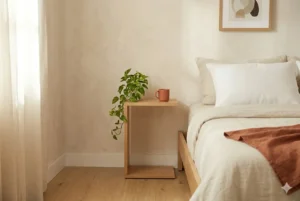
Best for: Platform beds with low frames or very tight side clearances
A C-shaped nightstand slides partially under the edge of the bed, saving 4–6 inches of floor space compared to a traditional design. It’s one of the most underused solutions among nightstands for small bedrooms — and it works particularly well with platform and storage bed frames. The top surface sits at standard height, so it functions exactly like a regular nightstand.
Pro Tip: C-shaped nightstands pair beautifully with the best storage beds for small bedrooms — combining under-bed storage with a space-saving nightstand gives you maximum storage without adding footprint.
5. Mirrored Nightstand
Best for: Small bedrooms that need to feel larger and brighter
Mirrored furniture reflects light back into the room, creating the illusion of more space. A mirrored nightstand for a small bedroom won’t give you extra square footage, but it will make your room feel less enclosed — especially in bedrooms with limited natural light. One drawer is standard in this style.
Avoid oversized mirrored pieces (over 22″ wide) in very small rooms — the effect becomes overwhelming rather than expansive. (Available on Amazon)
6. Nightstand with Charging Station
Best for: Minimalists who want to eliminate cable clutter
Some of the best nightstands for small bedrooms now include built-in USB ports and wireless charging pads on the surface. For compact rooms where cord management is a daily frustration, this feature alone justifies a slightly higher price. Fewer cables = a cleaner surface = a bedroom that feels more restful.
Look for models with USB-A and USB-C ports, and ideally a small internal drawer to hide the main power cable. (Available on Amazon)
7. Hairpin Leg Nightstand
Best for: Mid-century modern, Scandinavian, and warm minimalist bedrooms
Hairpin legs are one of the most effective design choices for a nightstand in a small bedroom: they expose the floor underneath, creating visual continuity that makes the room feel larger. A simple wooden drawer unit on hairpin legs achieves a light, airy feel that solid-base alternatives simply can’t replicate.
These work best in rooms with hardwood or light-toned flooring where floor visibility is actually an asset. (Available on Amazon)
8. Stacking Cube Nightstand
Best for: Flexible layouts and studio apartments where the bedroom doubles as another space
A stacking cube nightstand (2–3 open cubes stacked vertically) gives you adjustable, modular storage. The modular nature is a real advantage for small bedroom nightstand setups that change seasonally or when you move. You can add a door to one cube for hidden storage, or leave all open for display.(Available on Amazon)
👉 Pro Tip: Add a small woven basket inside one of the open cubes for soft storage (charging cables, hand cream, sleep essentials). It keeps the surface looking intentional rather than cluttered.
9. Tall Narrow Nightstand (Single Drawer, High Profile)
Best for: Beds with high frames or elevated mattresses (pillow-top, thick mattress toppers)
Standard nightstands for small bedrooms sit at 24–28 inches. If your mattress top sits at 30 inches or higher, a tall narrow profile (12–14″ wide, 28–32″ tall) solves the height problem without widening your footprint. This style tends to have a clean, architectural look that suits contemporary bedroom designs.
10. Over-Bed Shelf Nightstand
Best for: Rooms where no side clearance exists at all
When your bed is pushed against a wall on one or both sides, a traditional nightstand simply doesn’t fit. An over-bed shelf clamps or mounts to the headboard, creating a narrow surface directly above the mattress corner. It’s the most space-efficient nightstand solution for small bedrooms where every inch is already spoken for — and far better than using the floor. (Available on Amazon)
Pros & Cons of Different Nightstand Styles for Small Bedrooms
| Style | Pros | Cons |
|---|---|---|
| Wall-mounted / floating | Maximum floor clearance · clean look | Requires wall installation · less portable |
| 2-drawer standard | Best storage-to-size ratio | More visual weight than open designs |
| Open shelf | Light visually · affordable · easy access | Requires tidiness · no hidden storage |
| C-shaped | Saves the most floor space | Not compatible with all bed frames |
| Mirrored | Creates illusion of space | Fingerprints · high maintenance |
| With charging station | Eliminates cable clutter | Higher price point |
| Hairpin legs | Most visually open · stylish | Less stable than solid base |
Best Placement & Styling Ideas for Small Bedroom Nightstands
Scandinavian / Warm Minimalist
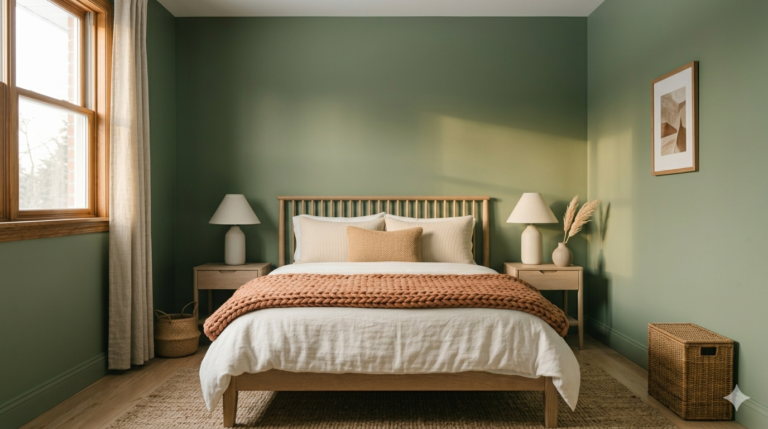
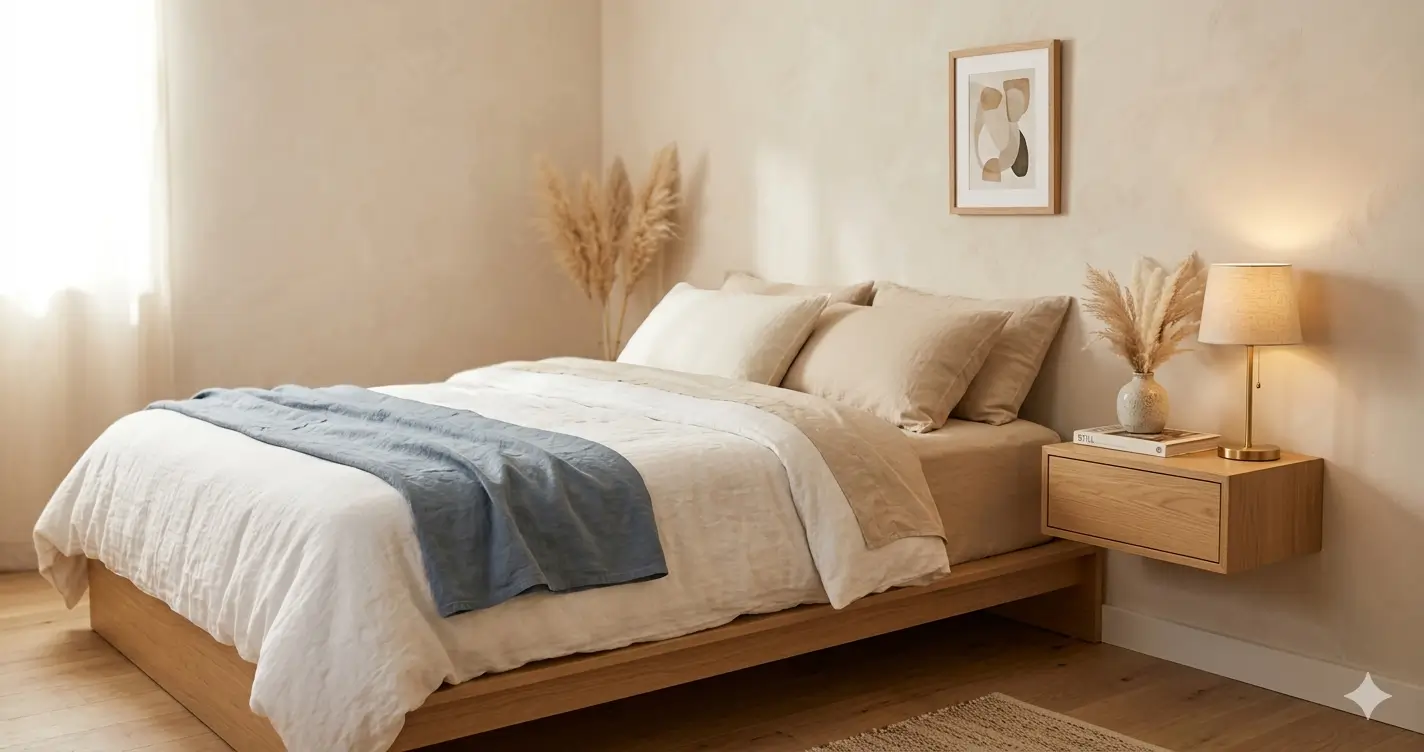
Choose a light oak or white ash floating shelf or hairpin-leg nightstand for a small bedroom. Keep the surface intentionally sparse: one lamp, one book, one small plant. The restraint is the style.
Modern / Contemporary
A mirrored or lacquered nightstand with a single thin-profile lamp creates a sleek, polished look. Match the nightstand finish to one other metallic element in the room (mirror frame, lamp base, door hardware).
Maximizing a Studio Bedroom
Use a C-shaped or floating nightstand for a small bedroom and prioritize storage over aesthetics. The goal is to eliminate items from the floor and surfaces so the space reads as one coherent room rather than a cluttered corner.
Rental-Friendly Setup
Open shelf or hairpin-leg nightstands require no wall installation and move easily. Pair with a lightweight cordless lamp for a setup that works in any small bedroom without a single hole in the wall.
Common Mistakes to Avoid When Choosing Nightstands for Small Bedrooms
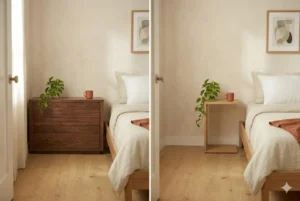
1. Buying a nightstand that’s too wide for the clearance.
Measure twice. The gap between your bed frame and the wall (or door) is often smaller than it looks. A small bedroom nightstand that’s 2 inches too wide either blocks a pathway or forces you to push the bed into an awkward position.
2. Ignoring height.
A nightstand that’s 6+ inches below your mattress surface is annoying to use every single day. Match height to your actual mattress top — not the standard height listed in product guides.
3. Choosing a dark, solid piece in a light-challenged room.
Dark nightstands with solid bases are harder to work with in small rooms. If your bedroom is already tight on natural light, a mirrored, open-shelf, or light-toned nightstand will do more for the room’s feel.
4. Not accounting for the lamp.
If you use a table lamp, make sure the nightstand surface is large enough for it — and still leaves room for the essentials. A surface under 12″ square makes lamp placement awkward. Consider a wall-mounted sconce instead to free the entire small bedroom nightstand surface.
5. Treating both sides identically.
In a small bedroom shared by two people, one side often has more clearance than the other. Use a floating or C-shaped design on the tight side, and a standard nightstand on the open side. Asymmetry that solves a real problem is good design.
Expert Warning: Never place a nightstand that blocks a bedroom door’s swing path, even partially. It’s a safety issue and a daily frustration. Always open your bedroom door fully before finalizing your small bedroom nightstand placement.
Frequently Asked Questions About Nightstands for Small Bedrooms
What are the best nightstands for small bedrooms?
The best nightstands for small bedrooms are floating wall-mounted models, narrow 2-drawer units (16″ wide), C-shaped slide-under designs, and hairpin-leg nightstands. These styles maximize floor clearance, reduce visual weight, and provide adequate storage for compact spaces.
What size nightstand works best in a small bedroom?
For most small bedrooms (under 150 sq ft), a nightstand between 16 and 20 inches wide and 24 to 28 inches tall works well. Depth should stay under 16 inches to preserve walkway clearance. If the room is very tight, a floating wall-mounted nightstand eliminates the footprint entirely.
How much space should be between the bed and nightstand in a small bedroom?
You don’t need space between the bed and nightstand — they can touch. What matters is the clearance on the outer side of the nightstand: aim for at least 18–24 inches of walkable space between the nightstand and the nearest wall or door.
Are floating nightstands practical for everyday use in a small bedroom?
Yes, if installed correctly. A floating nightstand mounted with a proper French cleat or wall bracket handles 30–50 lbs easily — enough for a lamp, phone, books, and a glass. Mount into wall studs for stability. Floating nightstands are among the best options for small bedrooms because they free up the entire floor beneath them.
What height should a nightstand be in a small bedroom?
The nightstand surface should be within 2–3 inches of your mattress height, either slightly below or level with it. Measure from the floor to the top of your mattress (including any topper) to find your target height before shopping for a small bedroom nightstand.
Can I use a small dresser as a nightstand in a tiny bedroom?
Yes — a narrow 2-drawer dresser (16–18″ wide) can double as a nightstand for a small bedroom and provide significantly more storage. This works particularly well in rooms where a full dresser doesn’t fit elsewhere. Check out the small apartment furniture checklist for more multi-purpose furniture ideas.
Is one nightstand enough for a small bedroom?
If space is genuinely tight, one nightstand is a perfectly valid choice for a small bedroom. Place it on the side of the bed used most frequently, or on the side with more clearance. A floating shelf above the other side of the bed provides a secondary surface without any footprint.
Related Articles
- Best storage beds for small bedrooms that maximize every inch
- Small apartment furniture checklist: everything you need, nothing you don’t
- Bedroom lighting ideas for small rooms and tight spaces
- Murphy bed dimensions guide for small bedrooms and studio apartments
As an Amazon Associate, I earn from qualifying purchases and referrals.