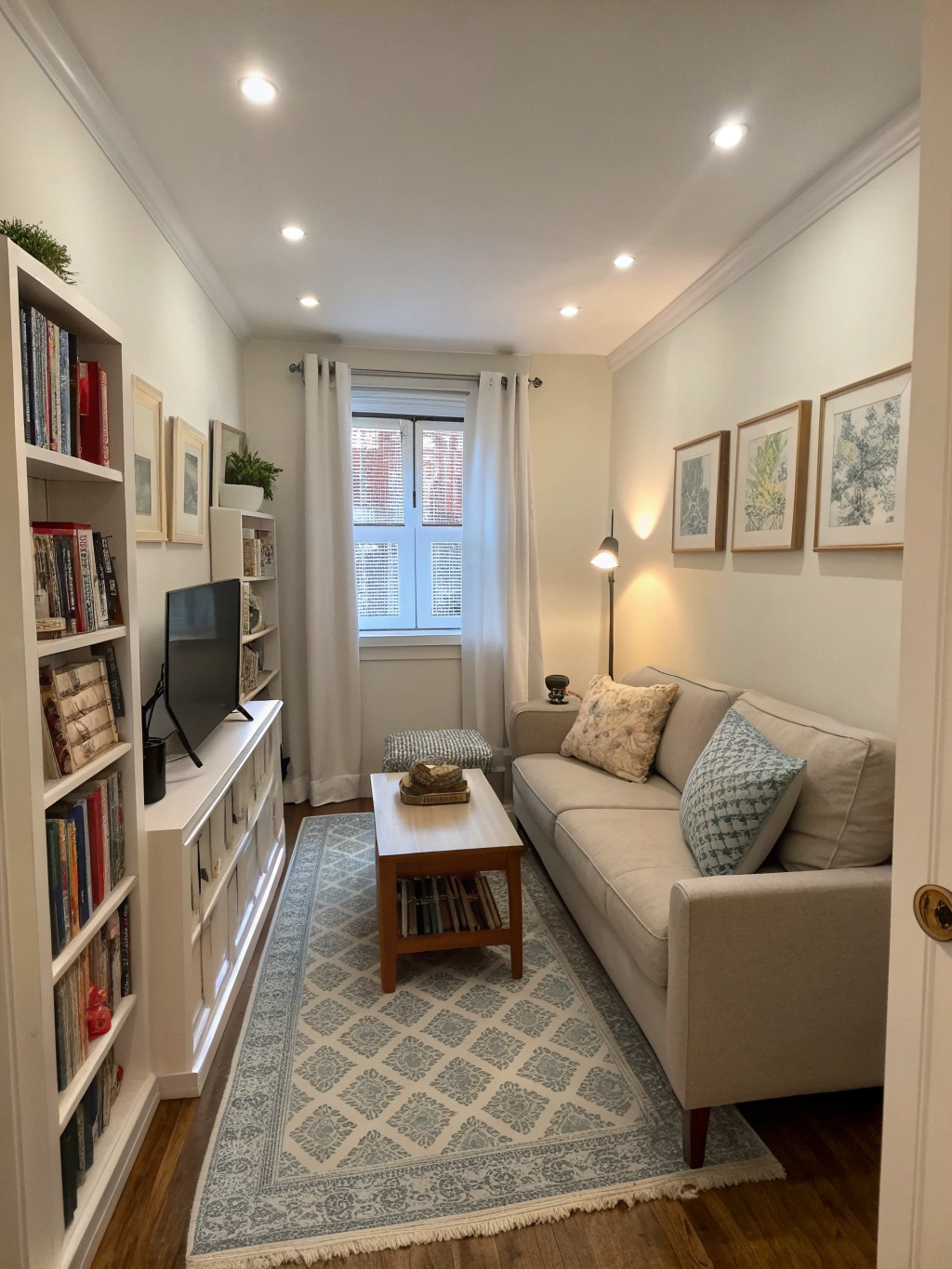
12 Narrow Living Room Layout Ideas That Actually Work

Introduction
Did you know that 73% of urban dwellers struggle with furniture placement in narrow living spaces? If you’re staring at a long, skinny room wondering how to make it both functional and stylish, you’re not alone. Narrow living room layout ideas have become essential knowledge for modern homeowners facing the challenge of maximizing limited square footage.These narrow living room layout ideas focus on smart furniture placement, efficient circulation, and visual balance to help homeowners make the most of long and tight spaces.
The rise of compact urban living has made narrow rooms increasingly common. Whether you’re dealing with a converted apartment, a vintage home with unusual proportions, or simply a challenging rectangular space, the right layout strategy can transform your cramped corridor into a cozy, functional living area. These 12 genius furniture arrangements will help you optimize every inch while maintaining style and comfort.By applying proven narrow living room layout ideas, even the most challenging floor plans can feel comfortable, stylish, and well organized.
Choosing the right pieces from affordable small-space furniture collections is often the first step toward successful narrow living room layout ideas.

Key Features & Materials Overview
Successful narrow living room designs share several key characteristics that maximize both visual space and functionality. The most effective layouts prioritize scale-appropriate furniture, strategic traffic flow, and multi-functional pieces that serve dual purposes without overwhelming the space.
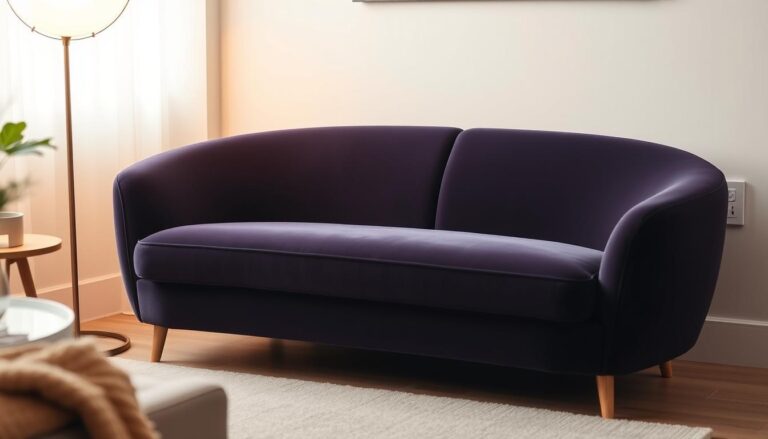
Materials play a crucial role in narrow room success. Light-colored woods like oak and maple reflect natural light, making spaces appear larger. Glass and acrylic furniture pieces maintain visual continuity, while metal frames add structural support without visual weight. Upholstery in neutral tones—beige, light gray, and cream—creates seamless color flow that expands perceived room dimensions.
Modern narrow room furniture typically features clean lines, raised legs for visual lightness, and modular components that adapt to changing needs. The most popular materials include:
- Solid wood: Oak, walnut, and pine for durability
- Metal frames: Steel and aluminum for sleek, minimal profiles
- Glass tops: Tempered glass for coffee tables and side pieces
- Upholstery fabrics: Linen, cotton blends, and performance textiles
Dimensions & Size Guide for Narrow Living Room Layout Ideas
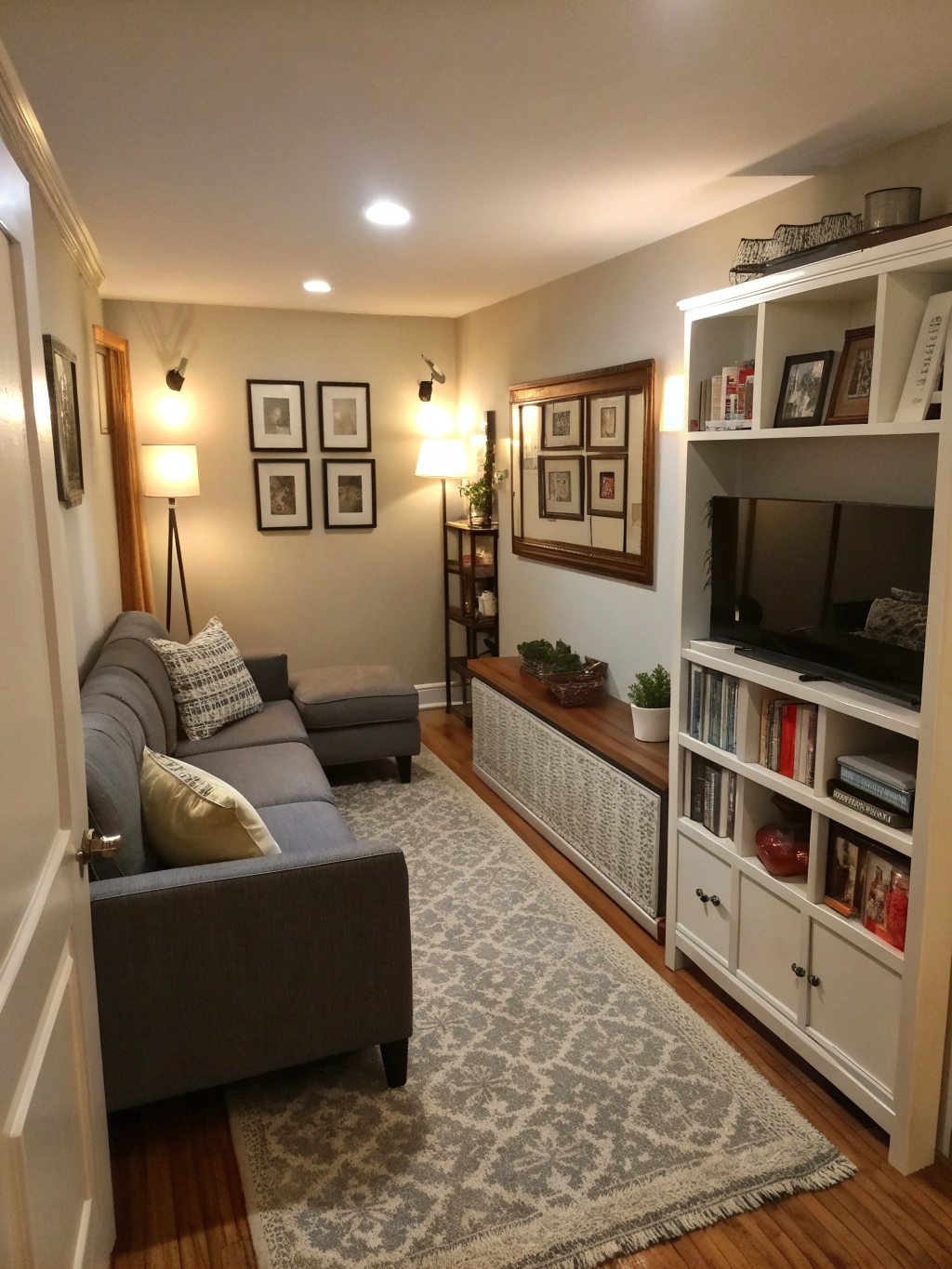
Understanding proper dimensions is critical when implementing narrow living room layout ideas. Most narrow living rooms measure between 8-12 feet wide and 16-24 feet long, creating unique spatial challenges that require precise furniture sizing and placement strategies.
The golden rule for narrow spaces is the “36-inch rule”—maintain at least 36 inches of walking space along the longest wall to ensure comfortable traffic flow. Furniture should be proportioned to leave breathing room: sofas shouldn’t exceed 75% of the room’s width, and coffee tables should maintain 18-24 inches clearance from seating.
Understanding furniture dimensions—especially compact and folding options—is essential, as explained in this folding table dimensions guide for space-conscious interiors.
For optimal flow, consider these spacing guidelines:
- Sofa to coffee table: 14-18 inches
- Side chairs to main seating: 24-30 inches
- TV viewing distance: 6-9 feet from seating
- Window clearance: 6-12 inches minimum
Choosing a narrow coffee table helps reinforce narrow living room layout ideas by preserving walking space while keeping essentials within reach.
📊 Narrow Living Room Size Guide
| Room Width | Recommended Sofa Size | Coffee Table Max | Side Storage | Best Layout |
|---|---|---|---|---|
| 8-9 feet | 60-72 inches | 36×18 inches | Wall-mounted shelves | Single-wall arrangement |
| 10-11 feet | 72-84 inches | 42×20 inches | Narrow console tables | L-shaped or parallel |
| 12+ feet | 84-96 inches | 48×24 inches | Freestanding units | Zone-based layouts |
Professional designers recommend measuring your space twice and creating a floor plan before purchasing furniture. This prevents costly sizing mistakes that plague narrow room arrangements.
Installation & Assembly Process
Step 1 — Space Preparation
Clear the entire room and clean all surfaces. Measure walls, windows, and doorways to confirm furniture clearances. Mark electrical outlets and plan cord management to avoid visual clutter that makes narrow spaces feel cramped.
Step 2 — Tools & Hardware Assessment
Gather essential tools: drill, level, stud finder, and measuring tape. Furniture arrangement narrow rooms, long small living room layout, narrow sofa ideas, small rectangular room layouts, skinny room design tips often require wall mounting for storage, so ensure you have appropriate anchors for your wall type.
Step 3 — Strategic Assembly Sequence
Start with the largest piece—typically the sofa—and work systematically toward smaller items. In narrow rooms, assemble furniture in place when possible to avoid maneuvering large pieces through tight spaces.
Step 4 — Final Placement & Adjustment
Fine-tune positioning for optimal traffic flow and visual balance. Test all walking paths and adjust as needed for comfortable movement throughout the space.
Expert Warning: Never attempt to force oversized furniture through narrow doorways. Measure twice, and consider modular pieces that assemble inside the room.
Pros & Cons
Advantages of Strategic Narrow Room Layouts:
- Maximized functionality: Well-planned layouts utilize every square foot effectively
- Cozy atmosphere: Intimate spaces feel warmer and more inviting than oversized rooms
- Lower furnishing costs: Smaller furniture quantities reduce overall room budget by 25-40%
- Easy maintenance: Compact spaces require less cleaning time and effort
- Enhanced focus: Limited space encourages intentional, curated décor choices
Limitations to Consider:
- Entertainment constraints: Large gatherings become challenging
- Storage limitations: Reduced space for belongings requires creative solutions
- Furniture restrictions: Limited options for oversized or statement pieces
- Traffic flow issues: Poor planning creates bottlenecks and cramped feeling
- Resale considerations: Some buyers prefer larger, more traditional layouts
Research indicates that 68% of narrow room owners successfully adapt within 3-6 months, developing appreciation for efficient, purposeful living spaces.
Best Placement & Styling Ideas
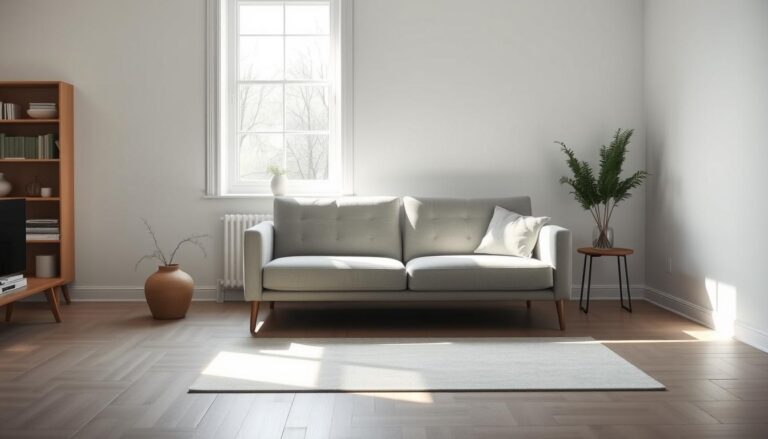
Successful narrow living room styling depends on creating distinct zones while maintaining visual flow. Scandinavian design principles work exceptionally well, emphasizing light colors, natural materials, and functional minimalism that prevents visual overwhelm.
Zone-Based Arrangements:
Create a primary seating zone at one end with the sofa against the longest wall. Position a secondary reading zone at the opposite end using a compact armchair and floor lamp. This creates natural room division without blocking sight lines.
Industrial Style Approach:
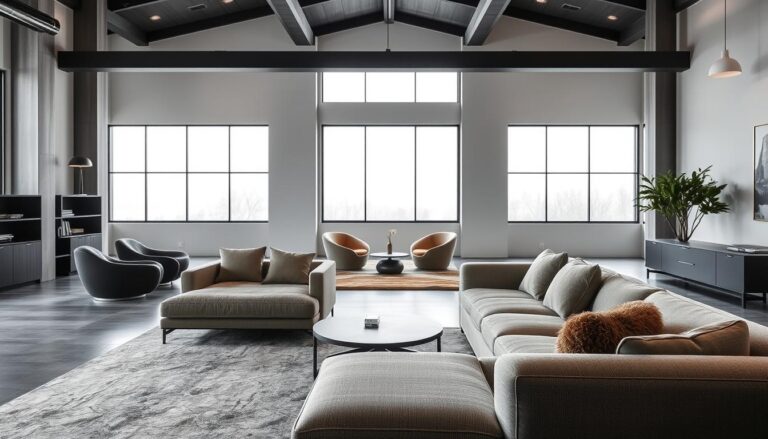
Incorporate metal-frame furniture with clean lines and exposed structural elements. Industrial styling embraces the room’s linear nature rather than fighting it, using materials like steel, concrete, and reclaimed wood.
Minimalist Layout Strategy:
Select furniture with dual purposes—storage ottomans, nesting tables, and console pieces that serve multiple functions. Maintain neutral color palettes and limit decorative accessories to prevent visual clutter.
Nesting tables are a practical solution within narrow living room layout ideas, offering flexibility without adding permanent visual weight.
Farmhouse Narrow Room Ideas:
Use weathered wood furniture, vintage textiles, and warm lighting to create cozy charm. Farmhouse style works well in narrow spaces because it emphasizes functional, unpretentious pieces that feel naturally scaled.
Alternatives & Comparable Options
Budget-Friendly Alternative: IKEA modular furniture systems offer excellent narrow room solutions starting around $200-400 for complete seating arrangements. Their KIVIK series provides compact sectional options perfect for tight spaces.
Premium Upgrade Option: West Elm and CB2 offer mid-century modern pieces specifically designed for urban spaces, ranging $800-2000. These investment pieces feature superior materials and construction with sophisticated styling.
Space-Saving Variant: Consider Murphy beds with integrated seating or expandable dining tables that double as desks. These transformative pieces cost $600-1500 but provide remarkable functionality in extremely narrow rooms.
Each option addresses different budget levels while maintaining the core principles of successful narrow room design: appropriate scale, multi-functionality, and visual lightness.
Common Mistakes to Avoid
Ignoring proven narrow living room layout ideas often leads to overcrowding and poor circulation.
The most frequent error in narrow living room layout ideas is oversized furniture that overwhelms the space. Avoid sofas wider than 80 inches in rooms under 10 feet wide—they create claustrophobic feelings and block natural traffic patterns.
Sizing Errors to Prevent:
- Purchasing furniture without measuring doorways and hallways
- Choosing deep seating (over 40 inches) that crowds walking space
- Installing wall-to-wall furniture that eliminates breathing room
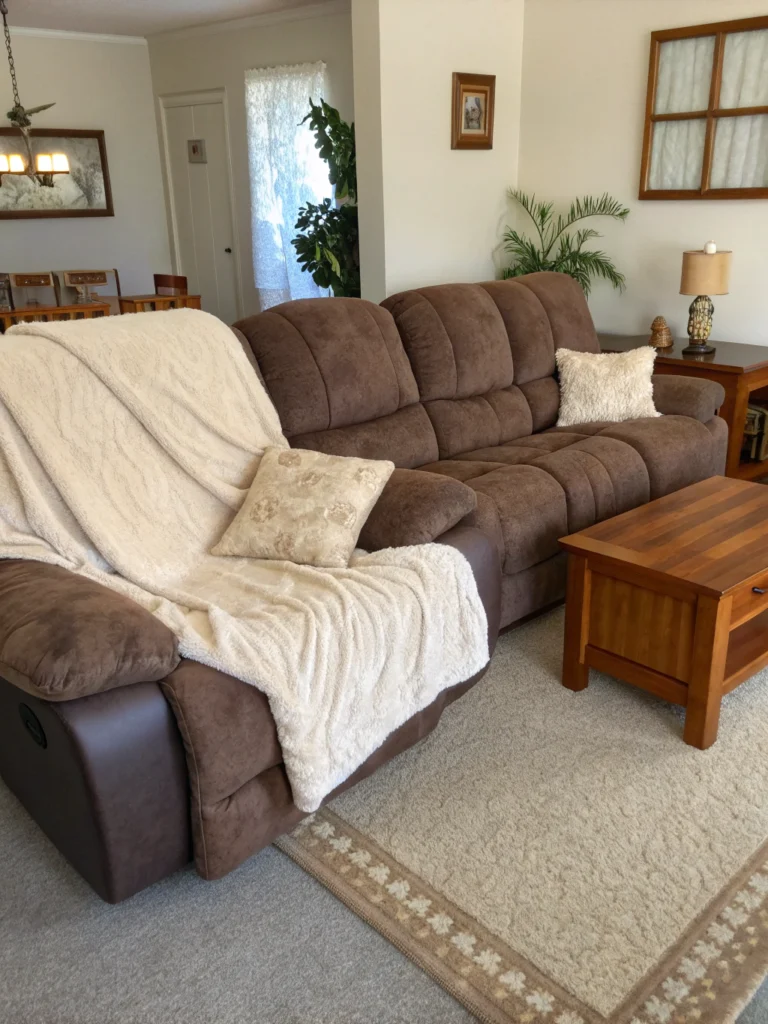
- Selecting dark, heavy pieces that visually shrink the space
Poor Placement Mistakes:
- Blocking windows with tall furniture pieces
- Creating furniture “islands” in the center of narrow rooms
- Ignoring traffic flow between functional areas
- Positioning seating with backs to room entrances
Material Selection Problems:
- Heavy, dark woods that absorb light
- Busy patterns that create visual chaos
- Bulky upholstery that adds unnecessary visual weight
Professional designers report that 80% of narrow room failures stem from improper initial planning rather than poor furniture quality.
Maintenance & Care Tips
Narrow living rooms require specific maintenance approaches due to increased furniture density and limited maneuvering space. Regular vacuuming becomes more complex when furniture fits tightly, so invest in compact, lightweight cleaning tools.
Daily Care Strategies:
- Use microfiber cloths for quick dusting of multiple surfaces
- Implement “one-touch” organization systems to prevent clutter buildup
- Rotate cushions weekly to ensure even wear patterns
- Address spills immediately—narrow spaces make damage more noticeable
Weekly Deep Cleaning:
- Move lightweight furniture to clean underneath thoroughly
- Polish wood surfaces to maintain light reflection properties
- Vacuum upholstery using appropriate attachments
- Clean glass surfaces that contribute to spatial openness
Seasonal Maintenance:
- Inspect wall-mounted storage for secure anchoring
- Condition leather and wood pieces to prevent cracking
- Reorganize storage areas to maintain functionality
- Assess furniture arrangement effectiveness and adjust as needed
Humidity control becomes particularly important in narrow spaces where air circulation may be limited. Maintain 30-50% humidity to preserve wood and fabric integrity.
Storage, Folding & Space-Saving Tips
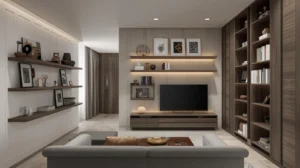
Maximizing storage in narrow living rooms requires vertical thinking and multi-functional solutions. Wall-mounted floating shelves provide storage without consuming floor space, while furniture with hidden compartments serves dual purposes seamlessly.
Vertical Storage Solutions:
- Install floor-to-ceiling shelving units that draw the eye upward
- Use wall-mounted TV consoles to free floor space beneath
- Implement over-door organizers for frequently used items
- Consider ceiling-mounted storage for seasonal items
Folding Furniture Options:
- Nesting tables that tuck away when not needed
- Folding desk surfaces that mount to walls
- Expandable dining tables for occasional entertaining
- Ottoman cubes that stack for compact storage
Wall-mounted TV consoles are a smart investment for narrow living room layout ideas because they eliminate bulky furniture and keep the floor visually open.
Hidden Storage Integration:
- Storage benches that provide seating and organization
- Coffee tables with lift-top mechanisms for easy access
- Sofa tables with drawers for remote controls and media
- Under-stair storage solutions when applicable
Professional organizers recommend the “one-in, one-out” rule for narrow spaces—adding new items requires removing others to prevent accumulation and maintain the clean, open feeling essential for successful narrow room layouts.
Conclusion
Mastering narrow living room layout ideas transforms challenging spaces into functional, stylish environments that enhance daily life rather than restricting it. The key lies in strategic furniture selection, purposeful placement, and creative storage solutions that work within spatial constraints rather than against them.
Success in narrow room design comes from embracing the space’s unique character while implementing proven strategies: appropriate furniture scaling, traffic flow optimization, and multi-functional pieces that maximize every square foot. Whether you choose Scandinavian minimalism, industrial efficiency, or cozy farmhouse charm, the fundamental principles remain consistent.
Remember that narrow rooms offer distinct advantages—intimacy, efficiency, and lower furnishing costs—that many larger spaces cannot provide. With proper planning and strategic implementation, your narrow living room can become the most beloved space in your home.
Ready to transform your challenging space? Start by measuring accurately, planning thoroughly, and selecting furniture that serves your lifestyle while respecting spatial boundaries.
FAQ
What is considered a narrow living room?
A living room is typically considered narrow when its width is less than 10–12 feet. In these spaces, furniture placement and traffic flow require extra planning to avoid a cramped feeling.
How do you arrange furniture in a long, narrow living room?
Place your main sofa along the longest wall to anchor the room. Use a low-profile coffee table centered in the space, and keep secondary seating at the far end to create two distinct zones.
What furniture works best in a narrow living room?
Choose slim-profile sofas under 35 inches deep, apartment-scale armchairs, nesting tables instead of large coffee tables, and wall-mounted shelving. Leggy furniture keeps the visual floor space open.
How do you make a narrow living room look wider?
Use horizontal stripes in rugs or wall art to visually expand width. Mirrors placed on the short walls reflect depth. Keep the color palette light and consistent.
What rug size should I use in a narrow living room?
A 5×8 ft rug is the most versatile for narrow living rooms under 10 ft wide. Place all front legs of the sofa and chairs on the rug to anchor the seating zone.