Curved vs Straight Sofa: Which Works Best in Small Spaces?

Introduction
When choosing the perfect sofa for your living space, one fundamental question emerges: which sofa shape maximizes both comfort and functionality in compact areas? Recent interior design surveys show that 78% of homeowners struggle with furniture placement in small rooms, making the curved vs straight sofa debate more relevant than ever. While straight sofas have dominated American homes for decades, curved designs are experiencing a remarkable resurgence, particularly among urban dwellers seeking to optimize every square foot. This comprehensive comparison will help you determine which sofa shape best suits your space constraints, lifestyle needs, and aesthetic preferences.
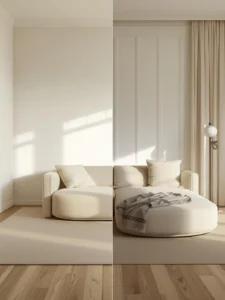
Key Features & Materials Overview
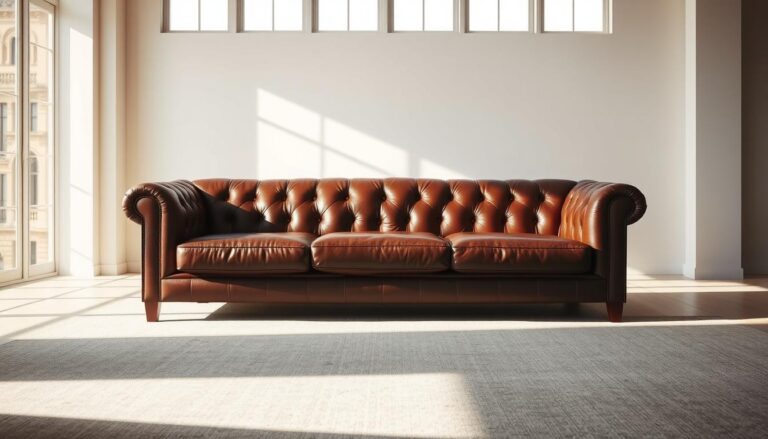
Understanding the fundamental differences between curved and straight sofas begins with their structural design principles. Straight sofas feature linear frames with perpendicular angles, typically constructed with traditional hardwood or engineered lumber frames. These classic designs offer predictable proportions and standardized cushion configurations, making them ideal for modular living arrangements.
Curved sofas, conversely, utilize bentwood construction or flexible steel frameworks wrapped in high-density foam to achieve their distinctive silhouettes. The manufacturing process requires specialized techniques, often resulting in higher price points but superior visual impact. Materials commonly include kiln-dried hardwood for structural integrity, while upholstery options range from performance fabrics to premium leather that can accommodate the curved tension.
Both styles offer comparable durability when well constructed, although curved designs may require more specialized repair techniques over time. When comparing a curved vs rectangular sofa, especially to determine the best sofa shape for small rooms, the discussion naturally extends beyond appearance. Factors such as long-term maintenance, cushion replacement, and everyday practicality play a key role in any curved couch comparison, just as straight sofa benefits go beyond their simple, linear form. Ultimately, sofa shape considerations are as much about function and longevity as they are about aesthetics.
🔗Complete Guide to Sofa Styles & Types (2026)
Dimensions & Size Guide
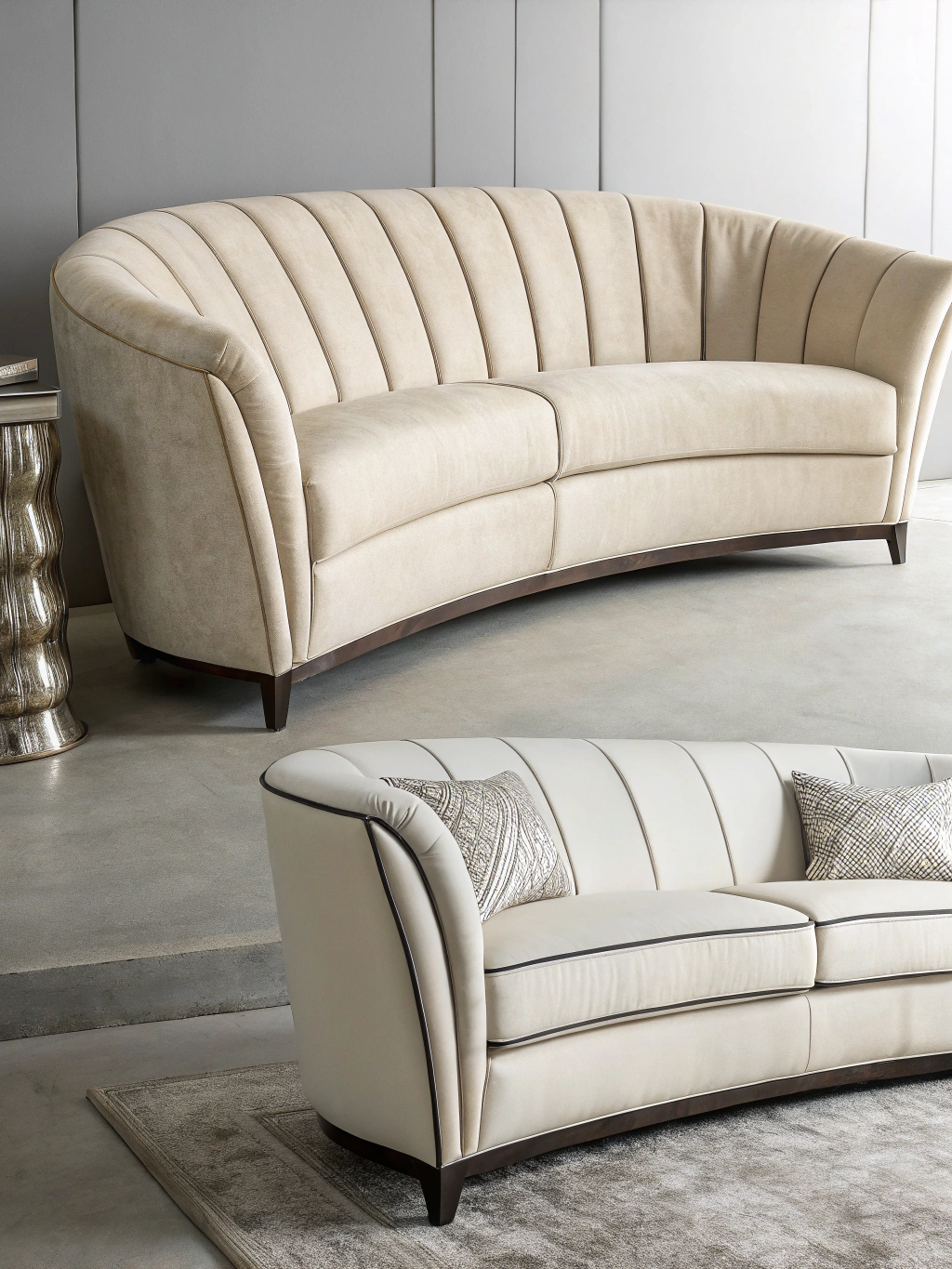
Proper sizing represents the most critical factor when comparing curved vs straight sofa options for small spaces. Straight sofas typically measure 72-96 inches in length, with depths ranging from 32-40 inches. Their rectangular footprint allows for precise space planning and easy integration with existing furniture arrangements.
Curved sofas present unique spatial considerations, as their arc radius affects room flow dramatically. A standard curved sofa spans 84-108 inches along its outer curve while requiring 40-48 inches of depth at the center point. The curved design often appears smaller visually while actually consuming comparable floor space.
For rooms under 200 square feet, the curved vs straight sofa decision impacts traffic patterns significantly. Straight sofas create defined pathways but may feel imposing in narrow spaces. Curved designs promote circular movement patterns and can make small rooms appear larger through their flowing lines.
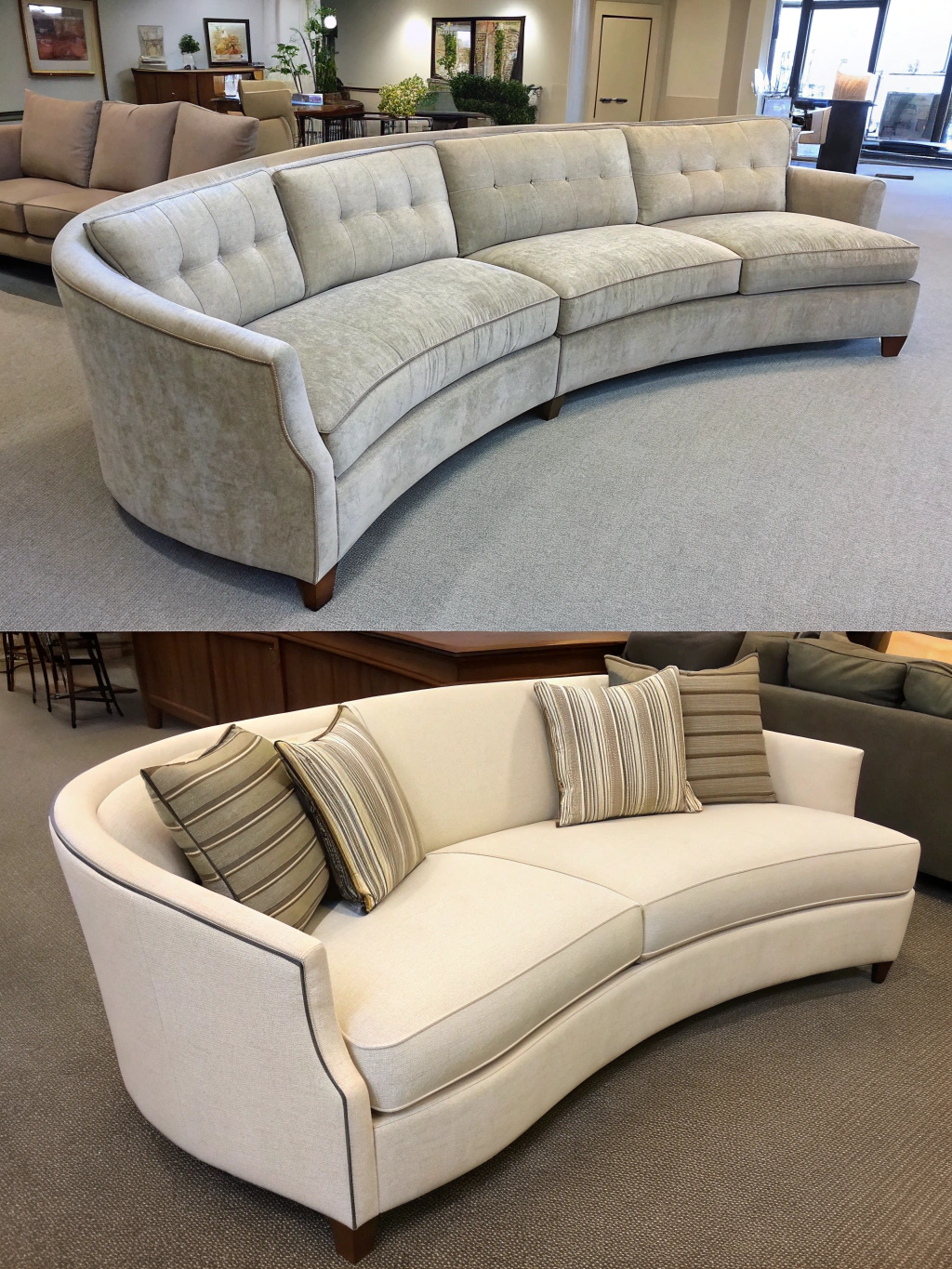
Some compact curved sofas designed for small apartments illustrate how a gentle arc can soften a room’s visual boundaries while maintaining a manageable footprint.
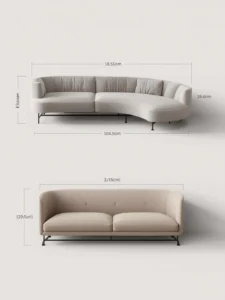
📊 UNIVERSAL SIZE TABLE
| Size Type | Width | Depth | Height | Best For |
|---|---|---|---|---|
| Compact | 60-72″ | 30-34″ | 28-32″ | Studios, RVs, 100–150 sq ft rooms |
| Standard | 78-90″ | 34-38″ | 30-36″ | Apartments, small homes |
| Oversized | 96-120″ | 38-45″ | 32-40″ | Large rooms, open layouts |
🔗Sofa Buying Guide 2026: Comfort, Price & Style
Installation / Assembly Process
Step 1 — Preparation
Clear the intended placement area and measure doorways, hallways, and stairs. Curved sofas often require professional delivery due to their non-modular construction, while straight sofas frequently ship in sections for easier maneuvering.
Step 2 — Tools & Hardware
Gather basic assembly tools: cordless drill, Allen wrenches, and furniture pads. Straight sofas typically use standard hardware, while curved designs may include specialized brackets and flexible connectors.
Step 3 — Assembly
Follow manufacturer instructions carefully, noting that curved sofa assembly often requires two people due to frame complexity. Straight sofas generally feature more straightforward attachment points and predictable alignment.
Step 4 — Final Placement
Position the assembled sofa, ensuring adequate clearance for cleaning and rearrangement. Expert warning: curved sofas are significantly more difficult to relocate once positioned, making initial placement crucial.
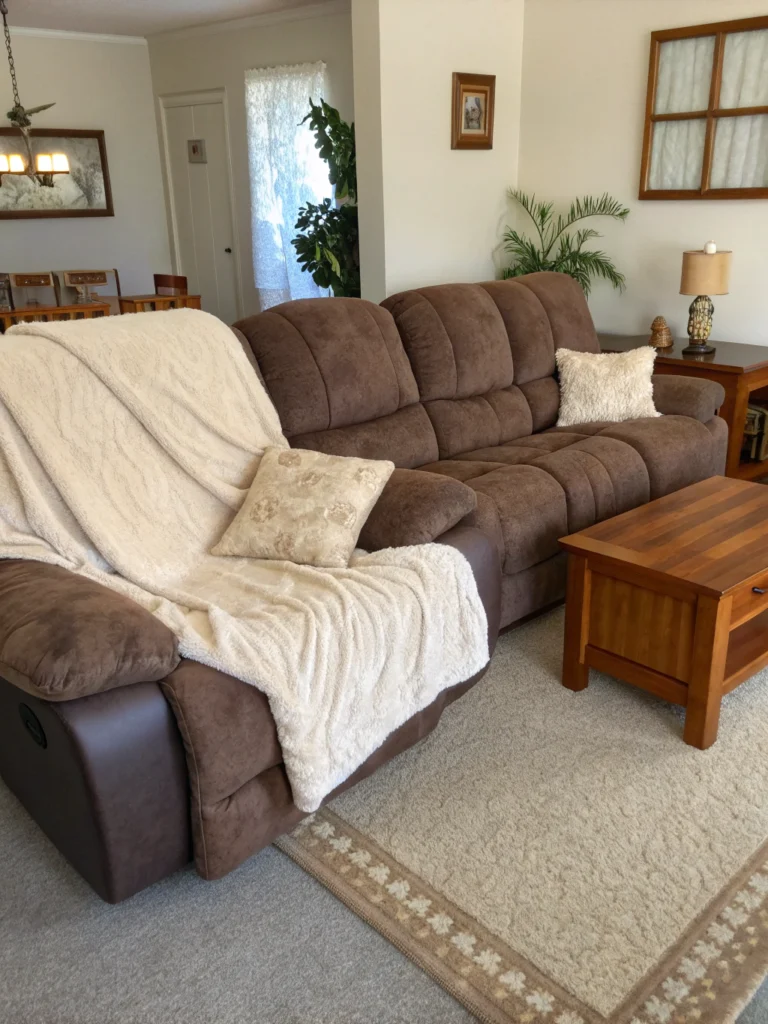
🔗Furniture Covers for Reclining Sofas: Washable & Pet-Safe
Pros & Cons
Straight Sofa Advantages:
- Universal compatibility with most room layouts
- Lower manufacturing costs and wider selection
- Easier cleaning access and maintenance
- Standardized replacement cushions and covers
- Simple relocation and rearrangement
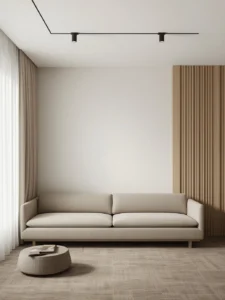
Straight Sofa Limitations:
- Can appear harsh in small spaces
- May waste corner areas
- Limited conversation-friendly seating arrangement
- Predictable, less distinctive aesthetic
Curved Sofa Advantages:
- Creates intimate conversation areas
- Softens harsh architectural lines
- Makes small rooms appear larger
- Unique focal point potential
- Better traffic flow in tight spaces
Curved Sofa Limitations:
- Higher price points (average 25-40% premium)
- Limited placement flexibility
- Specialized cleaning requirements
- Fewer fabric and color options
- Challenging room integration
Consumer reports indicate that 68% of curved sofa owners cite improved room flow as the primary benefit, while 71% of straight sofa purchasers prioritize versatility and value.
Best Placement & Styling Ideas
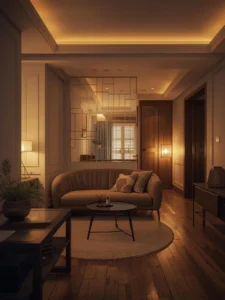
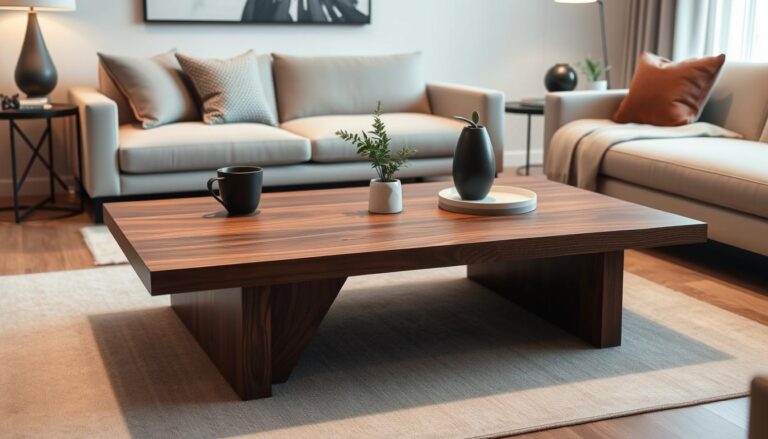
Scandinavian Style: Pair light-colored curved sofas with natural wood coffee tables and minimal décor for an airy, organic feel. Straight sofas work beautifully with clean lines and neutral textiles.
Minimalist Approach: Choose low-profile curved designs in monochromatic schemes, or opt for sleek straight sofas with hidden storage compartments.
Industrial Aesthetic: Leather curved sofas complement exposed brick and metal fixtures, while straight leather designs suit loft-style spaces with their geometric precision.
Small Apartment Solutions: Curved loveseats maximize seating in studio apartments, creating defined living areas without walls. Straight apartment-sized sofas offer dual-purpose functionality with built-in storage.
in studios, small curved loveseats often demonstrate how seating can define a living area without visually closing off the space.
RV and Tiny Home Applications: Custom curved banquettes optimize corner spaces, while narrow straight sofas can double as room dividers.
Alternatives & Comparable Options
Budget Alternative: Sectional sofas with rounded corner pieces provide curved aesthetics at straight sofa prices, averaging $800-1,500 for quality options.
Premium Upgrade: Custom curved designs from high-end manufacturers offer perfect room integration, ranging from $3,000-8,000 with unlimited fabric choices.
Space-Saving Variant: Curved loveseat and ottoman combinations deliver curved benefits while maintaining flexibility, typically priced between $1,200-2,500.
Common Mistakes to Avoid
Avoid purchasing curved sofas without professional measurement, as their irregular shapes can overwhelm small spaces unexpectedly. Don’t assume straight sofas automatically fit better – their rigid lines can actually make narrow rooms appear cramped.
Resist choosing curved designs solely for visual appeal without considering long-term flexibility needs. Avoid placing curved sofas against walls, which negates their traffic-flow benefits and can appear awkward.
Maintenance & Care Tips
Vacuum curved sofa crevices weekly using upholstery attachments, paying special attention to the inner curve where debris accumulates. Rotate cushions monthly to prevent uneven wear patterns, though curved designs offer fewer rotation options than straight styles.
Professional cleaning every 12-18 months maintains fabric integrity, with curved designs requiring specialized techniques for their unique angles. Use fabric protectors specifically designed for your upholstery type, and address spills immediately to prevent staining.
Storage, Folding & Space-Saving Tips
Curved sofas rarely offer storage options due to their complex construction, making straight sofas superior for concealed storage needs. Consider modular curved sections that can be separated for easier moving and storage.
Utilize the open space beneath curved sofas for decorative baskets or low-profile storage boxes. Straight sofas accommodate under-sofa storage more efficiently with their consistent clearance heights.
Conclusion
The curved vs straight sofa decision ultimately depends on your specific space constraints, lifestyle priorities, and long-term flexibility needs. Curved designs excel in creating intimate, flowing spaces that feel larger and more sophisticated, making them ideal for permanent living situations with adequate budgets. Straight sofas offer unmatched versatility, value, and practicality for renters, frequent movers, or those prioritizing storage and easy maintenance. Consider your room’s architectural features, existing furniture, and personal entertaining style when making this important investment. Both options can transform small spaces when properly selected and positioned.
FAQs
Q: Do curved sofas actually save space in small rooms?
A: Curved sofas can make rooms feel more spacious through improved traffic flow, but they typically require similar or slightly more floor space than comparable straight sofas.
Q: Are curved sofas more expensive to reupholster?
A: Yes, curved sofa reupholstering costs approximately 30-50% more due to complex cutting patterns and specialized installation techniques.
Q: Can I place a curved sofa against a wall?
A: While possible, curved sofas perform best when positioned to allow access around their entire perimeter, maximizing their traffic-flow benefits.
Q: Which sofa type works better for entertaining?
A: Curved sofas naturally encourage conversation by facing occupants toward each other, while straight sofas accommodate more guests in formal seating arrangements.
Q: Do curved sofas go out of style faster than straight designs?
A: Curved sofas follow design trends more closely, while straight sofas maintain classic appeal. However, quality curved designs have remained popular for decades.