How to Choose the Right Dining Room Rug | 2026 Guide

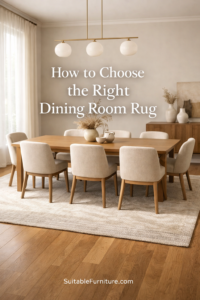
Choosing the right dining room rug can instantly improve the look and comfort of your dining space. A well-chosen rug helps define the dining area, protects your floors from chair movement, and reduces noise during meals and gatherings.
However, many homeowners make one common mistake: choosing a rug that is too small for their dining table and chairs. To select the perfect dining room rug, you need to consider the right size, material, durability, and how well the rug matches your existing décor.
In this guide, you’ll learn how to choose the best dining room rug, starting with the most important step: measuring your dining room correctly.
If you’re planning a full dining room makeover, you might also like our guide on modern dining room light fixtures that help create a warm and inviting atmosphere.
Key Takeaways
-
A dining room rug helps create visual balance, reduce noise, and protect your floors from chair movement.
-
Measure your dining space carefully to choose the correct dining room rug size.
-
Consider material, color, pattern, and durability when selecting a dining room rug.
-
Match your rug with wall colors, dining furniture, and the overall décor style.
-
Choose durable, easy-to-clean materials for high-traffic dining areas.
Understanding the Importance of a Dining Room Rug
A dining room rug is more than just a decorative element. It adds warmth to your space, makes the dining area feel more inviting, and protects your floors from daily chair movement and foot traffic.
Creating Visual Balance
A well-sized dining room rug visually anchors the table and chairs, preventing the dining set from looking like it’s floating in the room.
Sound Absorption Benefits
In dining rooms with hardwood or tile floors, sound can easily echo. A dining room rug absorbs noise and creates a quieter, more comfortable space for conversations.
Protection for Your Floors
Dining rooms get a lot of use, with chairs moving and people walking around. This can damage your floors over time. A sturdy rug protects your floors from scratches and keeps them looking new for longer.
Understanding these benefits helps you choose the right dining room rug. The next step is learning how to measure your dining space correctly to select the perfect rug size.

How to Measure Your Dining Room for the Perfect Dining Room Rug Size?
Choosing the right size rug is crucial for functionality and aesthetics. Follow these steps to measure your space accurately:
1.Account for Surrounding Furniture: Include buffets, sideboards, or nearby cabinets when determining the overall dining room rug size.
2.Measure Your Dining Table: Record the length and width of your table so you can calculate the ideal dining room rug size.
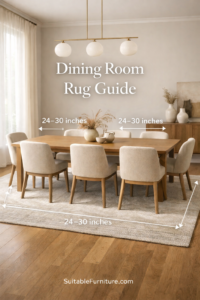
3.Add clearance for chairs: Leave 24–30 inches of extra space on all sides so chairs can slide in and out without catching the rug edges.
| Dining Table Size | Recommended Rug Size |
|---|---|
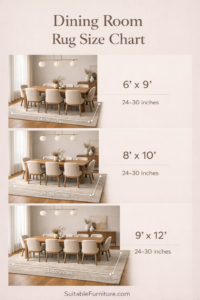
| 4-6 Seater (36-48 inches) | 5′ x 8′ or 6′ x 9′ |
| 6-8 Seater (54-60 inches) | 8′ x 10′ or 9′ x 12′ |
| 8-10 Seater (66-72 inches) | 9′ x 12′ or 10′ x 14′ |
By following these simple guidelines, you can confidently measure your dining room. Then, select the perfect dining room rug size. This will enhance the overall aesthetics and functionality of your space.
3 Key Factors When Choosing a Dining Room Rug
1. Material
The material of a dining room rug affects durability, comfort, and maintenance. Some materials handle spills and heavy foot traffic better than others.
Popular options include:
Natural Fibers (Jute or Sisal): Provide a natural, earthy look but may be less stain-resistant.
Wool: Luxurious, highly durable, and naturally resistant to stains and wear. You can also check out this highly rated wool dining room rug on Amazon known for its durability.
Synthetic Fibers (Polyester or Polypropylene): Affordable, easy to clean, and highly durable, making them ideal for families and high-traffic dining areas.
Cotton: Lightweight and casual, but generally less durable than wool or synthetic rugs.
2. Color and Pattern
- Dark Colors: Hide stains better, ideal for homes with kids or frequent gatherings.
- Neutral Tones: Timeless and versatile, neutral rugs blend seamlessly with most décor styles.
- Bold Patterns: Add personality to a plain dining room but should complement the furniture and wall colors.
3. Durability
Dining rooms endure spills and foot traffic. Opt for rugs with low pile (flatweave) and sturdy construction for longevity and easy cleaning.
| Material | Durability | Maintenance | Aesthetic |
|---|---|---|---|
| Wool | Highly Durable | Requires Regular Cleaning | Luxurious and Sophisticated |
| Cotton | Moderately Durable | Easy to Clean | Soft and Casual |
| Synthetic (Polyester/Polypropylene) | Highly Durable | Easy to Clean | Affordable and Versatile |
By considering material, color, pattern, and durability, you can choose a dining room rug that is both stylish and practical for everyday use.
Complete your dining room look with our guide to stunning dining room curtain ideas.
Standard Dining Room Rug Sizes and Dimensions
Choosing the right dining room rug size is key. The right rug can make your dining area look great, balance the space, and protect your floors. Let’s look at the common rug sizes for different dining table setups.
For a standard rectangular dining table, a rug size of 8′ x 10′ or 9′ x 12′ is best. These sizes give enough room for chairs to move easily without falling off. If your table is smaller, a 6′ x 9′ rug might be better.
Round dining tables look good with 6′ or 8′ round rugs. For square tables, an 8′ x 8′ or 9′ x 9′ rug works well.
| Dining Table Shape | Recommended Dining Room Rug Size |
|---|---|
| Rectangular | 8′ x 10′, 9′ x 12′ |
| Round | 6′, 8′ |
| Square | 8′ x 8′, 9′ x 9′ |
This highly rated dining room rug on Amazon fits most standard table sizes and adds warmth and comfort to your dining space.
These are just general tips, and the best dining room rug size can vary. Always measure your space and think about your design style before choosing.
Matching Your Dining Room Rug with Existing Decor
Choosing a new dining room rug is all about matching it with your décor. It’s key to pick a rug that fits well with your room’s colors, furniture, and design. This way, your room will look cohesive and beautiful.
Coordinating with Wall Colors
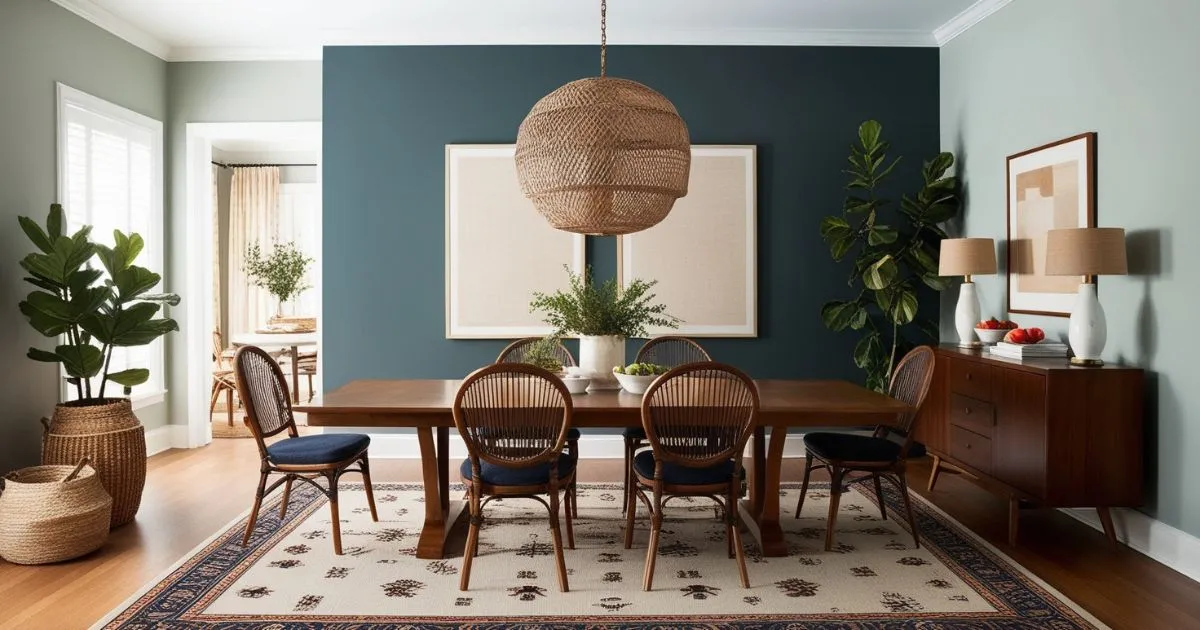
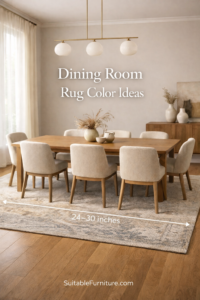
When choosing a dining room rug, consider how its color works with your wall colors. Pick a rug that either matches or complements the wall tones to create a balanced and harmonious look.
If your walls are neutral, you can choose a rug with bolder colors or patterns to add personality and visual interest to the dining space.
Complementing Furniture Styles
It’s also important to match your rug with your furniture. For traditional or classic sets, a patterned rug works well. But, for modern or minimalist furniture, a solid-colored rug is better.
Balancing Patterns and Textures
Balance patterns and textures in your dining room. If your walls or furniture have bold patterns, choose a subtle rug. This prevents the room from feeling too busy.
On the other hand, if your room is plain, a patterned rug can add interest. It brings depth and beauty to your space.
By carefully choosing your dining room area rug, you can make your room look great. It will show off your personal style and make your home more beautiful.
You can also explore dining sets with benches and back support for a more comfortable dining setup.
Best Materials for High-Traffic Dining Areas
Choosing the right material for your dining room rug is key. It must handle foot traffic and spills well. Options range from durable wool to synthetic fibers that are easy to clean.
Wool Rugs
Wool is a top pick for dining room rugs. It’s naturally tough and resists stains well. Wool rugs also soak up sound, making your dining room cozy and quiet.
Synthetic Fibers
Synthetic materials like polypropylene or nylon are also great. They’re cheaper than wool and stand up to spills and foot traffic. Plus, they’re simple to clean, perfect for busy rooms.
Natural Fibers
Natural fibers like jute or sisal add a rustic charm. They’re durable and fit many design styles. But, they might stain easier and need more care than synthetic or wool rugs.
| Material | Durability | Stain Resistance | Maintenance |
|---|---|---|---|
| Wool | High | High | Moderate |
| Synthetic Fibers | High | High | Easy |
| Natural Fibers | Moderate | Moderate | Moderate to High |
Think about foot traffic, spills, and how much you want to clean when picking a rug. A durable, easy-to-clean rug will keep your dining room rug looking great for years.
Understanding Proper Dining Room Rug Placement
Choosing the right placement for a dining room rug is essential for both style and functionality. Proper rug placement helps define the dining area, keeps the room visually balanced, and allows chairs to move comfortably around the table.
Distance from Walls
Ideally, a dining room rug should sit about 12 to 24 inches away from the walls. This spacing keeps the rug proportional to the room and prevents it from looking either too small or too overwhelming. It also allows enough room for chairs to slide back comfortably.
Centering Guidelines
-
Place the rug directly under the dining table so the table remains centered on the rug.
-
Leave 24 to 36 inches of space between the rug edge and the walls for a balanced layout.
-
If your dining table has an unusual shape, adjust the rug placement slightly to maintain visual balance in the room.
By following these simple dining room rug placement tips, you can create a dining space that feels both functional and visually appealing.
Budget Considerations for Your Dining Room Rug
Choosing the right dining room table rug means thinking about your budget. The price of a rug can change a lot. This depends on the material, size, and quality. Knowing what affects the price helps you set a budget and find a rug that fits your budget.
Material Matters
The material of the dining room table rug affects its price. Natural fibers like wool, silk, and jute cost more than synthetic ones like polyester or nylon. But, these natural materials are often more durable and last longer.
Size Plays a Role
The size of the dining room table rug also changes the price. Bigger rugs need more materials and work, making them pricier. Make sure to measure your dining room well to pick the right size and stay within your budget.
Quality Considerations
The rug’s quality is another big factor in its price. Rugs with detailed designs or hand-knotted patterns cost more. But, a good-quality rug can last longer and look better over time.
Understanding these factors helps you set a budget for your dining room table rug. This way, you can choose a rug that meets your budget and fits your space well.
Seasonal Considerations for Dining Room Rugs
Choosing the right dining room rug is not only about style—it’s also helpful to consider how seasonal changes can affect comfort and durability. Selecting the right material ensures your dining space remains comfortable and attractive throughout the year.
Summer vs. Winter Options
During warmer months, lightweight rugs made from natural fibers like jute or sisal help keep the dining room feeling light and breathable. These materials allow air circulation and prevent the space from feeling too warm.
In colder months, wool dining room rugs are often a better option. Wool provides natural insulation and creates a warm, cozy atmosphere that is perfect for family meals and gatherings.
You can also explore wooden dining tables ideal for smaller dining setups to complement your seasonal décor.
Material Adaptability
Some dining room rug materials adapt well to different seasons. Synthetic fibers such as polyester or nylon are durable, resistant to fading, and easy to maintain.
Stain-resistant rugs are especially practical in dining areas, since they can handle spills and frequent foot traffic all year.
| Rug Material | Summer Suitability | Winter Suitability |
|---|---|---|
| Jute | Excellent | Fair |
| Sisal | Excellent | Fair |
| Wool | Good | Excellent |
| Polyester | Good | Good |
| Nylon | Good | Good |
By choosing the right dining room rug material, you can maintain both comfort and durability regardless of the season.
Maintenance Tips for Your Dining Room Rug
Keeping your dining room rug clean and well-maintained helps preserve its appearance and extend its lifespan. With a few simple habits, your rug can stay fresh and beautiful for many years.
Regular Cleaning
Regular cleaning is essential for maintaining a dining room rug. Vacuum the rug weekly to remove dust, crumbs, and debris. Use a gentle vacuum setting to avoid damaging the fibers.
For deeper cleaning, shampoo the rug every few months using a mild, rug-safe detergent. Allow the rug to dry completely before placing furniture back on it.
Stain Removal
Quick action is important when spills occur. Blot the stain gently with a clean cloth instead of rubbing it, which can spread the stain further.
For easier cleaning, you can use a reliable rug cleaner spray available on Amazon, which helps remove common dining stains such as food or drink spills.
For stubborn stains, professional rug cleaning services may be the best option.
Common Mistakes to Avoid When Choosing a Dining Room Rug
Choosing the right dining room rug can completely transform the look and functionality of your dining space. However, many homeowners make a few common mistakes when selecting a rug, which can affect both the appearance and practicality of the room.
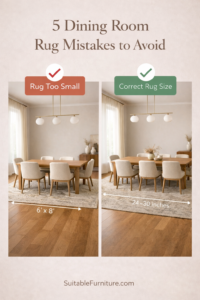
One of the most frequent mistakes is choosing a rug that is too small or too large for the dining area. A rug that is too small can make the dining space look unbalanced, while an oversized rug may overwhelm the room.
Ready to upgrade your dining room?
You can explore this highly rated dining room rug on Amazon, known for its durability and easy maintenance.
Size Miscalculations
Size is one of the most important factors when choosing a dining room rug. Ideally, the rug should extend beyond the dining table on all sides so that chairs remain on the rug even when pulled out.
Measuring your dining space carefully ensures that the rug fits both the table and chairs comfortably while maintaining a balanced look in the room.
Material Mismatches
Another common mistake is choosing a rug material that isn’t suitable for a busy dining area. Delicate materials may wear out quickly due to spills, foot traffic, and chair movement.
Instead, choose durable materials such as wool, sisal, or synthetic fibers, which are better suited for high-traffic dining spaces.
You can also explore complementary dining room lighting ideas to complete the overall look of your dining space.
FAQ
What is the importance of a dining room rug?
A dining room rug helps create visual balance, reduces noise, and protects your floors from scratches caused by chair movement and foot traffic.
How do I measure my dining room for the perfect rug size?
To find the right rug size, measure your dining area. Include the table and chair sizes. Also, think about the space needed around the dining set for looks and function.
What factors should I consider when selecting a dining room rug?
When picking a rug, think about the material, color, pattern, and durability. Make sure it fits your decor and can handle a busy dining area.
What are the standard dining room rug sizes and dimensions?
Rug sizes for dining rooms vary with table and room layout. Use guidelines for table shapes and sizes to pick the right size.
How do I match my dining room rug with existing decor?
To blend your rug with decor, match its color and pattern with walls, furniture, and decor. This creates a balanced and cohesive look.
What are the best materials for high-traffic dining areas?
For busy dining rooms, choose rugs made of wool, synthetic fibers, or natural materials. These can handle spills, stains, and lots of foot traffic.
How should I properly place my dining room rug?
Place your rug right under the dining table and away from walls. Make sure there’s enough space for chairs to move easily.
How do I set a budget for my dining room rug?
When setting a budget, consider the rug’s material, size, and quality. This helps you choose within your means.
How do seasonal changes affect my dining room rug choice?
Seasonal changes can affect your rug choice. Look for rugs that work in different seasons. Choose materials that handle temperature changes well.
How do I properly maintain my dining room rug?
Keep your rug clean and stain-free. Follow cleaning tips and consider professional cleaning to keep it looking good longer.
What are the common mistakes to avoid when choosing a dining room rug?
Avoid choosing rugs that are too small or made of the wrong material. These mistakes can ruin your dining room’s look and function.