Wall-Mounted Dining Tables: Smart Space-Saving Solutions

INTRODUCTION
In modern homes, every square foot matters. As apartments and small houses become more compact, homeowners are looking for practical furniture that combines functionality, style, and efficient use of space. Wall-mounted dining tables have quickly become one of the most popular solutions for small apartments, studios, and multifunctional rooms.
Unlike traditional dining tables, a folding wall table provides a full dining surface when needed and frees valuable floor space when folded away. This makes it an ideal choice for urban living, tiny homes, and anyone who wants a cleaner, more open interior layout.
In this guide, you’ll discover how space-saving dining tables work, what materials and sizes to choose, how to install them safely, and smart styling ideas to make your dining area both practical and beautiful.
Many homeowners also consider multifunction folding tables when looking for flexible solutions in compact living spaces.
Why Wall-Mounted Dining Tables Are Perfect for Small Apartments and Compact Spaces
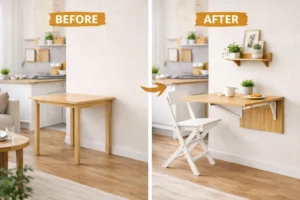
Wall-mounted dining tables are specifically designed to maximize usable space in small apartments and compact homes. Unlike traditional tables that permanently occupy floor space, these tables fold flat against the wall when not in use, instantly freeing up room for movement or other activities.
This makes them ideal for studio apartments, small kitchens, and multifunctional living areas where a single space often serves several purposes. By combining practicality with modern design, wall-mounted tables help create a more open, organized, and comfortable living environment without sacrificing the functionality of a proper dining area.
What Is a Wall-Mounted Dining Table?
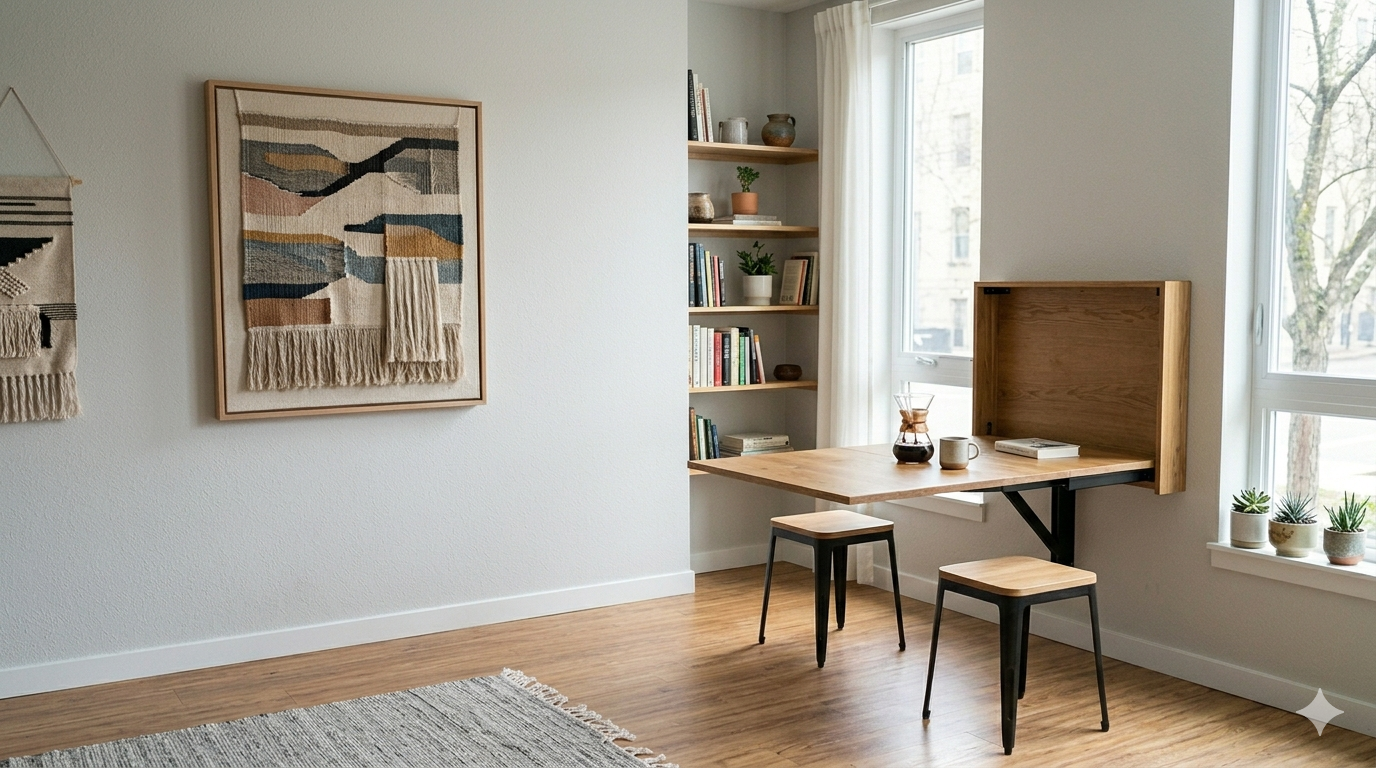
A wall-mounted dining table is a space-saving table that attaches directly to the wall instead of standing on legs. It can be folded down when needed to create a dining surface and folded back up when not in use, freeing valuable floor space.
These tables are especially popular in small apartments, studio homes, and compact kitchens where every square foot matters. Most models use sturdy brackets, hinges, or drop-leaf mechanisms to provide stability while remaining easy to open and close.
Because of their compact design and versatility, wall-mounted dining tables are often used not only for dining but also as work desks, breakfast counters, or multipurpose tables in modern small-space interiors.
Key Features & Materials Overview
Wall-mounted dining tables stand apart from traditional dining furniture through their innovative construction and versatility. Unlike conventional tables that occupy permanent floor space, these tables attach directly to your wall, creating a dining surface only when needed.
Materials and Durability
Most high-quality wall-mounted tables are constructed from:
– Engineered Wood: Often the most affordable option, offering good durability with proper sealing. MDF (medium-density fiberboard) with laminate finishes provides water resistance and easy cleaning.
– Solid Hardwoods: Premium options include oak, walnut, and maple, offering superior longevity but requiring more maintenance.
– Metal Frames: Supporting brackets and hinges are typically made from aluminum or steel for optimal strength-to-weight ratio. Look for powder-coated finishes to prevent rust.
– Composite Materials: Modern options combine wood with reinforced polymers for exceptional strength while maintaining a lightweight profile.
The weight capacity of wall-mounted tables varies significantly, from basic models supporting 50 pounds to premium installations handling up to 200 pounds. When selecting your table, consider both the everyday use and occasional heavier items you might place on it. [Our guide to selecting durable furniture for small spaces](https://www.suitablefurniture.com/small-space-furniture/) offers additional insights on balancing quality and functionality.
Dimensions & Size Guide
Selecting the right size for your wall-mounted dining table requires careful consideration of your space constraints and typical usage needs. Unlike traditional tables, these installations must balance functionality when extended with minimal footprint when folded.
The standard rule of thumb is to allow about 24 inches of table width per person for comfortable dining. For depth, most wall-mounted dining tables extend between 24 and 30 inches from the wall when opened, providing enough surface for meals without taking up too much room.
Many fold-down and drop-leaf models are specifically designed for small apartments and compact dining areas, making them a practical solution for maximizing space while maintaining everyday comfort.
Space Considerations
When planning your installation, remember to account for chair placement and movement space. [Our room layout planning guide](https://www.suitablefurniture.com/room-planning/) suggests allowing at least 32 inches of clearance from the edge of the table to any obstacle for comfortable seating and movement.
📊 SIZE REFERENCE TABLE
| Size Type | Width | Depth | Height | Best For |
|———–|——-|——-|——–|———-|
| Compact | 24-36″ | 18-24″ | 29-30″ | Studios, RVs, very small rooms |
| Standard | 36-48″ | 24-30″ | 29-30″ | Apartments, small homes |
| Large | 48-60″ | 30-36″ | 29-30″ | Open layouts, larger rooms |
If you want to compare measurements in more detail, see our guide on standard folding table sizes to better understand width and depth options.
For extremely tight spaces, consider models with asymmetrical designs or quarter-circle shapes that can be installed in corners to maximize seating while minimizing the footprint.
Installation / Assembly Process
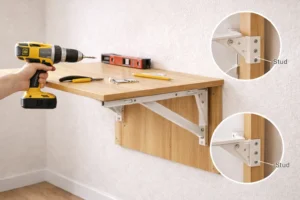
Installing a wall-mounted dining table requires more careful planning than simply assembling a traditional table. Follow these steps for a successful installation:
Step 1 — Preparation
– Locate and mark wall studs using a stud finder
– Determine ideal height (standard dining height is 29-30 inches from floor)
– Ensure the mounting area is free of electrical wires or plumbing
– Clear a workspace for assembly before starting
Step 2 — Tools & Hardware
Gather these essential tools:
– Stud finder
– Level (preferably 4-foot length)
– Power drill and appropriate bits
– Measuring tape
– Pencil for marking
– Socket wrench or screwdriver set
Most tables come with mounting hardware, but you may need additional lag bolts or wall anchors depending on your wall composition.
Step 3 — Assembly
1. Assemble the table portion according to manufacturer instructions
2. Mount the bracket system to the wall, ensuring it’s perfectly level
3. Secure all mounting points to wall studs (never rely solely on drywall anchors)
4. Attach the table to the mounted bracket system
5. Test the folding mechanism and locking features
Step 4 — Final Placement
– Test weight capacity gradually before placing full loads
– Adjust any tensioning screws if the table doesn’t stay level when extended
– Apply furniture pads where the table contacts the wall when folded
⚠️ EXPERT WARNING: Never mount a fold-down table using only drywall anchors. Always secure the main mounting points into wall studs. For concrete or masonry walls, use appropriate masonry anchors and consult our [wall mounting safety guide](https://www.suitablefurniture.com/mounting-safety/) for specialized advice.
Pros & Cons
If you’re comparing options, these are some of the most popular wall-mounted dining tables currently available online.
Best Wall-Mounted Dining Tables to Save Space
Choosing the right wall-mounted dining table depends on your available space, weight capacity needs, and preferred style. Here are some highly rated options that combine durability, smart design, and space efficiency.
Choosing the right table can dramatically improve how your space feels and functions every day.
1. Compact Folding Wall Table (Best for Small Apartments)
✔ Ideal for studios and small kitchens
✔ Lightweight but sturdy construction
✔ Easy fold-down mechanism
👉 Check price and reviews of this compact wall-mounted folding table on Amazon
2. Heavy-Duty Wall-Mounted Dining Table (Best for Daily Use)
✔ Higher weight capacity
✔ Reinforced brackets for stability
✔ Suitable for 2–4 people
👉See specifications of this heavy-duty wall-mounted dining table on Amazon
3. Modern Drop-Leaf Wall Table (Best Design Choice)
✔ Minimalist and modern look
✔ Smooth folding system
✔ Perfect for contemporary interiors
👉 View customer reviews of this modern drop-leaf wall-mounted table on Amazon
– Space Efficiency: Reclaims floor space when the table is not in use
– Versatility: Can serve multiple purposes beyond dining (work desk, crafting table)
– Visual Spaciousness: Creates an airier feel in small rooms by reducing visual clutter
– Customizable Placement: Can be installed at custom heights or in unconventional spaces
– Cleaning Convenience: Makes floor cleaning easier with no table legs to navigate around
Limitations
– Installation Complexity: Requires proper wall mounting, potentially limiting location options
– Weight Restrictions: Cannot support as much weight as traditional tables
– Wall Damage Concerns: Improperly installed tables may damage walls over time
– Limited Design Options: Fewer style choices compared to traditional tables
– Resale Considerations: Permanent installation may not appeal to all future homebuyers
Based on user feedback and small-space living trends, most homeowners find that the space-saving benefits of wall-mounted dining tables far outweigh the installation challenges, especially in apartments and homes under 900 square feet.
Best Placement & Styling Ideas
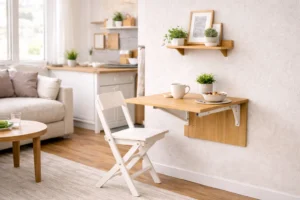
The optimal location for your wall-mounted dining table depends on your home’s layout and your lifestyle needs. Consider these placement strategies:
Kitchen Integration
– Install opposite kitchen counters to create an instant breakfast nook
– Position near windows to maximize natural light while dining
– Use the area beneath the folded table for additional kitchen storage
Living Room Multipurpose Solutions
– Place along a living room wall to create a dining area that disappears when entertaining
– Position near built-in shelving for a cohesive look
– Combine with wall-mounted lighting that can be adjusted for dining or ambient purposes
Style Adaptations
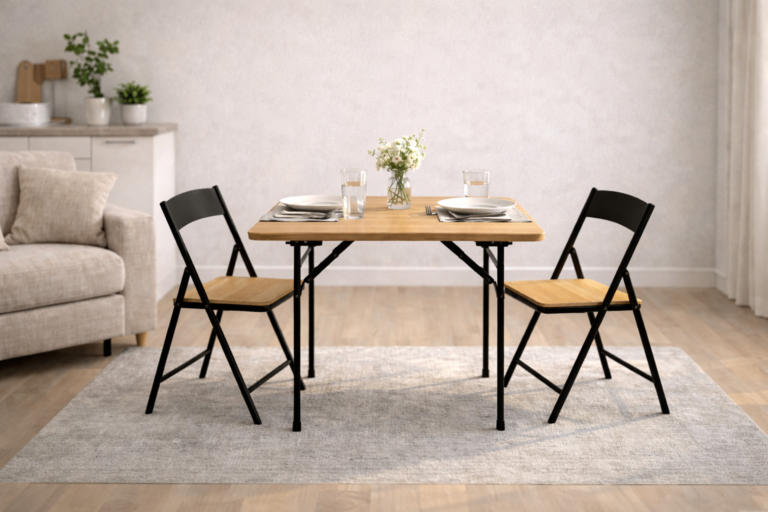
Scandinavian Minimalism: Opt for light birch or ash wood finishes with simple, clean lines. Pair with lightweight chairs that can be stacked or nested when not in use. Add a small vase of greenery as a centerpiece.
Industrial Chic: Choose tables with metal brackets and reclaimed wood tops. Complement with metal chairs that can be hung on wall hooks when not needed. [Our industrial decor guide](https://www.suitablefurniture.com/industrial-interior-design/) provides additional styling tips.
Modern Compact: Select glossy white finishes with hidden hardware for a sleek appearance. Pair with transparent acrylic chairs that visually disappear when not in use.
Small Space Maximizers:
– Install a wall-mounted bench on the opposite wall to eliminate the need for chairs on one side
– Use floor-to-ceiling mirrors nearby to amplify the sense of space
– Choose dual-purpose chairs that can serve as side tables or accent seating elsewhere
Alternatives & Comparable Options
While wall-mounted dining tables offer excellent space-saving benefits, they aren’t the only solution for compact dining spaces. Consider these alternatives based on your specific needs:
Budget-Friendly Option: Nesting Console Table
If wall mounting isn’t feasible due to rental restrictions or wall construction, consider a narrow console table that can expand when needed. These typically cost 30-40% less than quality wall-mounted systems and require no installation, making them perfect for renters.
Pros: No installation, easily movable, often includes storage
Cons: Occupies permanent floor space, typically smaller dining surface
Premium Upgrade: Convertible Smart Table
For those willing to invest more, hydraulic or motorized tables can transform from coffee table height to dining height with the push of a button. These technological marvels offer exceptional versatility but at a premium price point (typically 2-3x the cost of standard wall-mounted options).
Pros: Multiple height settings, premium materials, conversation piece
Cons: Significant investment, may require power source, complex mechanisms
Space-Saving Alternative: Ceiling-Mounted Drop-Down Table
For extremely challenging spaces, ceiling-mounted tables that lower on a pulley or mechanical system provide dining surfaces that completely disappear when not needed.
Pros: Zero wall or floor footprint, unique design element
Cons: Complex installation, limited size options, restricted placement
You can also explore different folding dining table solutions if wall mounting isn’t suitable for your space.
Common Mistakes to Avoid
When implementing a wall-mounted dining table solution, be careful to avoid these frequent missteps:
Improper Wall Assessment
Many homeowners fail to properly evaluate their wall structure before purchase. Remember that drywall alone cannot support a dining table – you must locate and mount to wall studs or use appropriate masonry anchors for concrete walls.
Underestimating Clearance Needs
A common error is failing to account for the full extension of the table plus seating space. Ensure you have at least 36 inches of clearance from the extended table edge for comfortable seating, plus additional space for chair movement.
Ignoring Height Considerations
Standard dining height is 29-30 inches, but this may not be optimal for all users or spaces. Consider who will use the table most frequently and adjust accordingly – slightly higher for taller family members or lower if children will be primary users.
Selecting Incompatible Chairs
Many people purchase chairs that cannot be easily stored when the table is folded. Look for stackable, nesting, or folding chair options that can be tucked away when not needed.
Overlooking Stability Features
Not all wall-mounted dining tables are created equal. Some fold-down or drop-leaf models include better locking mechanisms and stronger brackets to prevent wobbling or unexpected collapse.
Maintenance & Care Tips
Maintaining your wall-mounted dining table properly will extend its lifespan and keep it functioning smoothly for years to come.
Regular Cleaning Routine
– Wipe the surface with a slightly damp cloth after each use
– For wood finishes, use a specialized wood cleaner monthly
– For laminate surfaces, mild soap and water is sufficient
– Clean hinges and brackets quarterly to remove dust buildup
Preventive Maintenance
– Check and tighten all mounting hardware every 6 months
– Apply furniture wax to wood surfaces twice yearly
– Lubricate hinges and moving parts annually with silicone spray
– Inspect wall mounting points for any signs of strain or damage
Environmental Considerations
– Avoid mounting tables in areas with extreme temperature fluctuations
– For kitchens or humid environments, choose moisture-resistant finishes
– Position away from direct sunlight to prevent fading and warping
– Consider seasonal wood movement when mounting solid wood tables
Quick Troubleshooting
– Table doesn’t stay level when extended: Adjust tension on support brackets
– Squeaking when folding/unfolding: Apply silicone lubricant to hinges
– Surface scratches: Use appropriate wood touch-up markers or fill sticks
– Wobbling when extended: Check and tighten all mounting hardware
For more detailed care advice, check these folding wooden table maintenance tips to keep your furniture in excellent condition.
Storage, Folding & Space-Saving Tips
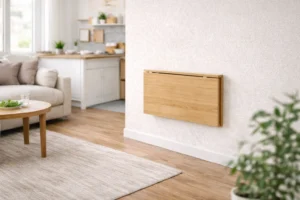
The primary advantage of a wall-mounted dining table is its ability to disappear when not in use. Maximize this benefit with these advanced space-utilization strategies:
Enhanced Storage Solutions
– Install shallow shelving or a magnetic strip above the folded table for additional storage
– Mount a slim cabinet beside the table to store table linens and serving items
– Use decorative hooks nearby for hanging lightweight folding chairs
– Consider table models with built-in storage compartments that remain accessible when folded
Smart Folding Features to Look For
– Soft-close mechanisms to prevent slamming
– One-handed operation systems for easier handling
– Auto-locking supports that engage without additional steps
– Drop-leaf designs that allow partial extension for smaller needs
Creative Multi-Use Strategies
– When folded, use the wall space for a decorative magnetic board or chalkboard
– Position a slim console table beneath that can slide out when the wall table is in use
– For work-from-home scenarios, install a small shelf at keyboard height beneath the main table
– Consider models that can be used as standing desks when partially extended
Conclusion
Wall-mounted dining tables are one of the smartest furniture solutions for modern small spaces. Whether you live in a studio apartment, a compact home, or simply want to make better use of your available space, a space-saving wall-mounted table offers the perfect balance between practicality and style.
By choosing the right size, materials, and installation method, you can create a dining area that feels comfortable when in use and completely disappears when not needed. This flexibility makes folding wall tables ideal for multifunctional rooms, work-from-home setups, and minimalist interiors.
If you’re ready to upgrade your space, exploring high-quality models can help you find a table that matches your needs, budget, and décor style. Well-designed wall-mounted dining tables can last for years while dramatically improving how you use your living space.
👉 Browse the best wall-mounted dining tables on Amazon to compare sizes, materials, prices, and customer reviews before choosing the right one for your home.
FAQs
How much weight can a wall-mounted dining table typically support?
Most quality wall-mounted dining tables can support between 50-100 pounds when properly installed into wall studs. Premium models with reinforced brackets may support up to 200 pounds, but always check the manufacturer’s specifications and never exceed recommended weight limits.
Can I install a wall-mounted table in a rental apartment?
Yes, but with caveats. You’ll need to secure it to wall studs, which will leave holes when removed. Check your lease agreement, as some landlords require approval for wall-mounted furniture. Consider models that leave minimal damage or offer a removable bracket system if you’ll be moving frequently.
What’s the ideal height for mounting a dining table?
Standard dining height is 29-30 inches from the floor to the tabletop surface. However, you may adjust this based on your seating (bar-height chairs would require a higher table) or the primary users’ height. Always test the height with your intended seating before finalizing installation.
How do I ensure my wall-mounted table is level when extended?
First, use a large level during installation to ensure the mounting bracket is perfectly horizontal. Many quality tables include adjustable tension on support brackets that can be fine-tuned if the table begins to sag. Regular inspection and tightening of all hardware will help maintain proper alignment.
Can wall-mounted dining tables be installed on any type of wall?
No. While they can be installed on most wall types with proper hardware, the mounting method varies significantly. Drywall requires securing to studs, brick or concrete walls need masonry anchors, and panel walls may not provide sufficient support. Always consult with a professional if you’re unsure about your wall composition or structural integrity.