Best Recliner Sofa Beds for Small Spaces

Introduction
When your living room has to do double duty — hosting guests overnight
while still looking put-together every day — a recliner sofa bed might
be the smartest piece of furniture you can invest in. The challenge
isn’t finding one. It’s finding one that actually fits your space,
reclines without hitting the wall, and converts to a bed without
requiring an engineering degree.
This guide covers everything you need to know to choose the right
recliner sofa bed for a small or mid-size living room: dimensions,
mechanism types, materials, and the styling decisions that make the
difference between a piece that works and one that overwhelms the room.
👉 If you’re weighing a recliner sofa bed against a dedicated murphy
bed, this comparison of recliner sofas vs sofa beds
breaks down which option works best depending on your space and how
often you need the bed function.
Key Features &
Materials Overview
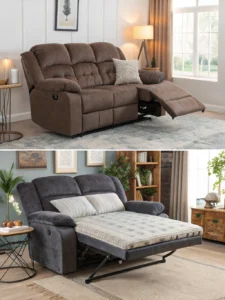
Recliner sofa beds combine three functions in one frame: upright
seating, a reclining position for lounging, and a flat sleeping surface
for guests. The quality of each function depends heavily on the
mechanism and materials used.
The most common upholstery options are:
- Performance fabric — stain-resistant, ideal for
households with kids or pets, easy to clean with a damp cloth - Faux leather — sleek and modern, but requires
proper care to prevent cracking over time - Linen blends — breathable and stylish, best
suited for lower-traffic living rooms - Genuine leather — durable and long-lasting,
higher investment but ages well
Frame construction matters just as much as upholstery. Look for
kiln-dried hardwood frames with sinuous spring systems — these hold up
to the repeated stress of the reclining mechanism far better than
particleboard alternatives.
👉 If you’re considering a faux leather model for its clean, modern
look, this practical guide on how to clean faux leather sofas
without damaging the material explains how to prevent
cracking and surface wear over time.

Dimensions & Size Guide
Getting the dimensions right is the most important step — and the one
most people skip. A recliner sofa bed needs more clearance than a
standard sofa because the footrest extends forward when reclined, and
the backrest drops back when converting to bed mode.
The golden rule: measure the distance from your back wall to the
nearest coffee table or obstruction. You need a minimum of 18–24 inches
of clearance behind the sofa for the backrest to recline fully.
📊 Recliner Sofa Bed Size Guide
| Size Type | Width | Depth (seated) | Depth (fully reclined) | Best For |
|---|---|---|---|---|
| Loveseat (2-seat) | 56–66″ | 34–38″ | 58–66″ | Studios, rooms under 150 sq ft |
| Standard (3-seat) | 78–88″ | 36–40″ | 62–72″ | Small living rooms, apartments |
| Sectional recliner | 96–120″ | 38–42″ | 66–78″ | Open-plan layouts, larger rooms |
For rooms under 200 square feet, a loveseat recliner sofa bed in the
56–66″ range is the practical ceiling. Going larger will compromise
traffic flow and make the room feel permanently cluttered.
Expert Warning: Always measure the reclining depth before purchasing —
not just the seated footprint. Many online listings only show the seated
dimensions. A sofa that fits perfectly against the wall may become
unusable once you account for the 20–30 inches of additional depth
needed to fully recline.
Mechanism Types: Manual, Electric &
Hydraulic
The mechanism determines how easy the sofa is to use daily — and how
long it lasts.
📊 Recliner Mechanism Comparison
| Mechanism | Operation | Pros | Cons | Best For |
|---|---|---|---|---|
| Manual | Pull lever or push back | No power needed · Affordable · Simple to repair | Requires physical effort · Less precise | Budget-conscious buyers · Occasional use |
| Electric | Button or remote | Effortless · Adjustable positions · Smart home compatible | Requires outlet · Higher cost · Complex repairs | Daily users · Older adults · Premium setups |
| Hydraulic | Assisted lever | Smooth operation · Durable · No power needed | Heavier frame · Higher price point | Frequent use · Long-term investment |
For small spaces, electric models with a wall-hugger design are worth
the extra investment — they recline forward rather than backward, which
means you can place them just 4–6 inches from the wall instead of the
standard 18–24 inches.
👉 If you’re still deciding between a recliner sofa bed and a dedicated
murphy bed setup, this guide on wall beds with sofa for small
spaces covers how the two solutions compare in terms of
floor space recovery.
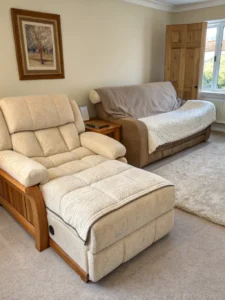
Pros & Cons
Advantages:
- Dual functionality: everyday seating plus a
guest bed without a separate piece of furniture - Space efficiency: replaces both a sofa and a
guest bed in a single footprint - Comfort flexibility: multiple positions for
reading, watching TV, or sleeping - Cost-effective: less expensive than buying a
sofa and a sleeper sofa separately - Design variety: available in styles from
minimalist to traditional
Limitations:
- Clearance requirements: needs more floor space
than a standard sofa when reclined - Mechanism complexity: more moving parts means
more potential maintenance over time - Sleep surface: the mattress portion is typically
thinner than a standalone bed — fine for occasional guests, less
ideal for long stays - Weight: heavier than standard sofas, which can
complicate moves or rearrangements
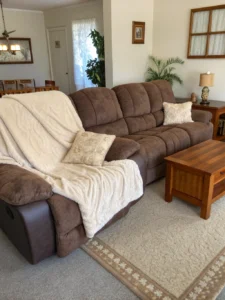
Best Placement & Styling
Ideas
Against the longest wall: In narrow rooms, place the
recliner sofa bed along the longest wall to preserve walking space.
Leave at least 36 inches of clearance in front for traffic flow and
coffee table placement.
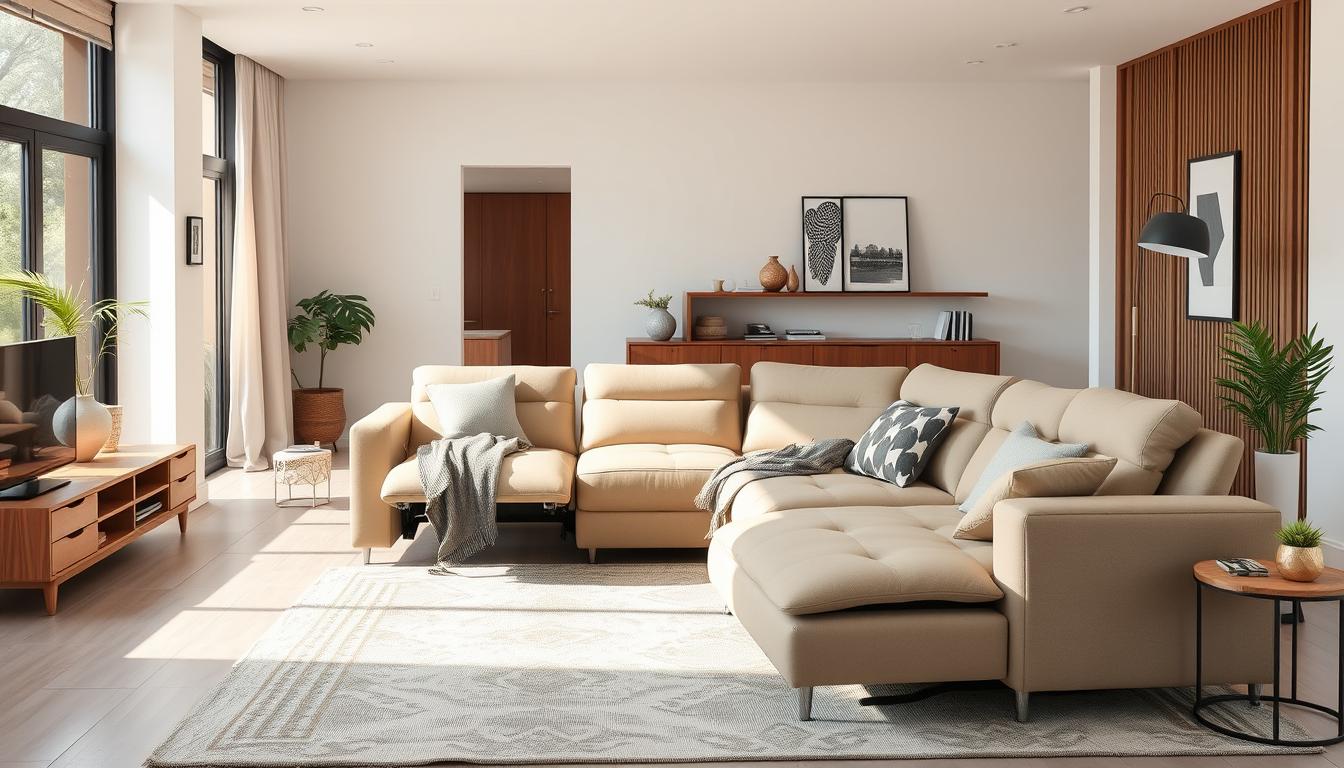
Corner placement: An L-shaped recliner sectional in a
corner can define the seating zone in an open-plan studio without
consuming the center of the room.
Floating placement: In rooms over 200 square feet,
floating the sofa away from the wall (with enough reclining clearance
behind it) creates a more intentional, designed feel.
Color and style pairing for small spaces: Light
neutrals — cream, light gray, warm beige — keep the room feeling open.
Pair with a compact coffee table suited for small living
rooms to maintain proportions. Avoid oversized rugs that
extend beyond the sofa’s footprint.
👉 For more layout strategies around a sofa as the anchor piece, this
guide on narrow living room layout ideas covers
the arrangements that work best when floor space is limited.

Top Picks: Recliner Sofa Beds for Small Spaces
Budget pick — Manual loveseat recliner sofa bed
A compact manual recliner loveseat is the most practical starting point
for rooms under 150 sq ft. Look for models in the 58–62″ width range
with a pull-lever mechanism and performance fabric upholstery.
🛒 Browse manual recliner loveseat options on Amazon
Mid-range pick — Electric wall-hugger recliner sofa bed
Electric wall-hugger models recline forward, requiring only 4–6 inches
of clearance from the wall instead of the standard 20+ inches. A
genuinely space-saving design for small apartments.
🛒 Browse wall-hugger electric recliner sofa beds on
Amazon
Premium pick — Power recliner sofa bed with USB charging
For daily use with added convenience, power recliner sofa beds with
built-in USB ports and adjustable headrests offer the best long-term
comfort. Ideal for living rooms that double as home offices.
🛒 Browse power recliner sofa beds with USB on Amazon
Space-saving pick — Compact recliner sofa bed with
storage
Some compact models include hidden storage compartments under the seat
cushions — a practical bonus in rooms where every inch of storage
counts.
🛒 Browse recliner sofa beds with storage on Amazon
Common Mistakes to Avoid
Buying without measuring reclining depth: The most
common mistake. The seated width is only half the equation — always
check the fully reclined depth before ordering.
Choosing mechanism based on price alone: A cheaper
manual mechanism that fails after two years costs more in the long run
than a mid-range electric model. Check the warranty on the mechanism
specifically, not just the frame.
Ignoring the sleep surface thickness: Most recliner
sofa beds have a 4–5 inch mattress. That’s fine for occasional guests
— but if someone will sleep on it regularly, look for models with a
6-inch or thicker memory foam insert.
Pairing with an oversized coffee table: When the
footrest extends, it needs clear floor space in front. A coffee table
that’s too large or too close will block the reclining function
entirely.
Expert Warning: Never place a recliner sofa bed on a thick high-pile
rug without testing the reclining mechanism first. The footrest can
catch on the rug fibers and either jam the mechanism or gradually
damage the rug. Use a low-pile or flat-weave rug under reclining
furniture.
Maintenance & Care Tips
Weekly: Vacuum seat cushions and the crevices around
the mechanism. Debris that accumulates in the mechanism can cause it
to stick or jam over time.
Monthly: Wipe down upholstery with a fabric-appropriate
cleaner. For faux leather, use a dedicated non-abrasive cleaner. Check
that all hardware connections are secure — reclining mechanisms loosen
with regular use.
Every 6 months: Apply a light lubricant (silicone
spray) to the metal parts of the reclining mechanism. This extends the
life of the mechanism significantly and prevents squeaking.
Understanding how long sofas typically last based on material
and usage helps set realistic expectations — with proper
care, a quality recliner sofa bed should last 7–12 years.
Storage & Space-Saving Tips
Choose models with built-in storage: Some recliner
sofa beds include compartments in the armrests or under the seat —
useful for storing remote controls, throws, or reading glasses without
cluttering side tables.
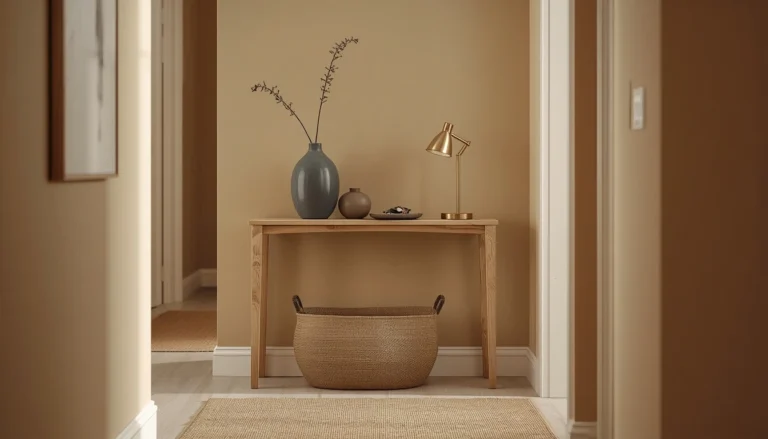
Use the space behind the sofa: A narrow console table
(12–14″ deep) behind a floating recliner sofa bed creates additional
surface space for lamps, books, or plants without adding bulk to the
room.
Slim side tables over bulky end tables: Recliner sofas
already take up significant floor space. Replace traditional end tables
with slim C-shaped side tables that slide under the armrest — they take
up zero additional floor footprint.
Coordinate with vertical storage: Install floating
shelves above the sofa line to draw the eye upward and add storage
without floor impact. This pairs especially well in narrow living rooms
where horizontal space is limited.
👉 For a complete checklist of space-saving furniture pieces that work
together in compact apartments, see this small apartment
furniture checklist.
Conclusion
A recliner sofa bed is one of the most practical investments you can
make in a small living space — but only if you choose the right size,
mechanism, and placement for your room. The key decisions are clearance
depth, mechanism type, and upholstery that fits your lifestyle.
Start by measuring your room with the reclining depth in mind, decide
whether a wall-hugger electric model makes sense for your layout, and
prioritize a mechanism warranty of at least 2–3 years. The rest —
style, color, fabric — is the fun part.
FAQs
Q: How much space do I need behind a recliner sofa bed?
A: Standard recliner sofa beds need 18–24 inches of wall clearance to
recline fully. Wall-hugger models are the exception — they recline
forward and need only 4–6 inches, making them the best choice for
small rooms.
Q: Can a recliner sofa bed work in a studio apartment?
A: Yes, provided you choose a loveseat-sized model (56–66″ wide) and
account for the fully reclined depth in your layout. A wall-hugger
electric model maximizes usable floor space in studios.
Q: Is a recliner sofa bed comfortable to sleep on?
A: For occasional guests, yes. Most models have a 4–5 inch mattress,
which is adequate for short stays. For someone sleeping on it
regularly, look for models with a thicker memory foam insert (6″+).
Q: What’s the difference between a recliner sofa bed and a
sleeper sofa?
A: A recliner sofa bed reclines to a flat position using the same
mechanism as the reclining function — no separate mattress to unfold.
A sleeper sofa has a fold-out mattress hidden under the seat cushions.
Recliner sofa beds are generally easier to convert but have a thinner
sleep surface. For a detailed comparison, see our guide on
recliner sofas vs sofa beds.
Q: How do I keep the reclining mechanism working
long-term?
A: Vacuum around the mechanism regularly to prevent debris buildup,
check hardware connections monthly, and apply silicone spray to the
metal parts every 6 months. Avoid placing the sofa on high-pile rugs
that can catch on the footrest.
Q: What’s the best upholstery for a recliner sofa bed in a
small apartment?
A: Performance fabric is the most practical choice — stain-resistant,
easy to clean, and durable enough for the repeated movement of the
reclining mechanism. Faux leather is a close second for its modern
look, but requires regular conditioning to prevent cracking.
As an Amazon Associate, I earn from qualifying purchases and
referrals.